 Storyclover
Storyclover
Storyclover
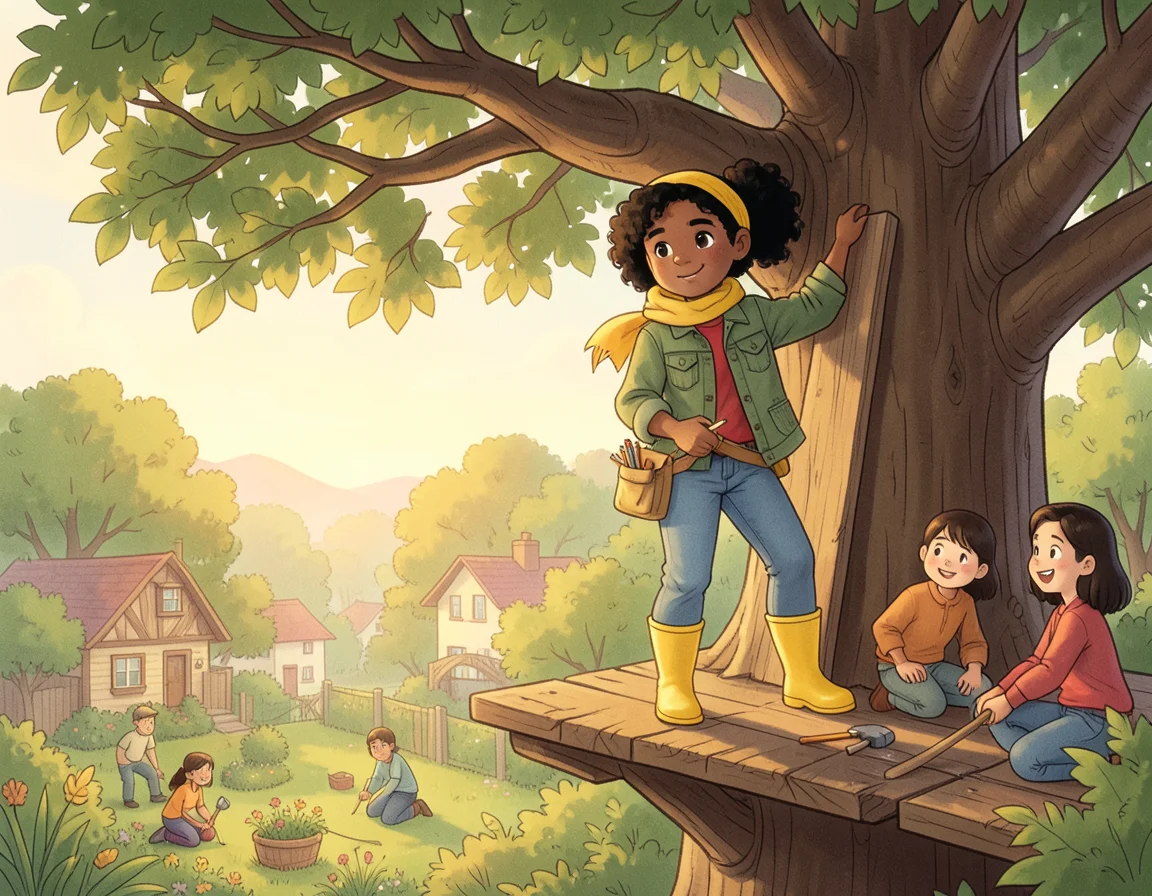
On Saturday afternoon, Mara held a cedar plank against the oldest oak while her friends hammered around her. By sunset, their treehouse had four walls, a slanted roof, and a door that stuck in the middle.
The Treehouse That Voted Against Its BuildersFriends who built a treehouse argue over rules until the treehouse itself starts locking doors, teaching them that fairness needs more than majority power.
1. On Saturday afternoon, Mara held a cedar plank against the oldest oak while her friends hammered around her. By sunset, their treehouse had four walls, a slanted roof, and a door that stuck in the middle.
2. Mara, Felix, and Nia made a list of rules. The first vote passed easily: the treehouse would belong to everyone who helped build it.
3. Then they argued about guests. Felix wanted a simple rule: whoever had more votes could invite anyone. Mara and Felix voted yes. Nia voted no.
4. Nia folded her arms. “A majority can decide what happens,” she said, “but it cannot decide who gets treated like they do not belong.” Mara looked at the rule sheet and said nothing.
5. They added more rules and more votes. No muddy shoes. No loud music. No changing a rule unless two people agreed. The door received a brass latch, and everyone cheered when it clicked.
6. On Monday, Nia arrived with warm cookies for everyone. The door would not open. Felix had voted to keep guests out while they cleaned, and Mara had agreed.
7. But Felix could not open it either. The latch had decided that a rule about guests was also a rule about builders. The three friends stared at one another through the window.
8. They found another locked door inside, separating the small reading nook from the main room. A third door had appeared beneath the bench. Every rule seemed to have grown a hinge.
9. Mara suggested a new vote: remove every rule that had caused trouble. Felix voted yes. Nia voted yes. The treehouse remained locked.
10. “It is following the votes we already made,” Mara whispered. Nia touched the door. “Then it is fair only in the narrowest way.” Felix lowered the token in his hand.
11. They stopped counting hands and began asking questions. Who would be affected? What could be repaired? Which rule protected the room, and which rule merely protected the people already inside?
12. They kept the rule about muddy shoes, changed the rule about guests, and added a promise to listen before deciding. A rule could be changed only after the people it affected had spoken.
13. The door opened for Nia. It opened for Felix. It opened for Mara. Then it opened for the children who had not built the treehouse, because the builders had finally asked what belonging should mean.
14. The treehouse kept its doors, its rules, and one stubborn habit. Whenever the friends tried to win by numbers alone, a lock clicked shut. They had built the walls together, but fairness needed more than a majority to open them.
Make a story like this →