 Storyclover
Storyclover
Storyclover
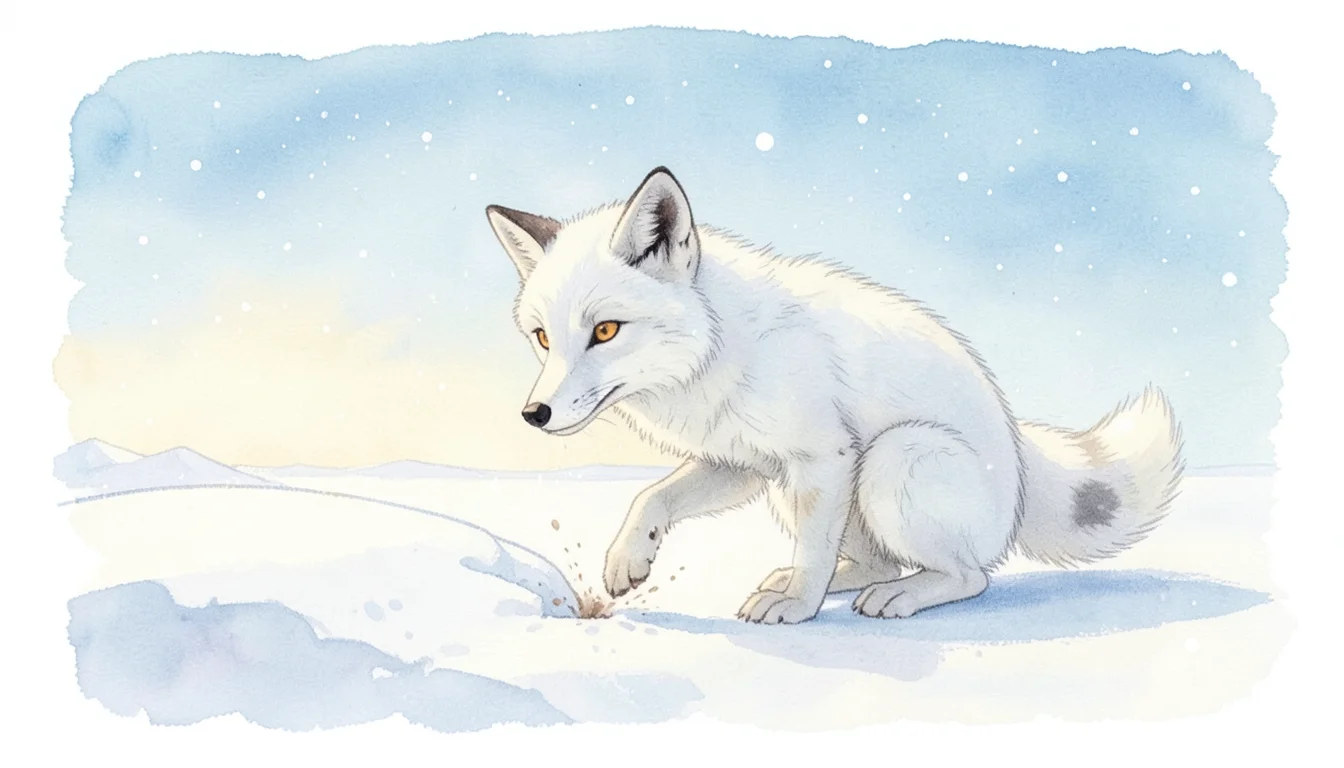
At sunrise, a young arctic fox crept across the snowy hill. Its white paws made hardly a sound.
Why Does the Arctic Fox Change Its Coat?An arctic fox grows white winter fur for camouflage on snow and thinner brown fur that blends with summer tundra.
1. At sunrise, a young arctic fox crept across the snowy hill. Its white paws made hardly a sound.
2. The fox wanted breakfast. A snow bunting rested on the far side of the hill, but the fox was hard to see.
3. The fox lowered its ears and waited. Its snowy coat helped it blend into the white world.
4. Soon, the fox had a meal. Its white coat had helped it stay hidden until the right moment.
5. Weeks passed. The sun climbed higher, the snow softened, and dark earth began to peek through.
6. The fox crossed the tundra, but its bright coat stood out now. White was no longer the best hiding place.
7. The fox shed its thick winter fur. A lighter, thinner brown coat grew beneath it.
8. Now the fox slipped through the brown and green tundra. Its thinner coat kept it cool and helped it disappear.
9. The fox found food again. Brown fur was just right for a summer hunt.
10. Then autumn faded. Snowflakes returned, and the tundra slowly turned white.
11. The fox grew its thick white winter coat again. It vanished into the snow, just as the season changed.
12. That is why the arctic fox changes its coat. It grows white winter fur for camouflage on snow, and thinner brown fur that blends with the summer tundra.
Make a story like this →