 Storyclover
Storyclover
Storyclover
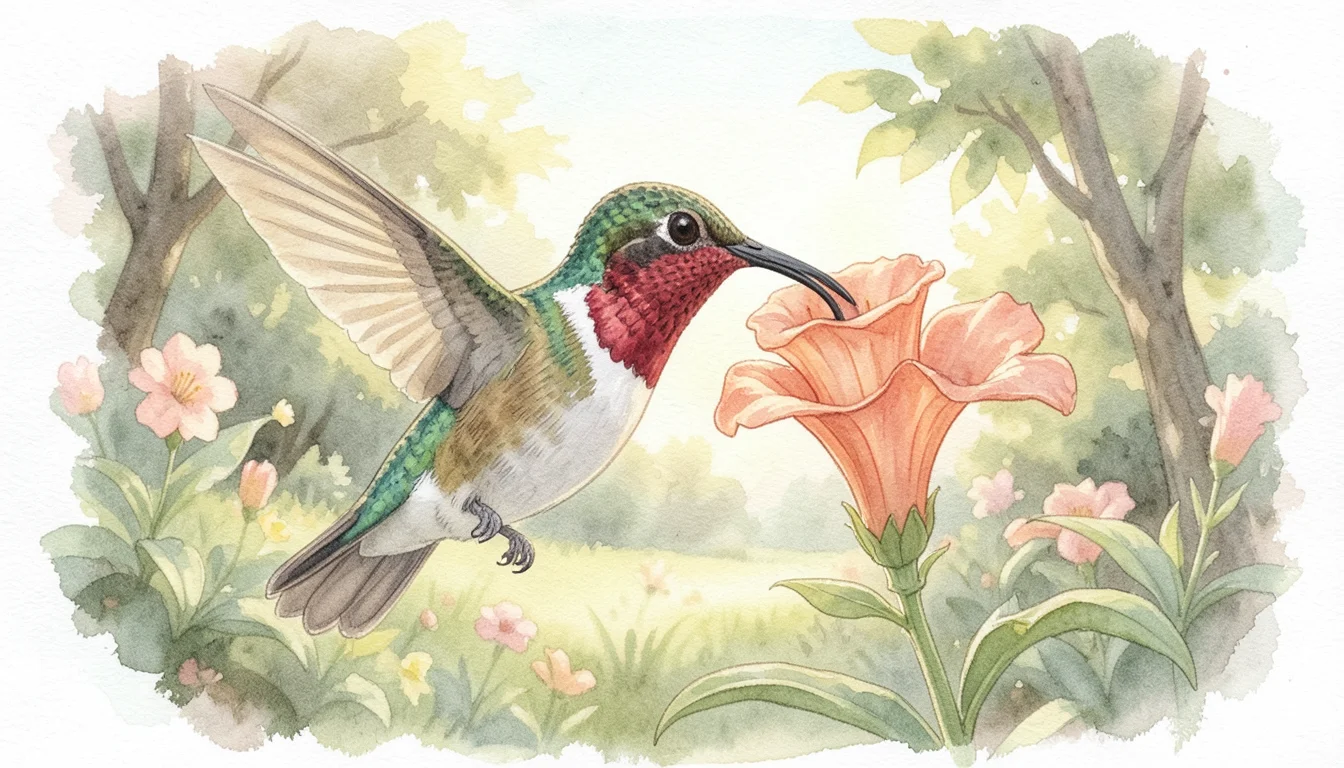
At sunrise, a ruby-throated hummingbird with emerald-green feathers on the back, a shimmering ruby-red throat, a white chest, large dark-brown eyes, a slender black bill, and tiny gray feet hovered beside a coral flower. It was time for breakfast.
The Hummingbird That Had to Eat All DayA hummingbird burns energy quickly while hovering, so it visits many flowers for nectar and also catches tiny insects.
1. At sunrise, a ruby-throated hummingbird with emerald-green feathers on the back, a shimmering ruby-red throat, a white chest, large dark-brown eyes, a slender black bill, and tiny gray feet hovered beside a coral flower. It was time for breakfast.
2. The hummingbird drank from one flower, then another. Soon, its little belly was full. But the garden held many more flowers, and the hummingbird still needed more energy.
3. Hovering took hard work. The hummingbird’s wings beat incredibly fast while its body stayed in one place. That kind of flying used energy quickly.
4. By noon, the hummingbird paused on a twig. It had visited many flowers, but its energy was already fading. The hummingbird needed a clever plan.
5. Then a tiny gnat appeared above a yellow flower. The hummingbird darted forward and caught it with its slender bill. What a small snack!
6. The hummingbird drank nectar for quick fuel. It also caught tiny insects for extra food. Flower by flower, insect by insect, the hummingbird kept going.
7. The garden looked different from every flower. Pink petals became orange petals, and orange petals became blue. The hummingbird’s tiny body kept its busy rhythm.
8. As evening arrived, the hummingbird settled on a branch. It had visited many flowers and caught tiny insects, just enough to keep its fast wings ready for tomorrow.
9. A hummingbird burns energy quickly while hovering. That is why it visits many flowers for nectar and also catches tiny insects. For this little bird, eating all day helps make flying possible.
Make a story like this →