 Storyclover
Storyclover
Storyclover
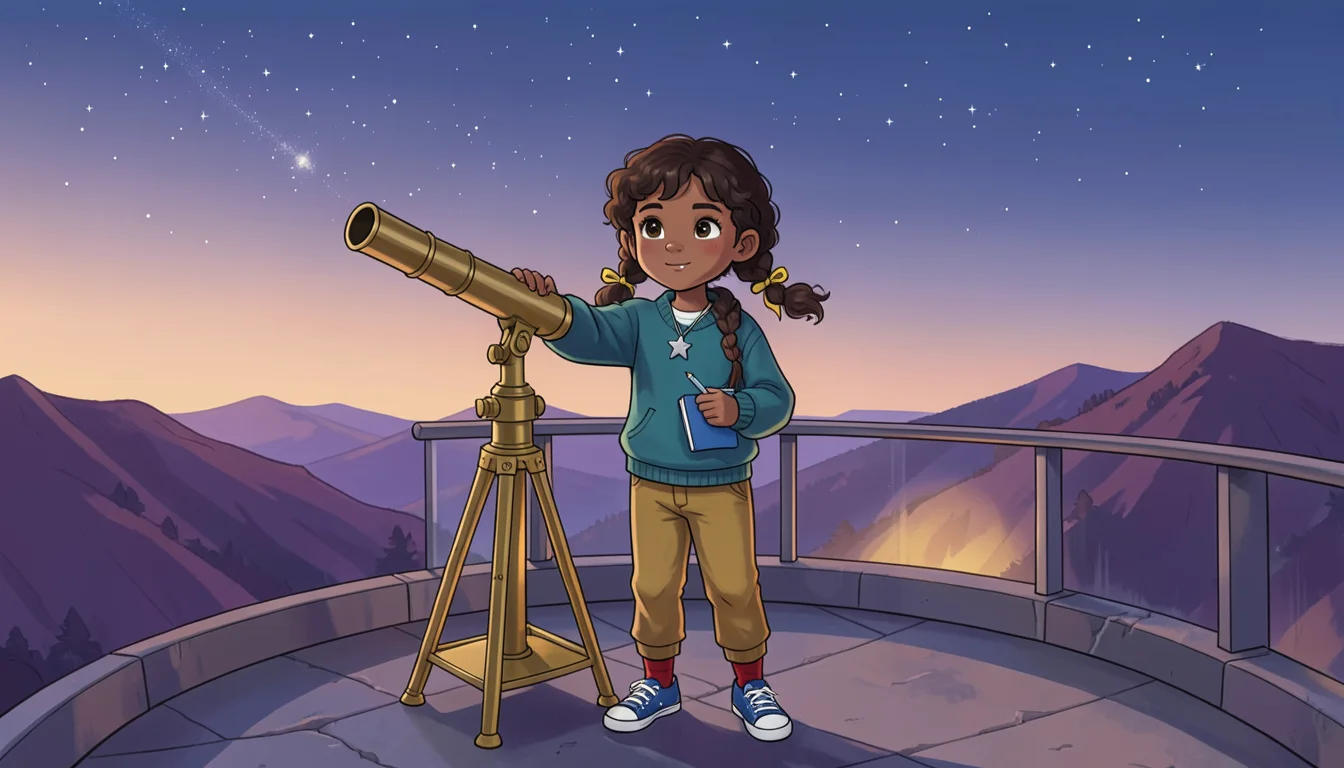
At dusk, Mara adjusted the telescope on the hilltop and waited for the sky to deepen. She had come to answer one stubborn question: Why do some stars explode instead of fading away?
Why Do Some Stars Explode Instead of Fading Away?Very massive stars run out of usable fuel, collapse under gravity, and rebound in supernova explosions that scatter new elements into space.
1. At dusk, Mara adjusted the telescope on the hilltop and waited for the sky to deepen. She had come to answer one stubborn question: Why do some stars explode instead of fading away?
2. Through the telescope, the star looked like a bright coal, red at its edges and gold at its heart. It seemed steady enough to last forever, yet somewhere in space, stars like this one had ended in enormous bursts.
3. Mara began with the star's first fuel: hydrogen. A star is not a ball of fire burning in ordinary air. Its gravity squeezes the center, where hydrogen nuclei join together and release energy.
4. That energy pushes outward while gravity pulls inward, and the star holds its shape. In a very massive star, the center can fuse helium and then heavier elements in layers, like an onion made of glowing shells.
5. The star kept making energy, but each new fuel lasted less time. Hydrogen could burn for ages, while the later fuels disappeared more quickly, deep inside the star's growing furnace.
6. At last, the center built iron. Fusing iron did not provide the outward energy needed to hold the star up, so the supply of usable fuel had reached its limit.
7. With no usable fuel left at its center, the core could no longer push back against gravity. In less than a heartbeat, gravity won, and the core collapsed inward, squeezing matter to extraordinary density.
8. Then the crushed core halted and rebounded. A shock wave punched outward through the star, and the star's outer layers burst into space in a supernova explosion.
9. The flash was not a star quietly going dark. In the explosion's fierce heat, some new elements were forged, and the expanding cloud carried them far beyond the star.
10. Mara pictured those elements drifting through space until they became part of new stars, rocky worlds, and everything those worlds might one day hold. The ending of one star could become the beginning of something else.
11. Mara lowered the telescope as morning gathered around the hill. Very massive stars run out of usable fuel, collapse under gravity, and rebound in supernova explosions that scatter new elements into space.
Make a story like this →