 Storyclover
Storyclover
Storyclover
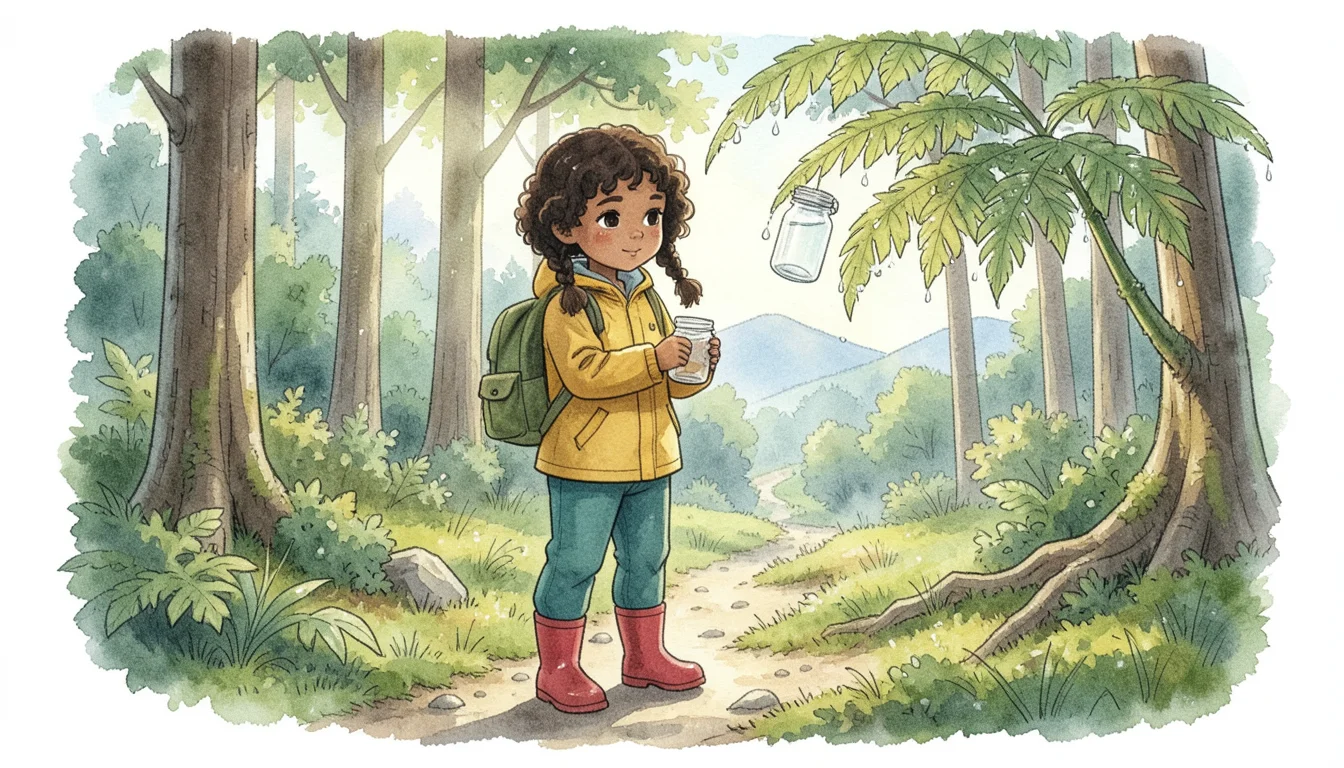
At sunrise, Mara held a jar beneath a fern leaf and waited for one bright drop of water. She had come to the forest with a question: Could trees really help make rain?
Why Can a Forest Make Its Own Rain?Trees release water vapor and tiny particles into the air, helping clouds form and recycle moisture over large forest regions.
1. At sunrise, Mara held a jar beneath a fern leaf and waited for one bright drop of water. She had come to the forest with a question: Could trees really help make rain?
2. The stream slipped between stones, carrying yesterday’s rain downhill. Mara knew some water would return to the clouds, but she wondered how it could climb so high.
3. Her guide, Dr. Imani, explained that a tree drinks through its roots and sends water upward through narrow pathways. At the leaves, some of that water escapes as invisible vapor.
4. Mara looked up. The forest was releasing water vapor from millions of leaves, more than she could ever see one leaf at a time.
5. Then Dr. Imani showed Mara another part of the puzzle. Leaves, soil, and living things release tiny particles into the air—small specks too little to notice, but useful to water vapor.
6. High above the trees, water vapor cooled around those particles. Droplets gathered, joined together, and helped a cloud take shape.
7. The cloud did not belong to one tree. Vapor from many trees had gathered above a living green region, where air, water, and wind kept meeting.
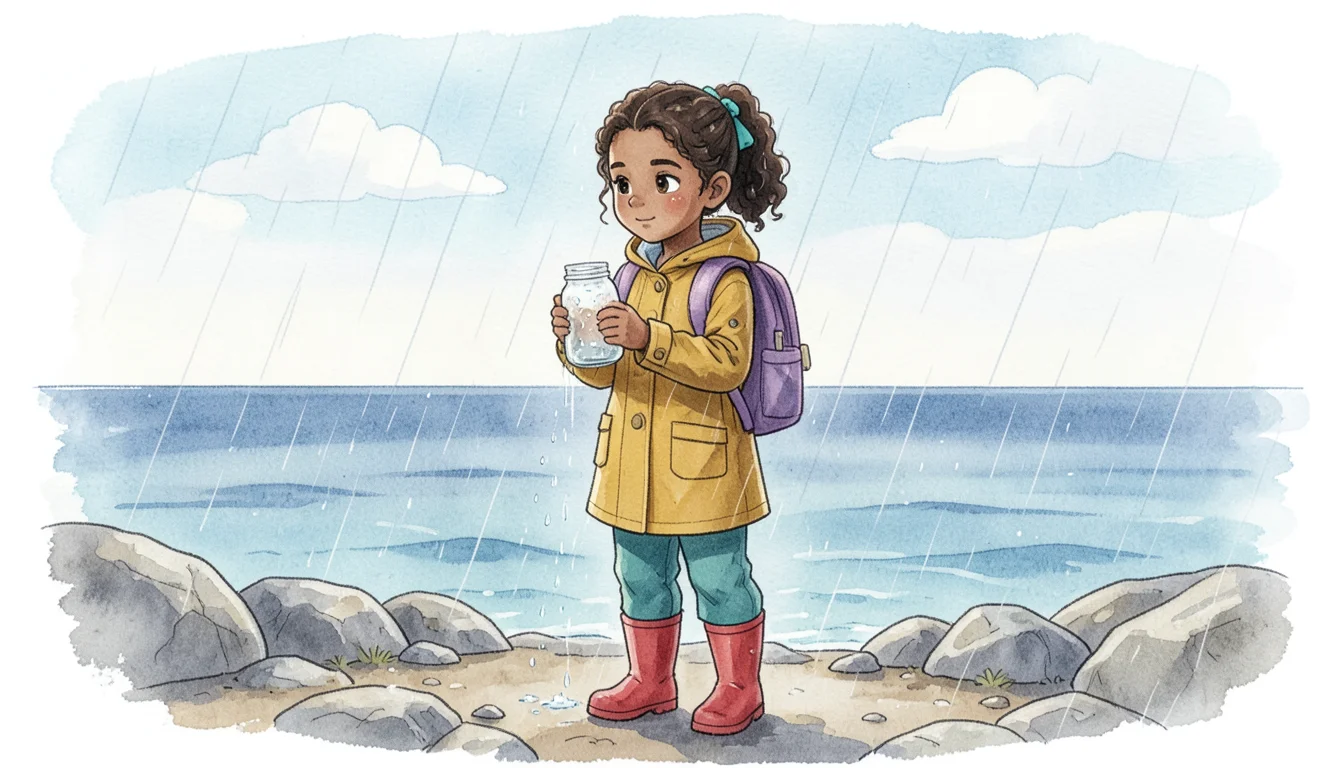
8. By afternoon, rain tapped the leaves and filled Mara’s jar. Some water soaked into the ground, some returned to the stream, and some would rise again.
9. Mara placed three stones beside the jar: one for the rain that fell, one for the water moving through roots and streams, and one for the vapor rising unseen.
10. The forest had not made rain from nothing. Trees released water vapor and tiny particles into the air, helping clouds form and recycle moisture over large forest regions.
Make a story like this →