 Storyclover
Storyclover
Storyclover
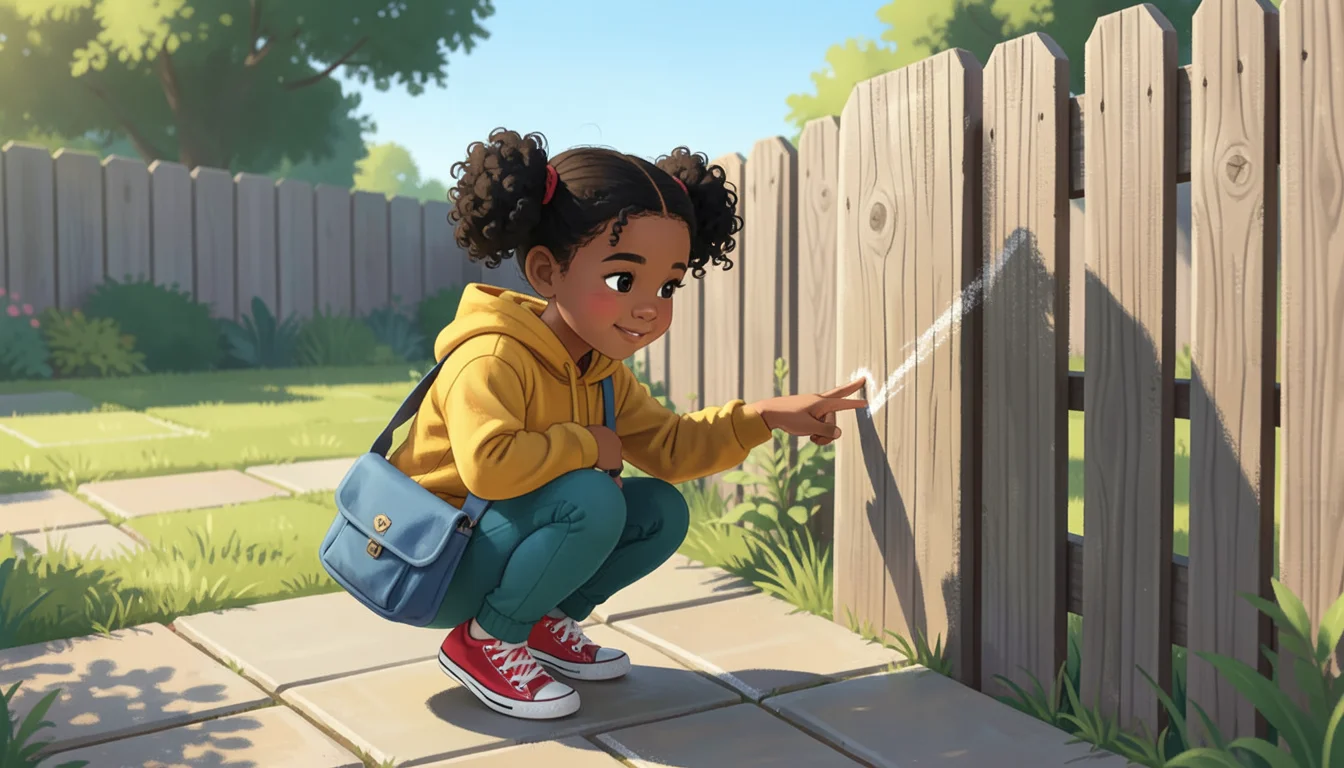
At noon on a clear Saturday, Mara crouched beside the garden fence and traced the edge of a post’s shadow with chalk. The line was so crisp that every pebble seemed to have a place. She wrote one question in her notebook: Why would this edge ever blur?
Why Can a Shadow Be Sharp at Noon and Blurry at Sunset?Shadow edges change with the size and angle of the light source, and low sunlight spreads across objects differently than overhead light.
1. At noon on a clear Saturday, Mara crouched beside the garden fence and traced the edge of a post’s shadow with chalk. The line was so crisp that every pebble seemed to have a place. She wrote one question in her notebook: Why would this edge ever blur?
2. To test the question, she held a square of cardboard above the paving stones. Overhead sunlight made its shadow small and sharply outlined. “If the cardboard stays the same,” Mara said, “the shadow should stay the same.”
3. By sunset, the cardboard was still square, and Mara held it the same careful distance above the stones. Its shadow had stretched across the path, but its edge had turned soft, as though a thumb had smudged it. Mara lowered the cardboard and stared at the blur.
4. She checked the cardboard, the stone, and the distance between them. Nothing had changed except the light. With a ruler laid across the shadow, she found a dim band between the dark center and the bright paving stones. The blur was not a mistake; it had a width.
5. The next afternoon, Mara carried the experiment indoors. A small flashlight made a narrow, neat-edged shadow, while a broad lampshade made a shadow with a gentle gray border. The cardboard had stayed unchanged, but the light source had not.
6. At sunset, she tested the angle instead of changing the cardboard. A tall stick stood in the garden, and its shadow lay low across the paving stones. Near the stick, the dark shape had a fairly clear edge; farther away, its partly lit border spread wider.
7. Mara finally saw what her noon line had hidden. Overhead light dropped close to the stick, so the shadow stayed compact; low sunlight skimmed across the ground, giving the partly lit region a long path in which to spread. She added a second chalk mark at the edge of the soft band.
8. Now Mara could answer her question. A small light source sends rays from nearly one direction, while a broad source sends them from many directions, softening the edge. Shadow edges change with the size and angle of the light source, and low sunlight spreads across objects differently than overhead light. She left the chalk marks on the path, ready to see what tomorrow would draw.
Make a story like this →