 Storyclover
Storyclover
Storyclover
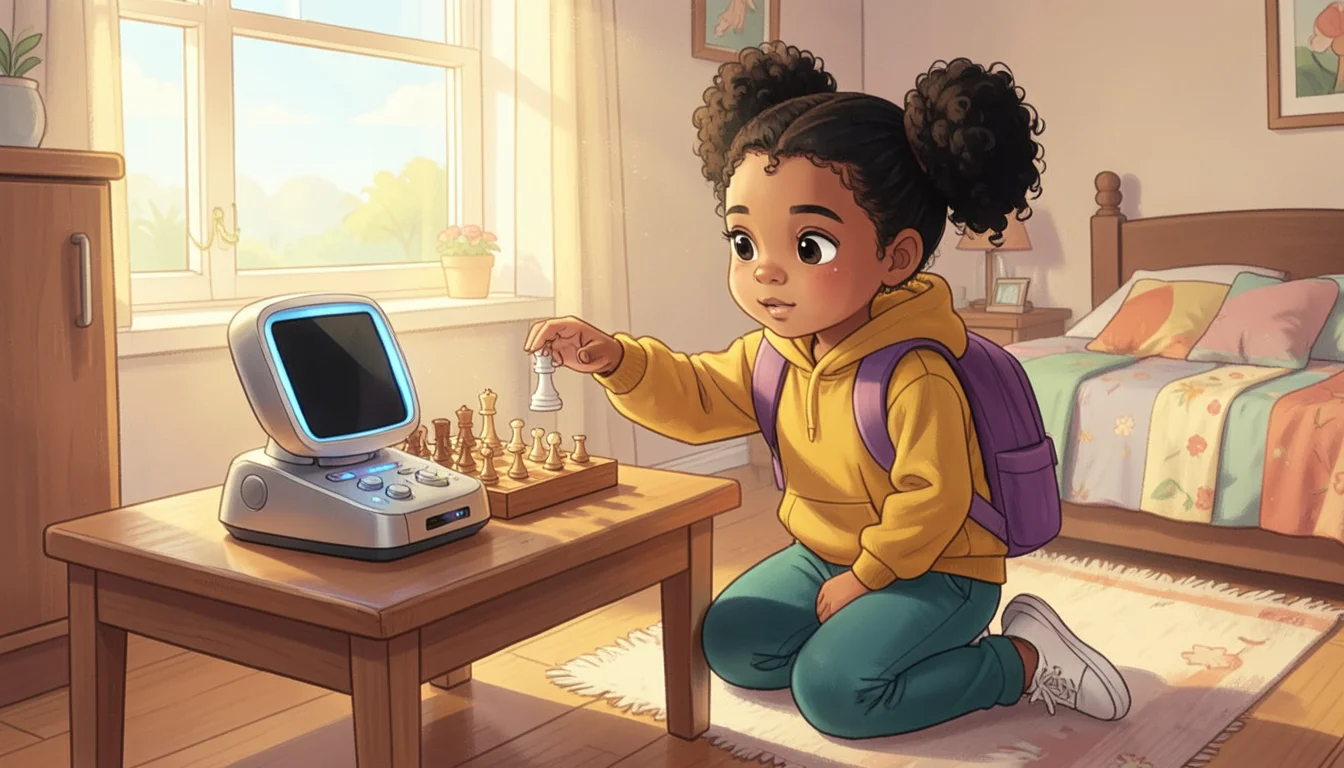
On a bright Saturday morning, Leena set a wooden chessboard beside her computer and tucked a joke into her pocket. She wanted to discover whether a machine that could beat a person at chess could also understand why people laugh.
Why Can a Computer Beat a Human at Chess but Not Understand a Joke?Computers can search patterns and calculate choices extremely fast, but human humor depends on context, emotion, and shared meaning.
1. On a bright Saturday morning, Leena set a wooden chessboard beside her computer and tucked a joke into her pocket. She wanted to discover whether a machine that could beat a person at chess could also understand why people laugh.
2. She had picked a joke that sounded simple: “Why did the bicycle fall over? Because it was two-tired.” It had made sense to her on the day she wobbled home from school, when her own legs felt tired and the pun arrived at exactly the right moment.
3. Before asking for a laugh, Leena gave the machine a harder test. She challenged it to chess, and soon the board was crowded with traps she had not noticed. After twelve quiet minutes, her king had nowhere safe to go. The computer had won.
4. Leena replayed the game in her head. The computer had compared thousands of possible moves while she was still deciding whether to protect one lonely bishop. It had found a path through the choices faster than she could blink.
5. Then Leena pulled out her joke. “Why did the bicycle fall over? Because it was two-tired.” The computer answered, “Bicycles fall when their balance is disturbed. The phrase ‘two-tired’ resembles ‘too tired.’” It had found the pattern without finding the fun.
6. Leena did not give up. After the computer captured her queen, she leaned close and said, “Well, that was a royal pain.” The computer replied, “Pain is a physical sensation. A chess queen has no nerves.” Leena waited for the little laugh she expected. The room stayed quiet.
7. Just then, Arun arrived with cocoa and found Leena staring at the silent machine. She told him about the bicycle joke and the royal pain. Arun laughed at the second one because he had watched that rook corner her queen all morning.
8. Leena pointed at the rook. “There it is, the show-off.” Arun laughed again. The computer answered, “Show-off is a phrase for someone displaying a skill to attract attention.” Leena and Arun looked at each other, then at the rook, which had been sneaking around the board like it owned the place.
9. “What exactly made it funny?” Leena asked. Arun shrugged. “You were annoyed, I knew why, and we both knew that rook had been acting like it owned the board.” Leena laughed again. The sentence was not a formula. It belonged to that particular moment, between them.
10. Leena looked from the silent machine to Arun’s laughing face and finally understood the missing piece. Computers can search patterns and calculate choices extremely fast, but human humor depends on context, emotion, and shared meaning.
Make a story like this →