 Storyclover
Storyclover
Storyclover
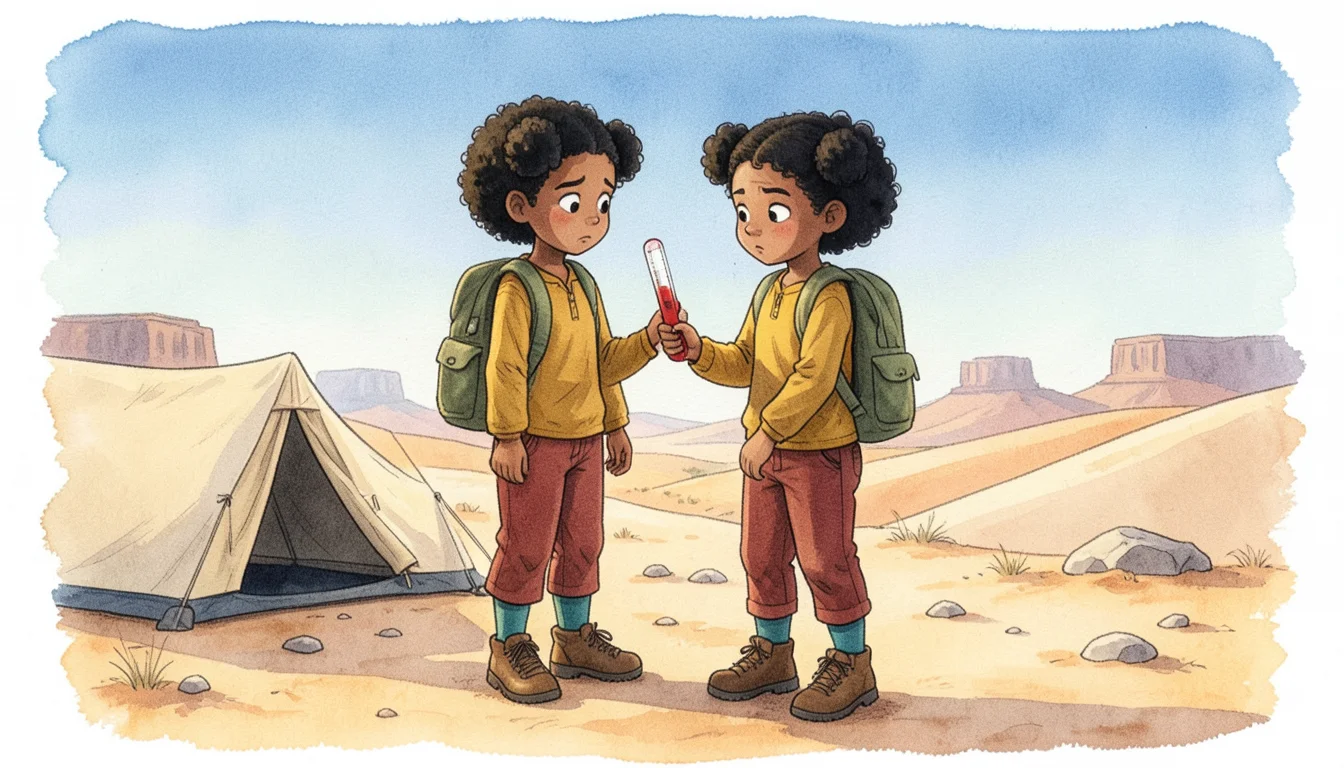
Maya planted the thermometer beside the research tent and waited for the desert sun to sink behind the mesas. At the end of the hot afternoon, the sand still shimmered.
Why Can a Desert Be Freezing at Night?Dry desert air holds little heat, so after sunset the ground loses warmth rapidly into the sky.
1. Maya planted the thermometer beside the research tent and waited for the desert sun to sink behind the mesas. At the end of the hot afternoon, the sand still shimmered.
2. Maya touched the sand with one hand, then checked the thermometer with the other. It was hot enough to make her pull her fingers away.
3. After sunset, Maya wrapped herself in a blanket. The air had turned so cold that she could see her breath, even though the day had felt like an oven.
4. Maya made a test. She left one tray of sand under the open sky and covered another with glass. Then she waited, shivering between the two.
5. At midnight, the uncovered sand was cold. The covered sand was warmer. Maya looked from one tray to the other and drew a careful arrow in her notebook.
6. Maya wondered where the uncovered sand had sent its warmth. Above her, the sky was clear from horizon to horizon, with hardly any clouds to interrupt the view.
7. At sunrise, the sand began warming again. Maya finally understood that the desert had not saved the afternoon heat for the night; it had let much of it escape.
8. Dry desert air holds little heat, so after sunset the ground loses warmth rapidly into the sky. That is how a desert can burn by day and freeze at night.
Make a story like this →