 Storyclover
Storyclover
Storyclover
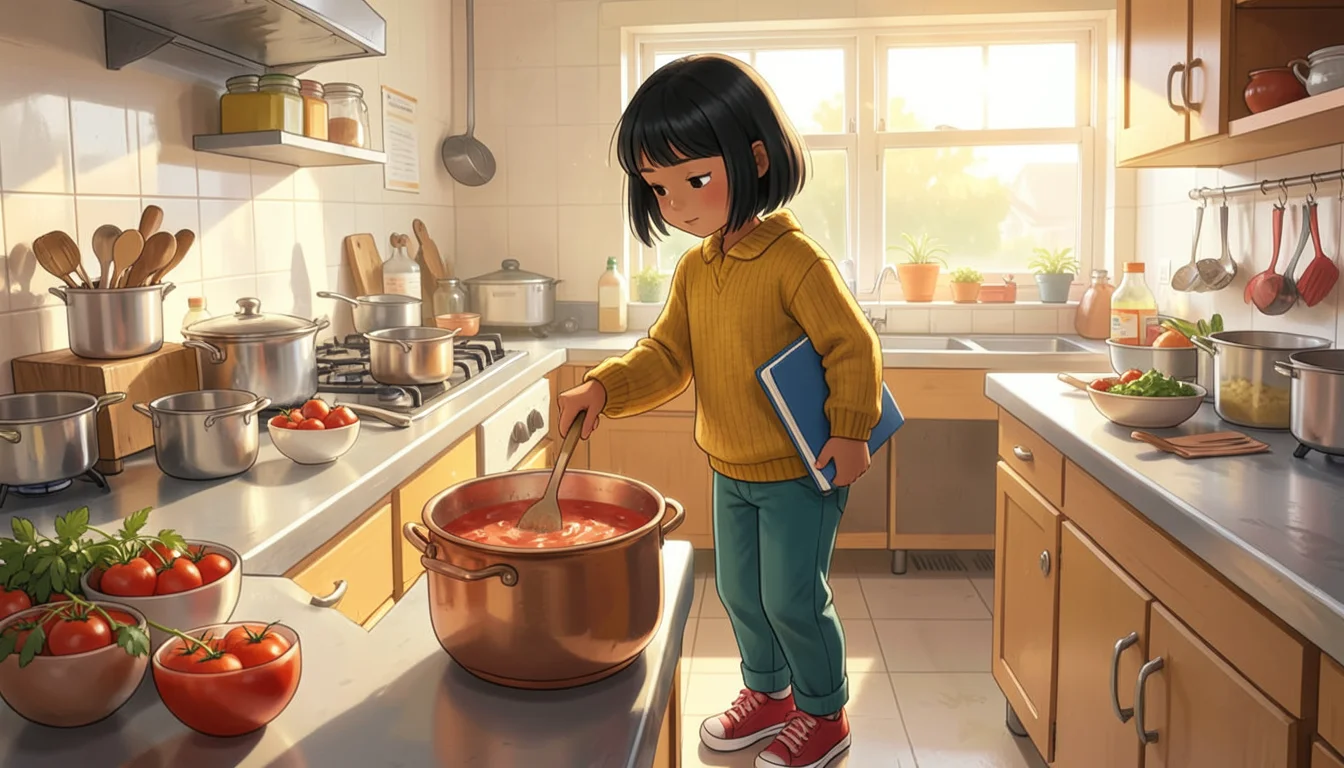
On Thursday afternoon, Maya Chen stirred tomato soup in the community kitchen. Her class had promised a tasting table for Saturday, and she wanted one recipe that everyone would call delicious.
Why Can Two People Taste the Same Food Differently?Taste depends on genes, smell, temperature, memories, and tiny differences in the tongue and brain, so flavor is partly personal.
1. On Thursday afternoon, Maya Chen stirred tomato soup in the community kitchen. Her class had promised a tasting table for Saturday, and she wanted one recipe that everyone would call delicious.
2. Theo took a spoonful and pulled his mouth to one side. “It tastes sharp,” he said. Maya tasted from the same pot. To her, the soup was sweet, smoky, and warm with herbs. They stared at the red surface as if it had hidden an answer.
3. They tried again with identical spoonfuls, taken from the same pot at the same moment. Maya noticed a bright tomato tang; Theo noticed pepper first. They checked the bowls, the spoons, and the recipe. Nothing explained why two honest tongues had told two different stories.
4. Next, they pinched their noses and tasted. The soup seemed flatter to both of them, because smell helps the brain build what we call flavor. When they let go, the herbs returned, but their descriptions still did not match.
5. Then they tested temperature. A warm spoonful seemed fuller, while a cooled spoonful seemed sharper and quieter. Temperature had changed the experience, but it had not made Maya and Theo agree.
6. The next spoonful carried a memory. Theo remembered tomato soup beside his grandmother’s window; Maya remembered eating it after a long, rainy walk home. The same flavor arrived with two different stories attached.
7. Maya read about genes, the instructions cells inherit from parents. Genes can shape taste receptors, while tiny differences in taste buds affect how many signals reach the brain. Then the brain sorts those signals with everything it already knows.
8. Maya closed her notebook. She had been searching for one correct answer, but the experiment had given her something better: a way to ask what each person noticed. They would serve the soup without asking anyone to find the right flavor.
9. On Saturday, they set out the same tomato soup in small cups. Maya offered warm spoonfuls, Theo offered cooled spoonfuls, and they invited tasters to describe their own reactions. No one had to borrow Maya’s words or Theo’s.
10. By sunset, Maya and Theo had filled their notebook with words that did not match—and that was the point. Taste depends on genes, smell, temperature, memories, and tiny differences in the tongue and brain, so flavor is partly personal.
Make a story like this →