 Storyclover
Storyclover
Storyclover
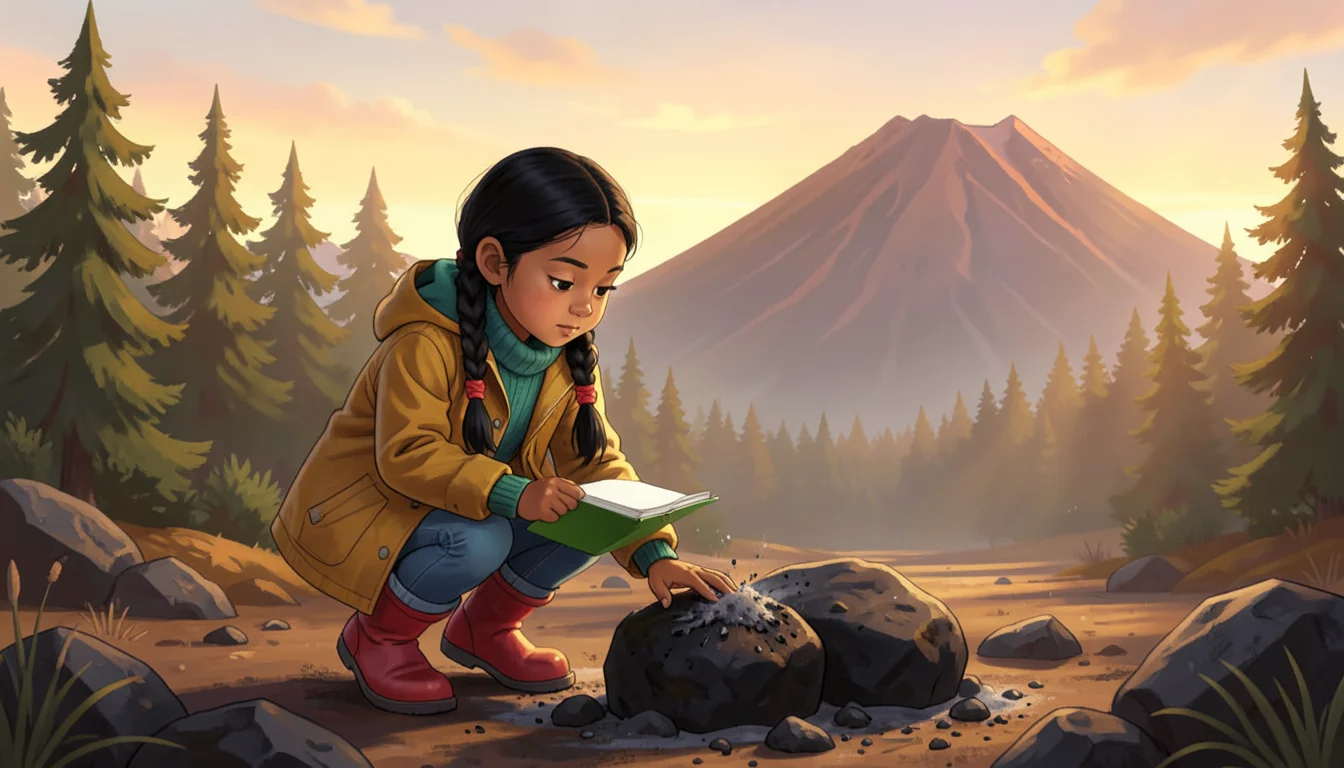
At sunrise, Mara crouched beside a quiet volcano and brushed ash from a black stone. The mountain lifted its broad shoulders above the pine forest, looking unchanged from one morning to the next. Mara opened her notebook and wrote one question: How could a volcano sleep for centuries and wake in days?
Why Can a Volcano Sleep for Centuries and Wake in Days?Magma and gases can build pressure underground for a long time, then move quickly when rock cracks open a path.
1. At sunrise, Mara crouched beside a quiet volcano and brushed ash from a black stone. The mountain lifted its broad shoulders above the pine forest, looking unchanged from one morning to the next. Mara opened her notebook and wrote one question: How could a volcano sleep for centuries and wake in days?
2. At the volcano observatory, Dr. Imani Vale set a small seismometer on a stone table. Mara showed her question. “People call a quiet volcano sleeping,” Dr. Imani said, “but the mountain is not tucked under a blanket.”
3. A volcano is quiet when its magma is not reaching the surface. That quiet may last for years, generations, or even centuries. Under the moss and flowers, the old lava still recorded a time when hot rock had found its way out.
4. Far below their feet, magma waited in pockets and pathways inside the hot Earth. Magma is melted rock, and it can carry gases dissolved within it. The mountain may look calm while heat, rock, and gas are changing out of sight.
5. Mara lifted a piece of pumice, a light stone filled with tiny holes. Dr. Imani explained that those holes began as bubbles of gas. Deep underground, pressure can keep gas squeezed into magma; nearer the surface, the gas can expand and push harder.
6. Over long stretches of time, old pathways can cool and seal with solid rock. New magma may enter from below and add more heat and gas. Pressure can build again beneath a surface that looks completely untroubled.
7. Mara pressed her lips together. If pressure could hide for so long, how would anyone know when the mountain was changing? Dr. Imani showed her that scientists listen for small earthquakes, measure the ground, and watch the gases released from cracks.
8. For several quiet days, the instruments recorded almost nothing. Then, during one spring week, they recorded a cluster of small earthquakes, a gentle swelling of the ground, and more gas near the crater. An eruption was not certain, but the underground system had changed quickly.
9. Dr. Imani showed Mara what could happen inside the mountain. Rock is strong, but pressure can find a weakness and crack it open. Once a path forms, magma can squeeze upward and its gases can expand, turning a long hidden build-up into a rapid change.
10. At sunset, Mara closed her notebook. The mountain still looked quiet, but she no longer confused stillness with emptiness. Magma and gases can build pressure underground for a long time, then move quickly when rock cracks open a path.
Make a story like this →