 Storyclover
Storyclover
Storyclover
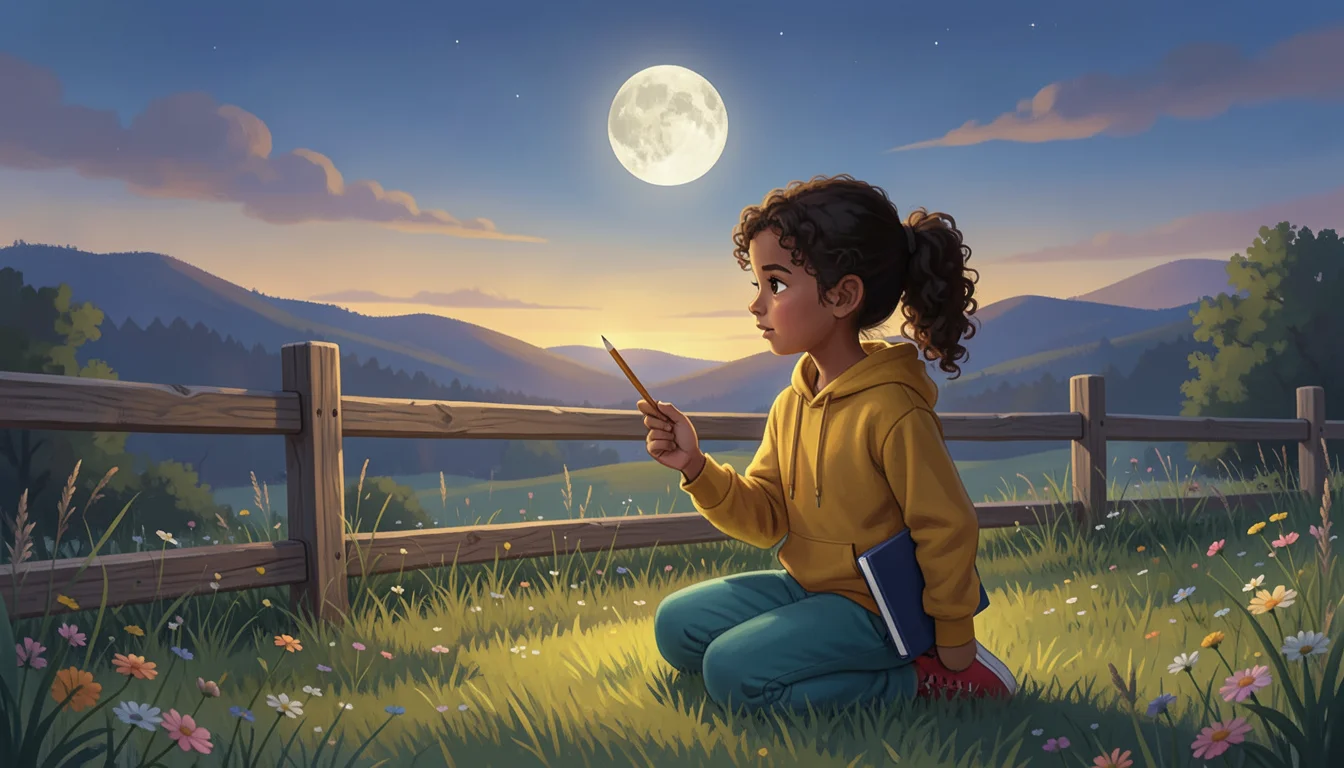
At sunset, Mira knelt in the grass and held her pencil toward the moon. It had just climbed above the hills, yet it looked enormous. “Why does the same moon look huge near the horizon?” she wondered.
Why Does the Same Moon Look Huge Near the Horizon?The moon's size in the sky barely changes, but the brain compares it with nearby landscape cues and can make it seem larger.
1. At sunset, Mira knelt in the grass and held her pencil toward the moon. It had just climbed above the hills, yet it looked enormous. “Why does the same moon look huge near the horizon?” she wondered.
2. The moon seemed wider than the barn and almost as broad as the hill. Mira turned her head from the moon to the trees, then back again. The sky held no ruler, so she needed another way to compare.
3. Mira found a small coin and held it at arm’s length. The coin covered the whole moon, including the moon that looked huge above the hills. She wrote down the result before the thought could slip away.
4. Later, when the moon stood high above the trees, Mira tried the coin again. It covered the moon just as neatly. The moon had changed position, but it had barely changed size.
5. High in the sky, the moon had fewer neighbors. No roof, tree, or hill stood beside it. Without nearby things to compare, it looked smaller and more ordinary.
6. Mira made two paper circles and held one close and one farther away. The nearer circle looked larger, even though both circles were the same size. Her eyes were measuring distance with clues, not with a ruler.
7. Before sunrise, Mira watched the moon sink toward the hills. The landscape gathered beneath it like a frame, and the moon seemed huge again. This time, she knew the frame was helping her brain decide what it saw.
8. Mira lowered the coin and smiled at the familiar hills. The moon’s size in the sky barely changes, but her brain compares it with nearby landscape cues and can make it seem larger. The moon had not grown; the view had.
Make a story like this →