 Storyclover
Storyclover
Storyclover
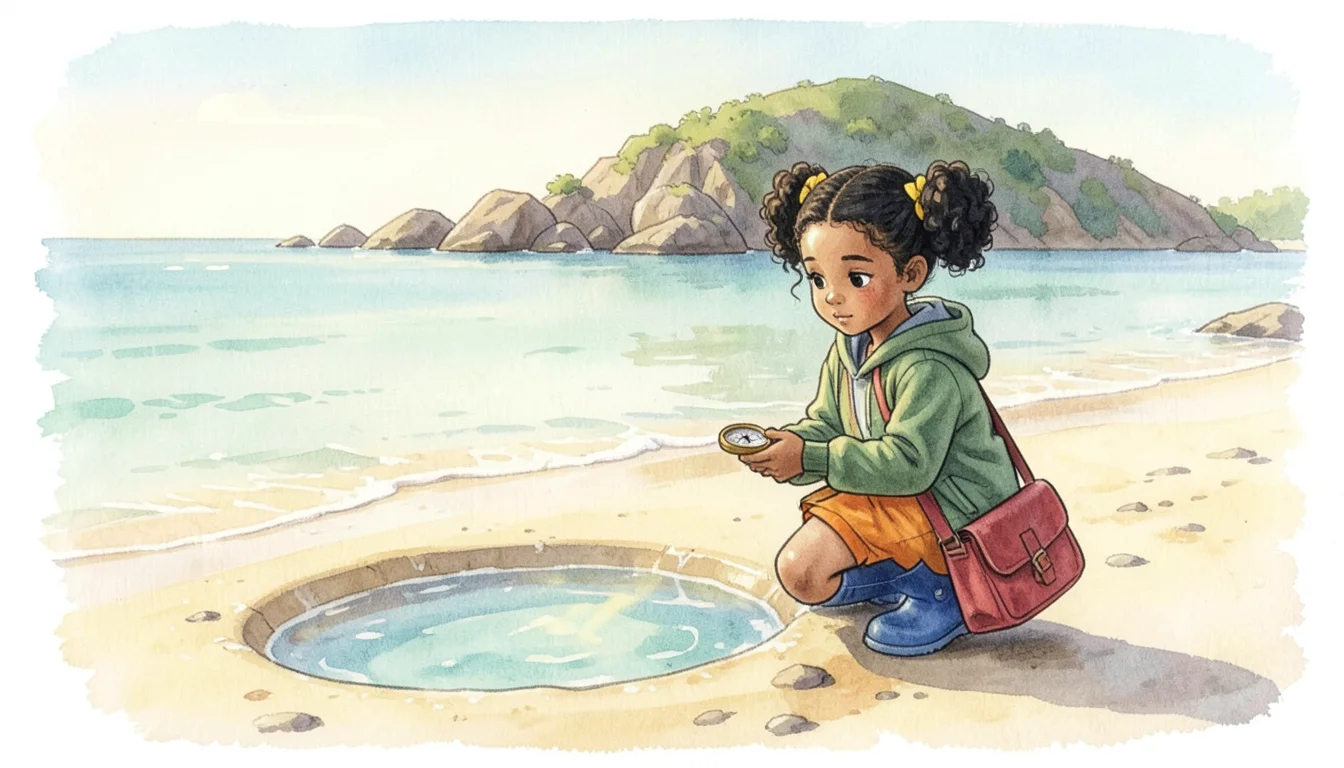
Maya knelt beside a tide pool just after sunrise and watched a rocky island shimmer beyond the reef. She opened her notebook, drew its crooked outline, and wrote the date beneath it.
Why Do Some Islands Appear and Disappear?Volcanoes, coral growth, waves, storms, and rising seas can build land above water or wear it away again.
1. Maya knelt beside a tide pool just after sunrise and watched a rocky island shimmer beyond the reef. She opened her notebook, drew its crooked outline, and wrote the date beneath it.
2. Maya planted a wooden stake at the edge of the water. She wanted to find out whether the island stayed put, or whether the sea was quietly changing it.
3. The next day, Maya went out with Dr. Imani Okafor, a marine geologist. Dr. Imani tapped the boat’s side and said, “An island is not always a finished thing. It can be built, broken, buried, or revealed.”
4. Far below them, a volcano pushed melted rock upward from Earth’s hot interior. The rock cooled into solid stone, layer after layer, until a peak could rise above the waves.
5. Maya touched a warm black rock near the shore. “So the island can begin as a mountain under the sea,” she said. Dr. Imani nodded, but pointed to a pale ring of reef around it.
6. The coral was alive. Tiny animals built hard homes from minerals in seawater, and new coral grew on top of old coral. Slowly, the reef made a bright underwater rim.
7. When pieces of coral and shells broke loose, waves carried them into gaps in the reef. The pieces collected as sand, and the sand became a beach where there had been only water.
8. Rain changed the island too. Water loosened soil from the slopes and carried it downhill, adding dark grains to the shore. Maya circled the stream in her notebook.
9. A storm arrived before Maya could finish measuring. When the clouds cleared, the waves had dragged sand away from one beach and piled it on another. The wooden stake stood alone above the new shore.
10. At the next high tide, water covered the place where Maya had stood. She checked the mark twice. The island had not vanished, but part of its beach had slipped beneath the sea.
11. Dr. Imani showed Maya old coral shelves beneath the water. They had once grown in sunlight, but the sea had risen over them. Maya understood that the island’s shape depended on a balance that could change.
12. Maya arranged three clues on the sand: volcanic stone, living coral, and wave-worn shells. Then she added a fourth clue—the high-water mark—and left space for whatever the sea would show next.
13. That evening, Maya drew the island with a dotted edge instead of a firm line. Volcanoes, coral growth, waves, storms, and rising seas can build land above water or wear it away again.
Make a story like this →