 Storyclover
Storyclover
Storyclover
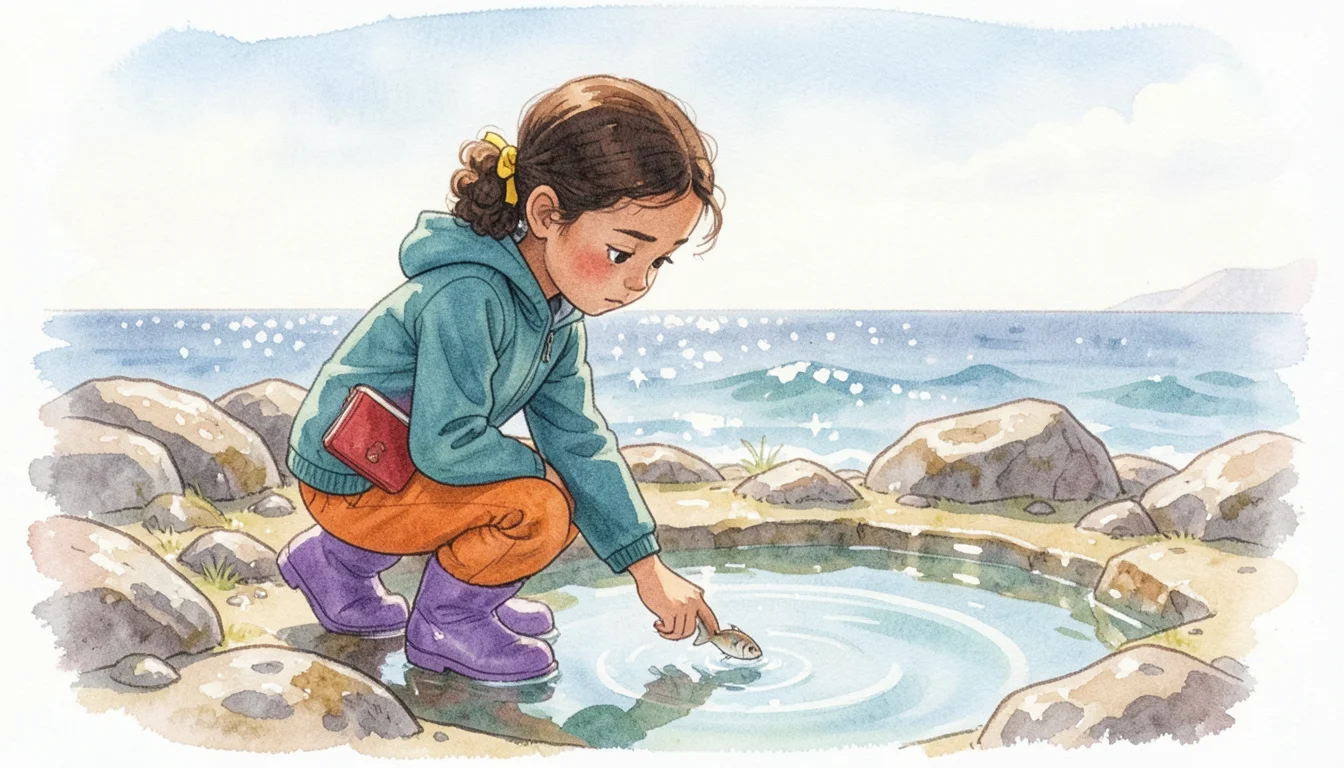
Maya crouched beside a tide pool and watched a fish slip beneath the waving seaweed. She pressed her notebook against her knee and wondered how anything could live at the bottom of the ocean.
Why Do Fish Not Get Crushed at the Bottom of the Sea?Deep-sea animals have bodies and chemistry adapted to intense pressure, often with flexible tissues and few air-filled spaces.
1. Maya crouched beside a tide pool and watched a fish slip beneath the waving seaweed. She pressed her notebook against her knee and wondered how anything could live at the bottom of the ocean.
2. At the harbor, Maya asked Dr. Imani Reyes the question she had carried all morning. “Wouldn’t the water press a deep-sea fish flat?” Dr. Reyes smiled and invited her aboard the research vessel.
3. Dr. Reyes placed a sealed bottle and a soft rubber pouch on the table. “Pressure pushes from every direction,” she said. “It is strongest deep below, but it does not choose one side of a fish and ignore the others.”
4. When Dr. Reyes squeezed the chamber, the pouch folded inward because it held air. The water in the chamber pressed on the pouch, but the water inside it pushed back too. Maya leaned closer.
5. “A fish is not an empty balloon,” Dr. Reyes said. “Most of its body is water and soft tissue. Water does not compress easily, so the pressure can pass through the fish instead of crushing a hollow space.”
6. Far below the waves, a deep-sea snailfish has a soft, flexible body. It has no large air-filled swim bladder, the balloonlike organ many shallow-water fish use to stay at a certain depth.
7. Maya wanted to see the place for herself, so Dr. Reyes took her down in the submersible. The bright surface shrank above them, and the sea gathered its blue layers around the windows.
8. At the bottom, the snailfish hovered above the mud as if the enormous weight of the ocean were nothing unusual. Its body bent gently around the pressure instead of resisting it like a rigid shell.
9. “Deep-sea animals also adjust their chemistry,” Dr. Reyes explained. “Their proteins and cell membranes are built to keep working under pressure. Some have special molecules that help protect those delicate parts.”
10. Maya placed her palm against the glass. She had expected the deep to be a place where creatures merely endured. Instead, the snailfish seemed perfectly fitted to a world that would flatten an air-filled object.
11. “There is one more part of the answer,” said Dr. Reyes. “A deep-sea animal is not simply a shallow-water animal taken downward. Over many generations, its body has been shaped for the pressure, the cold, and the scarce food.”
12. On the way home, Maya drew a fish with no balloon inside it. Beneath the drawing she wrote the answer carefully: Deep-sea animals do not get crushed because their bodies and chemistry are adapted to intense pressure, often with flexible tissues and few air-filled spaces.
Make a story like this →