 Storyclover
Storyclover
Storyclover
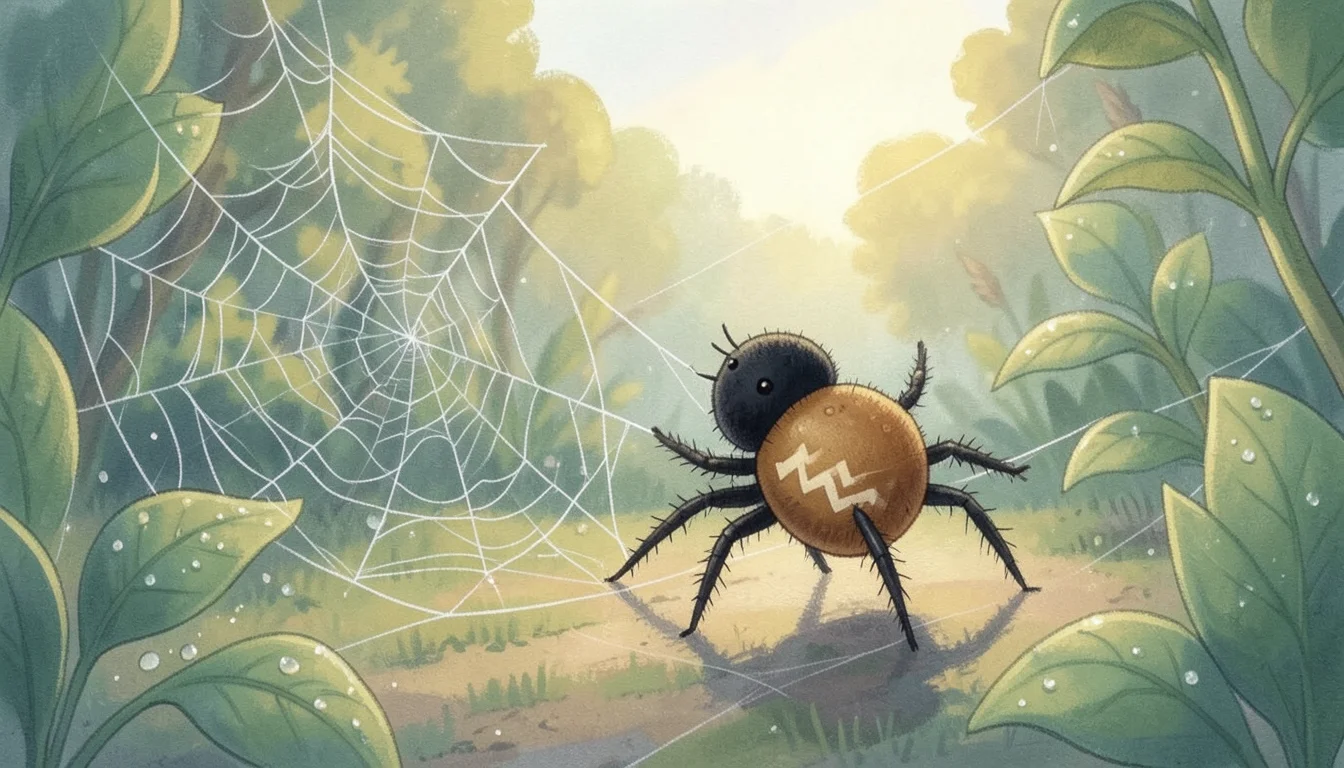
At dawn, Pip the garden spider climbed toward a loose thread at the edge of her web. She wanted to mend the round, shining web before the morning breeze grew strong.
Why Can a Spider Walk on Its Own Sticky Web?Spiders avoid the stickiest threads, step carefully with special feet, and use oily coatings that help keep them from getting trapped.
1. At dawn, Pip the garden spider climbed toward a loose thread at the edge of her web. She wanted to mend the round, shining web before the morning breeze grew strong.
2. The web had two kinds of silk. Straight spokes reached from the center, while looping circles curled around them.
3. The straight spokes were dry. The looping circles held tiny beads of glue, ready to catch a breakfast visitor.
4. Pip needed to reach a loose strand on the far side. The shortest path crossed the gluey loops, so she paused with one foot raised.
5. She chose a straight spoke instead. Pip placed her feet one by one where the silk was dry, resting at each crossing.
6. But the loose strand sagged beyond the last spoke. To mend it, Pip had to touch one sticky loop.
7. Pip's feet were made for this work. Tiny hooked hairs helped her step lightly, and an oily coating on her feet helped the glue let go.
8. She touched the loop, crossed it carefully, and reached the loose strand. Then she pressed the strand into place with one careful leg.
9. By sunrise, the web was round again, sparkling between the leaves. Spiders avoid the stickiest threads, step carefully with special feet, and use oily coatings that help keep them from getting trapped.
Make a story like this →