 Storyclover
Storyclover
Storyclover
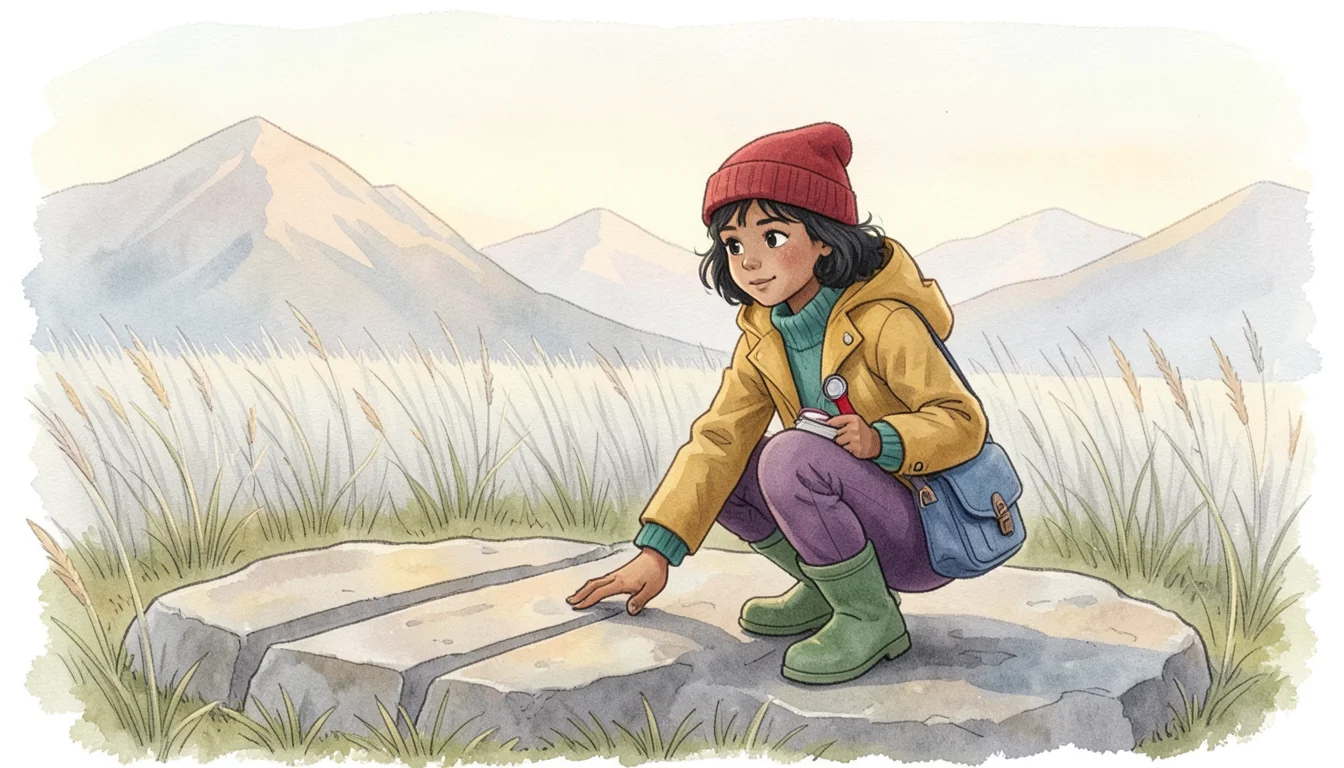
At first light, Mara crouched beside a smooth slab of bedrock in a high meadow. Long, parallel scratches crossed its surface, and she rested her fingers in the grooves. She wanted to know who had written them.
The Glacier That Left Clues Across a ContinentMoving ice scrapes rock, carries boulders, carves valleys, and leaves landforms that reveal where ancient glaciers once advanced and melted.
1. At first light, Mara crouched beside a smooth slab of bedrock in a high meadow. Long, parallel scratches crossed its surface, and she rested her fingers in the grooves. She wanted to know who had written them.
2. Under her hand lens, the grooves looked even sharper. Small stones had been pressed into the rock and dragged in one direction. Something heavy had passed over the meadow, but no road, river, or wagon could have made a mark like that.
3. By noon, Mara found a boulder that did not belong on that hillside. The hill was built of dark limestone, but the boulder was pale granite, sparkling with quartz. She pictured a block of ice carrying it far from its birthplace.
4. At sunset, a low ridge blocked the valley ahead. It held clay, sand, pebbles, and boulders of many sizes, all mixed together. Mara recognized a moraine, a heap left behind when the front of a glacier paused and melted.
5. Farther west, the land flattened into prairie. From one rounded hill, Mara could see long, smooth ridges lined up across the grassland. These drumlins were made of packed sediment, and their shapes pointed the same way as the scratches on the first rock.
6. Weeks later, high mountains rose around Mara. Their valley was broad on the bottom and rounded along the sides, shaped like a giant U instead of a river-cut V. A glacier had filled this valley from wall to wall, grinding its way downhill.
7. Near a northern shore, Mara found round blue ponds scattered through the grass. They filled hollows where buried chunks of glacier ice had melted. Nearby, a winding ridge of sand and gravel marked the tunnel where meltwater once ran beneath the ice.
8. That evening, Mara spread her notes and rock samples across a cabin table. The scratches, the misplaced boulder, the moraine, the drumlins, the U-shaped valley, and the ponds crossed more country than she had imagined. They were not random souvenirs; together, they formed a trail.
9. Then Mara noticed that her first idea was too simple. The clues did not show one straight journey. Some marked the glacier's farthest advance, while others marked pauses as its edge melted back. She had not found a single trail; she had found a record of ice changing its reach.
10. On the last morning, Mara stood above the land with her notebook tucked under one arm. The glacier was gone, but its work remained in every ridge, hollow, boulder, and valley. Moving ice scrapes rock, carries boulders, carves valleys, and leaves landforms that reveal where ancient glaciers once advanced and melted.
Make a story like this →