 Storyclover
Storyclover
Storyclover
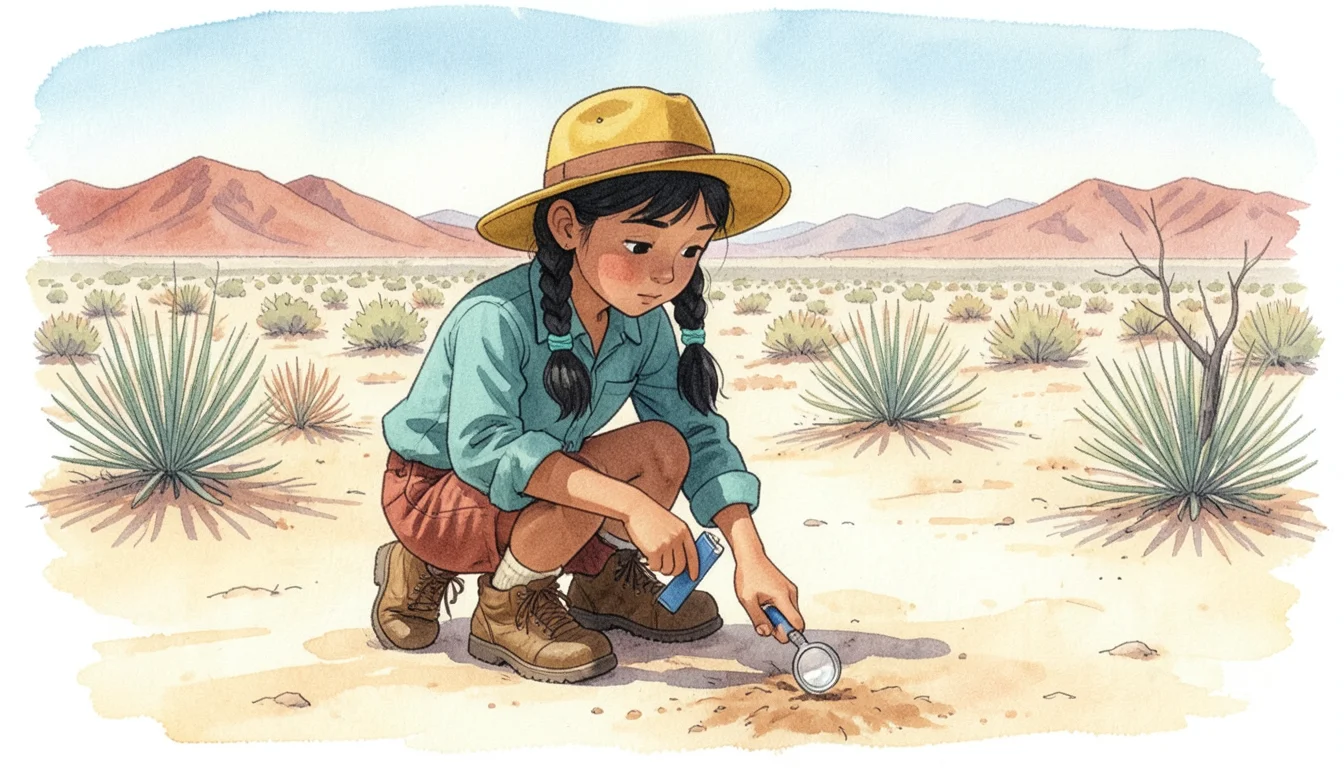
At noon, Lina knelt in a sandy wash and lowered her hand lens toward the ground. The desert seemed to offer only stones, thorny bushes, and a sky too bright to stare at. Lina wanted to find what was hiding there.
Can a Desert Be Full of Life You Cannot See?Desert soil crusts, buried seeds, sleeping animals, and night-active hunters show that dry landscapes can be biologically rich even when they look empty at noon.
1. At noon, Lina knelt in a sandy wash and lowered her hand lens toward the ground. The desert seemed to offer only stones, thorny bushes, and a sky too bright to stare at. Lina wanted to find what was hiding there.
2. She searched under the creosote bush, between the stones, and along the dry grass stems. Nothing crawled out, and no bird called from the cloudless sky. Lina pressed her lips together and searched more carefully.
3. Near her boot, Lina noticed a thin, pebbly skin over the soil. Through the hand lens, it held tiny threads of cyanobacteria, lichen, and moss. The ground was not bare after all; it was wearing a living coat.
4. Beside a dry grass stem, she found a seed pod split open by the heat. A few seeds rested beneath the loose sand, each wrapped in a hard coat. They were waiting, not dead, for rain enough to begin.
5. Then Lina found a narrow burrow under the creosote bush. Inside, a desert kangaroo rat slept through the hottest part of the day, its long hind legs folded close and its seeds tucked nearby. The empty-looking sand had a hidden room.
6. By the hottest hour, even Lina's knees felt heavy. She sat in the boulder's thin shade and watched the quiet wash. If she stayed until sunset, she might see the desert change, so she closed her notebook and waited for the light to soften.
7. At twilight, the sand cooled beneath Lina's boots. A breeze lifted the dry grasses, and the first stars appeared over the hills. She returned to the burrow and held still.
8. When the moon rose, the kangaroo rat appeared with a seed between its paws. It did not need the scorching daylight; its cool burrow and nighttime habits helped it save water. Lina had been waiting for a sign, and the sign had whiskers.
9. Lina heard other lives in the cool air. A pallid bat listened for a moth, while insects stirred among the flowers and grasses. After sunset, the desert was no longer quiet; it was busy in a language made of rustles, clicks, and wings.
10. By the next noon, the desert looked empty again. Desert soil crusts, buried seeds, sleeping animals, and night-active hunters show that dry landscapes can be biologically rich even when they look empty at noon.
Make a story like this →