 Storyclover
Storyclover
Storyclover
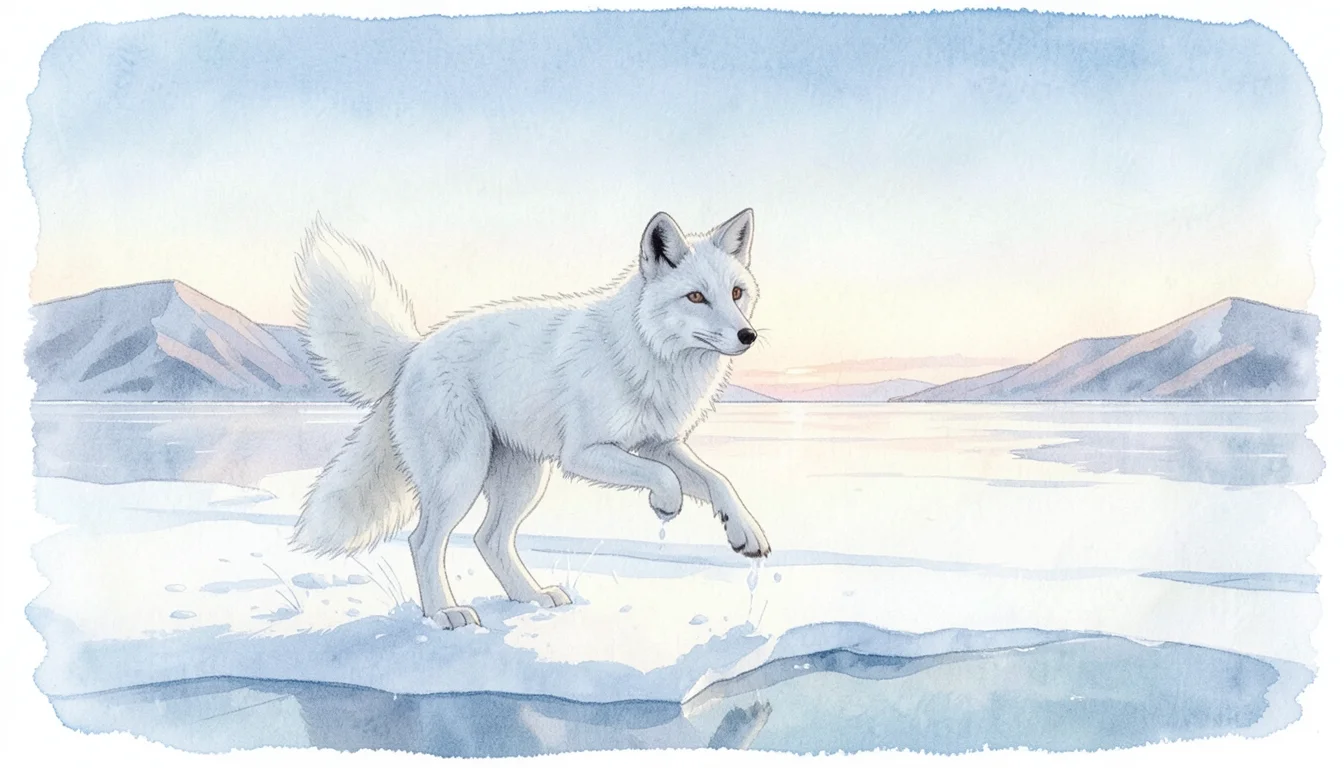
At first light, Juniper tested the sea ice with one careful paw. She was looking for food before the floes drifted too far from shore.
The Arctic Fox Hunting on Ice That Keeps MovingArctic predators depend on shifting sea ice, snow cover, prey cycles, and scavenging chances, making survival a constant adjustment to a changing landscape.
1. At first light, Juniper tested the sea ice with one careful paw. She was looking for food before the floes drifted too far from shore.
2. The snow had covered yesterday's trails. Juniper pushed her nose into the drift, but the buried lemming tunnels were silent.
3. By afternoon, the ice had opened a narrow lane of water. Juniper waited until the floe nudged against another, then stepped across the joined edges.
4. Fresh snow had hidden the old ice, but not every sign of life. Juniper found small tracks near the breathing holes and waited with her chin almost touching the ground.
5. The tracks ended at an empty hole. Juniper found only feathers and fish scales, leftovers from a meal that another hunter had reached first.
6. At the shore, the tide had left a clean whale rib among the seaweed. Juniper found no meat, yet the smell told her that scavenging chances could appear where the ice met the sea.
7. The moving floe had lifted a shallow pool above the tide. A small cod flashed there, and Juniper pinned it with one paw before the next shift could carry it away.
8. Juniper ate beside the changing shore and rested only a little while. Around her, snow cover, shifting ice, prey cycles, and scavenging chances kept rewriting the route ahead. For an Arctic predator, survival meant adjusting to the landscape again and again.
Make a story like this →