 Storyclover
Storyclover
Storyclover
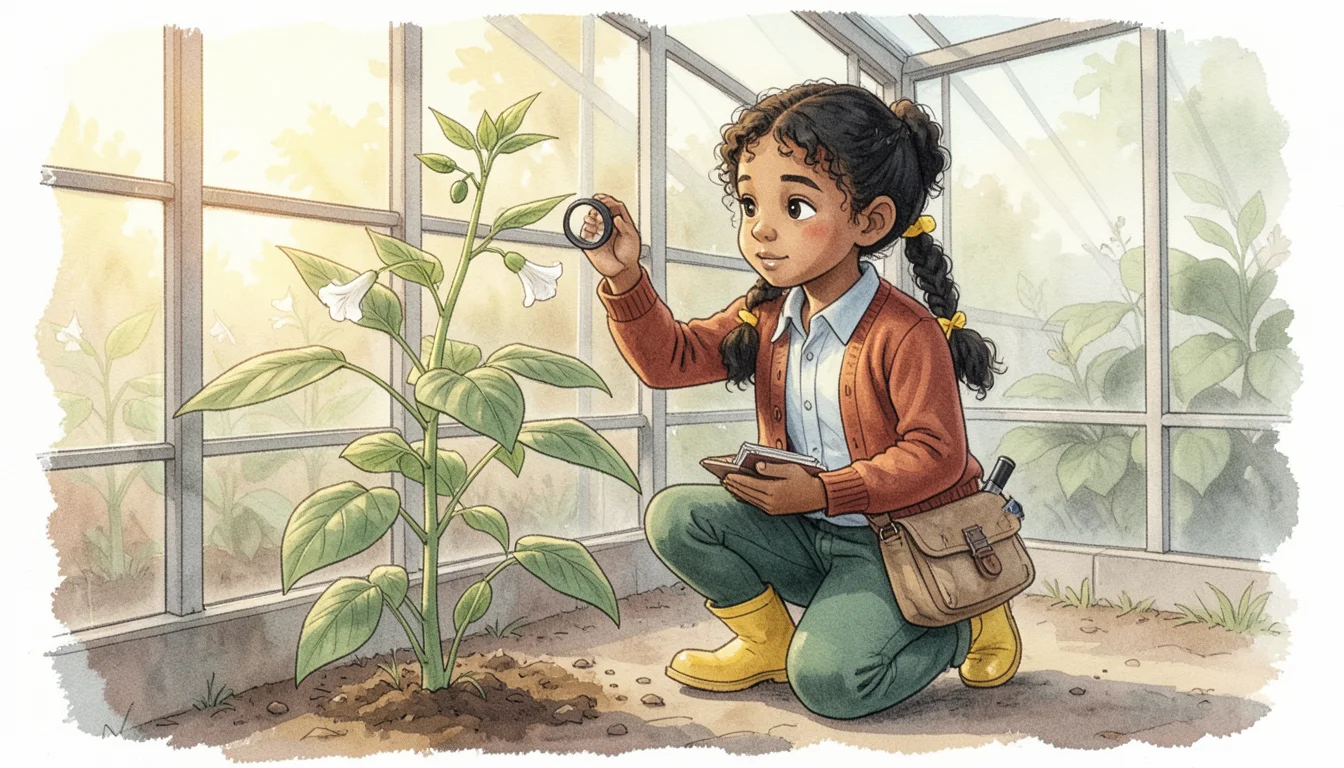
At sunrise, Mina knelt in the glasshouse garden and studied a neat crescent missing from one leaf. She lifted her hand lens. “Why would a plant spend energy making poison?”
Why Would a Plant Spend Energy Making Poison?Plants make toxins, bitter chemicals, thorns, and warning signals because defense can protect leaves and seeds, even though it costs resources that could have gone into growth.
1. At sunrise, Mina knelt in the glasshouse garden and studied a neat crescent missing from one leaf. She lifted her hand lens. “Why would a plant spend energy making poison?”
2. Dr. Sen crouched beside her. “Because staying alive matters,” she said. “But defense is not free. The plant must use water, minerals, and sugars to make chemicals instead of using all of them to grow.”
3. Dr. Sen placed a fallen leaf on her palm. “A plant has one small budget,” she said. “Its sugars can become a new leaf, a flower, a seed, or a defensive chemical. Choosing one leaves less for another.”
4. By late morning, Mina found the leaf’s visitor: a green caterpillar with its mouth at the ragged edge. As it chewed, the plant filled its leaves with nicotine. The chemical made the meal difficult for many insects, although this caterpillar was built to cope with it.
5. The answer grew in other shapes, too. A blackberry cane spends material on hooked thorns. The thorns cannot stop every hungry mouth, but they can protect leaves and berries long enough for seeds to mature.
6. Some plants make bitter chemicals instead. Milkweed keeps sticky, bitter latex in its leaves. A monarch caterpillar can eat the milkweed and store some of those chemicals in its body, making itself a less tempting meal later.
7. The bitten tobacco plant had another defense. It released a faint blend of chemicals into the air. Nearby plants could sense the warning and prepare their own defenses before an insect arrived.
8. The cost became clearer when Mina examined the plant’s newest leaf. While resources went into poison and warning signals, fewer resources were available for fresh growth. Defense could save a leaf, but it could also slow the making of the next one.
9. A week later, the bitten leaf still held its shape, and the flowers still opened above the forming seed capsules. New growth had arrived more slowly, but enough of the plant had remained to keep its future alive.
10. Mina understood at last that the plant was not choosing between growth and defense once and forever. It was spending what it had to protect what might grow next. Plants make toxins, bitter chemicals, thorns, and warning signals because defense can protect leaves and seeds, even though it costs resources that could have gone into growth.
Make a story like this →