 Storyclover
Storyclover
Storyclover
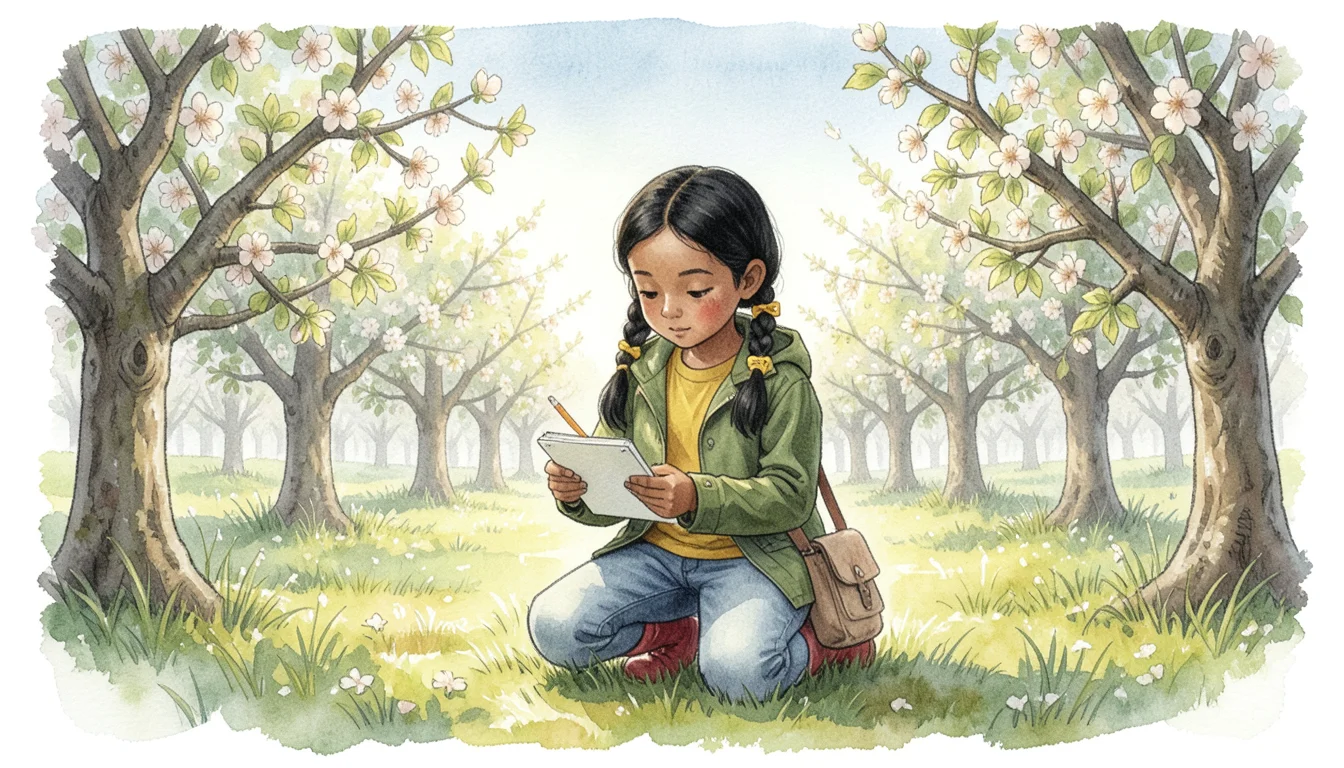
At first light in late spring, Mara moved between the apple trees with a notebook open in one hand, counting blossoms and waiting for the orchard’s usual bumblebee hum. She wanted to know whether there would be enough apples for her grandfather’s autumn market.
How Can One Missing Insect Change a Whole Orchard?Pollinators connect wild habitats, crops, weather, and food webs, so a decline in one group can affect fruit, seeds, birds, and farmers far beyond the flowers.
1. At first light in late spring, Mara moved between the apple trees with a notebook open in one hand, counting blossoms and waiting for the orchard’s usual bumblebee hum. She wanted to know whether there would be enough apples for her grandfather’s autumn market.
2. The blossoms were bright against the wet branches, but the air held no striped bodies. Cold rain had covered the orchard for three mornings, and not one bumblebee had visited the flowers. Usually, a bumblebee lands on one flower, gathers pollen, and carries some to the next.
3. Grandfather Eli showed Mara the flower’s golden dust and the small place where pollen must land. Without that exchange, many blossoms would shrivel without becoming apples. Mara looked down the long rows of trees, where thousands of flowers waited.
4. They checked the rain gauge and the edges of the orchard. The spring had been colder and wetter than usual, while the meadow beyond the fence had been mowed before its willow and clover could flower. Bumblebee queens often begin in sheltered grass and feed on early wildflowers before apple trees bloom. The orchard had lost more than a visitor; it had lost a place to begin.
5. Mara carried a small soft brush from tree to tree, touching pollen from open flowers to other blossoms. It worked for a few clusters, but the orchard stretched farther than her arms, and the blossoms were already beginning to fall. By sunset, the brush was yellow and Mara’s satchel was full of unanswered questions.
6. Grandfather Eli measured the problem in silence before he spoke. A bumblebee can work in cool air that keeps many other insects sheltered, and a colony can visit more blossoms in a morning than a person can reach in a week. Mara set down her brush beside the tree. The orchard needed the meadow, and the meadow needed time.
7. That evening, Mara and Eli left a wide ribbon of meadow wild. They planted clover, protected a patch of leaf litter, and set a shallow dish of stones and water where insects could drink safely. It would not bring the lost fruit back that spring, but it could give the next bumblebee queen somewhere to begin.
8. The following April, after a week of rain, the first warm spell arrived. Mara found a bumblebee queen resting among the willow catkins at the meadow’s edge. She was not in the orchard yet. She was feeding, gathering strength, and beginning the work that would connect the meadow to the trees.
9. A few days later, several bumblebees worked the apple bloom. Mara watched one press against the anthers and then settle on another blossom. The branches could now begin the quiet work of making apples, but the result would not be known until summer.
10. By midsummer, the blossoms that had received pollen had swelled into small apples full of seeds, while untouched clusters held only fading stems. Goldfinches tugged at clover seeds in the meadow, and other birds searched the hedge for tiny insects. Eli loaded fewer crates than he had hoped, but he still had a crop to take to market.
11. At the end of harvest, Mara drew a line in her notebook from meadow to orchard, from blossoms to apples, and from clover seeds to goldfinch beaks. She had started by looking for a missing bumblebee in one orchard. Now she understood the larger pattern: Pollinators connect wild habitats, crops, weather, and food webs, so a decline in one group can affect fruit, seeds, birds, and farmers far beyond the flowers.
Make a story like this →