 Storyclover
Storyclover
Storyclover
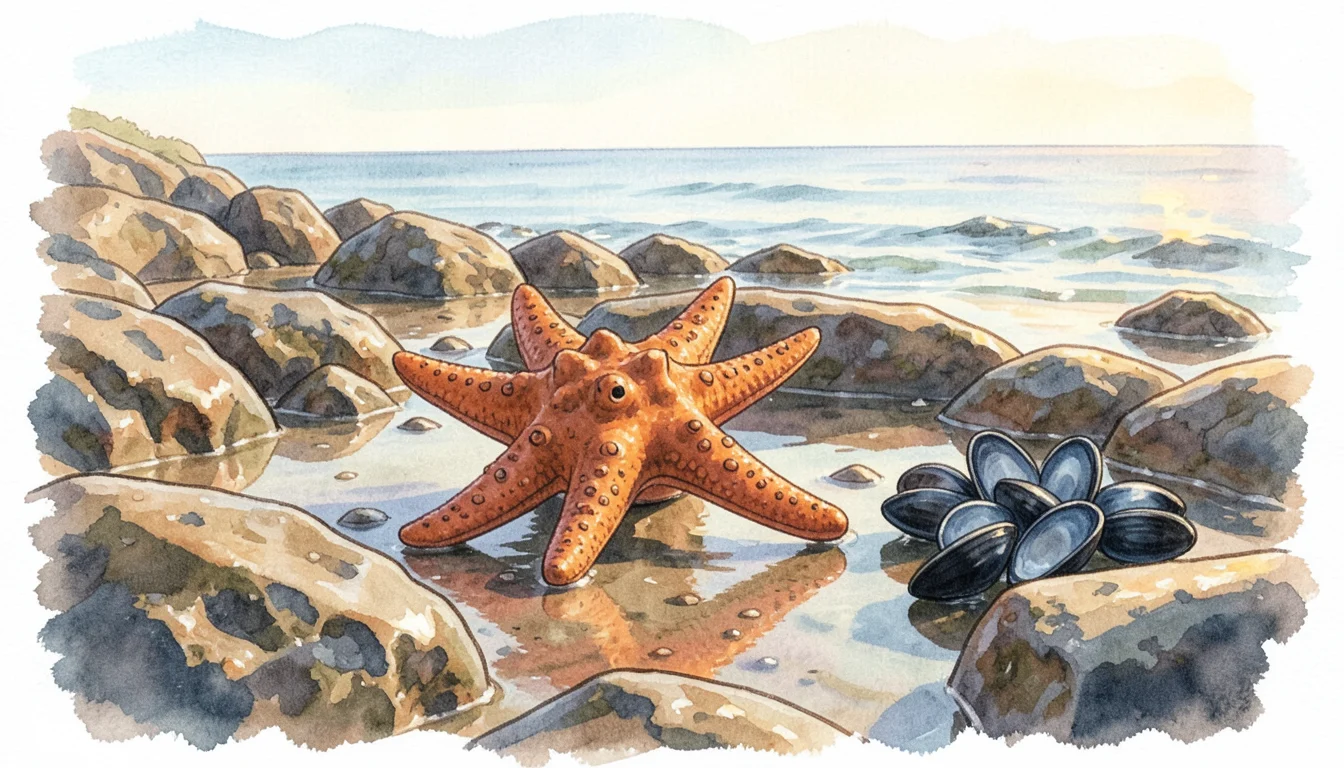
At late afternoon low tide, Rook pressed five arms against the floor of a shallow tide pool. A cluster of blue-black mussels waited beside the pool, and Rook had chosen one for dinner.
The Tide Pool Predator Waiting for the Water to ReturnTide pool animals survive fast changes in temperature, oxygen, salt, and predators by hiding, sealing in moisture, or feeding when the tide returns.
1. At late afternoon low tide, Rook pressed five arms against the floor of a shallow tide pool. A cluster of blue-black mussels waited beside the pool, and Rook had chosen one for dinner.
2. The sea slipped away from the rocks, leaving only a narrow ribbon of water. The mussel clamped its shell shut, while Rook's reaching arm rested on dry stone.
3. The exposed rock grew hotter, saltier, and drier. Rook tucked beneath a ledge and held a thin film of seawater against its skin.
4. As the hours passed, less oxygen dissolved in the shallow water. Rook stayed hidden, because open rock could expose a tide-pool animal to heat, thirst, and searching predators.
5. Then a cool line of seawater touched one of Rook's arms. Rook did not hurry; it waited until the returning tide covered the rock well enough to feed.
6. Water covered the ledge and carried fresh oxygen into the cracks. Rook loosened its arms, left its hiding place, and reached toward the mussels.
7. With seawater supporting its body, Rook pressed hundreds of tiny tube feet against the shell. The mussel held fast, but Rook had the time and the tide on its side.
8. The shell opened a narrow seam, and Rook settled over it for a slow meal. Tide pool animals survive fast changes in temperature, oxygen, salt, and predators by hiding, sealing in moisture, or feeding when the tide returns.
Make a story like this →