 Storyclover
Storyclover
Storyclover
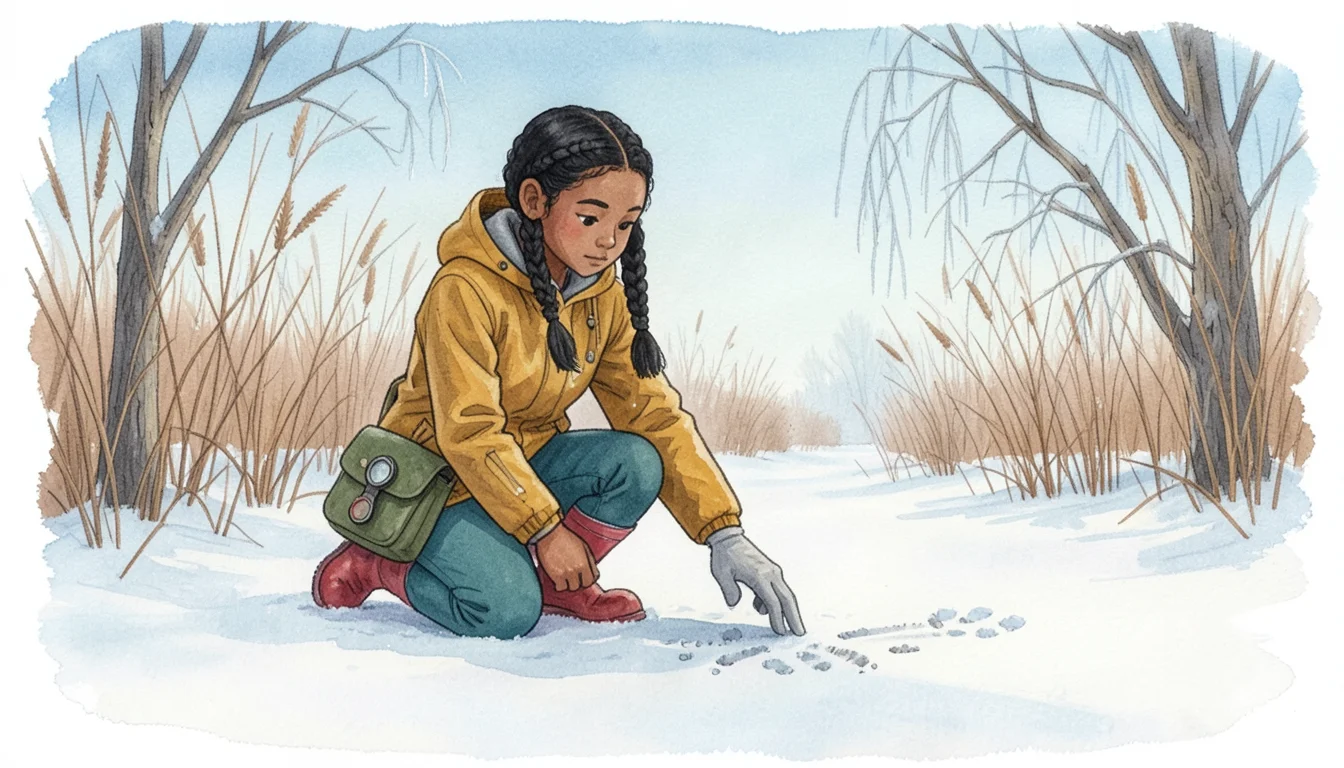
At first light, Mina knelt beside a track at the edge of Alder Marsh. Fresh snow filled the print, but its long toes and wide heel made it look as if a fox had stepped there.
The Animal Track That Lied About Who Passed ByField scientists must read tracks carefully because mud, snow, wind, overlapping footprints, and animal movement can make evidence misleading without context.
1. At first light, Mina knelt beside a track at the edge of Alder Marsh. Fresh snow filled the print, but its long toes and wide heel made it look as if a fox had stepped there.
2. Mina wanted to name the animal before Dr. Imani Vale began the winter survey. Dr. Vale crouched beside her and said, "A track is a question, not an answer."
3. They followed the trail toward the creek. The prints grew smaller, then farther apart, and then one stretched into a long smear before the next clear shape appeared.
4. At the creek, the snow thinned into mud. The heel had spread, the toes had blurred, and the print now looked wide enough for a much larger animal.
5. A sharp wind laid powder over the edges. Near the willows, several footprints crossed and landed on top of one another, turning many small clues into one enormous-looking shape.
6. Mina nearly wrote down a fox, but Dr. Vale pointed to the nearby willow. Its twigs were clipped cleanly, and a few white hairs clung to the bark. The ground held more evidence than the single track.
7. Then a snowshoe hare settled beside the willow, so quietly that Mina noticed its white coat before she noticed its ears. Mina looked from the hare to the strange track and back again.
8. The pieces fitted together. The hare had bounded, paused, and changed its gait; its hind feet landed ahead of its front feet, while mud widened the marks and overlapping prints hid their pattern. Mina crossed out her first answer, not because the track was useless, but because it was only one clue.
9. By late afternoon, Mina understood why field scientists read tracks carefully. Mud, snow, wind, overlapping footprints, and an animal's changing movement can make evidence misleading without the context around it.
Make a story like this →