 Storyclover
Storyclover
Storyclover
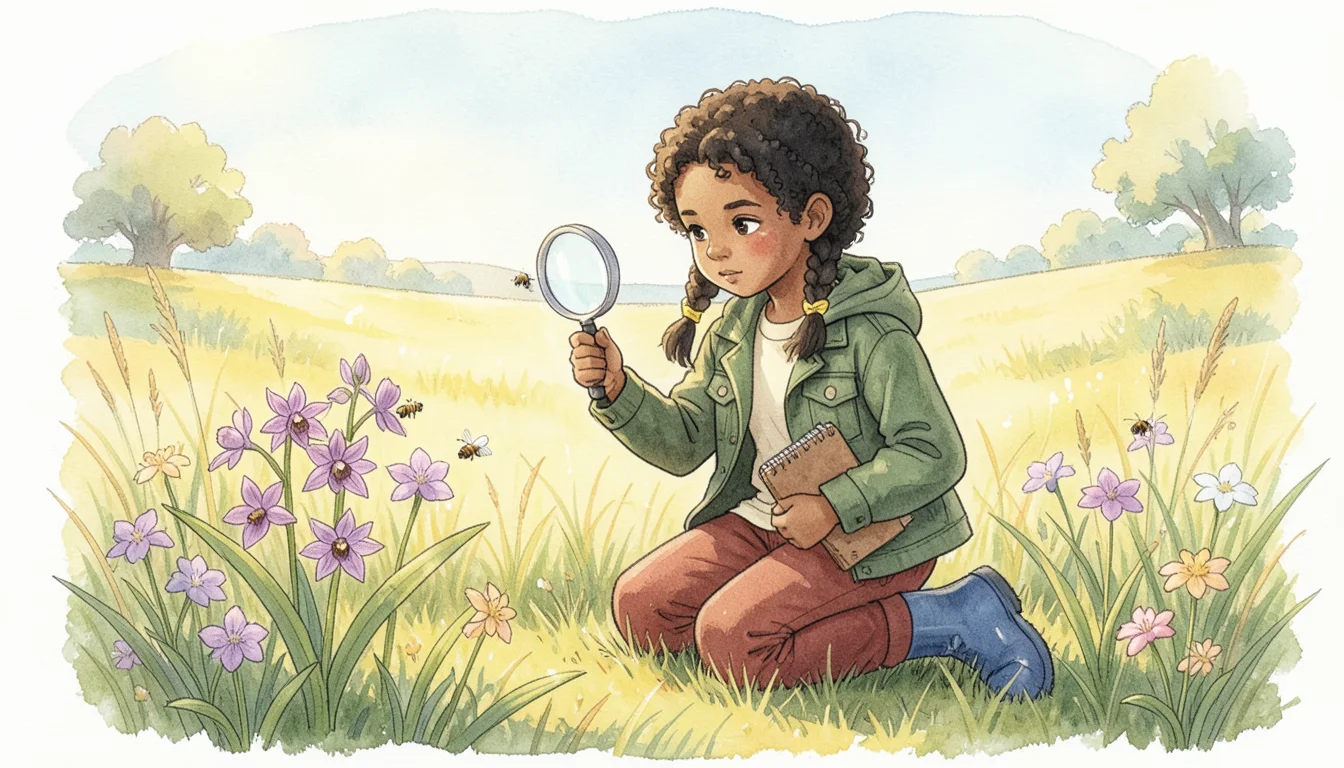
Mira knelt in the meadow and lifted her magnifying glass toward a purple bee orchid. Bees hummed around the flowers, but this blossom seemed to be waiting for something.
Why Do Some Flowers Trick Insects Instead of Feeding Them?Some plants lure pollinators with shapes, smells, or false promises, gaining pollen transfer without always giving nectar in return.
1. Mira knelt in the meadow and lifted her magnifying glass toward a purple bee orchid. Bees hummed around the flowers, but this blossom seemed to be waiting for something.
2. The orchid wore a bee-shaped patch on its petals. It had no wings or legs, yet from a little distance it looked ready to buzz away.
3. A fuzzy male bee landed on the flower. He pressed against the bee-shaped patch, searching for a visitor that was not there.
4. When the bee gave up, two pale pollen packets clung to his back. Mira drew what she saw, then frowned at the empty flower.
5. Mira searched the meadow for a fairer bargain. A crimson flower offered bright landing marks, but the butterfly found no sweet drop waiting inside.
6. At dusk, a pale orchid released a powerful perfume. A hawkmoth followed the scent, reached deep into the flower, and left with pollen instead of nectar.
7. Shapes had called one insect. Colors had called another. Smell had called a third. The flowers were not giving the same promise, but each visitor carried away the thing the plants needed.
8. By morning, Mira understood the trick. Some plants lure pollinators with shapes, smells, or false promises, gaining pollen transfer without always giving nectar in return.
Make a story like this →