 Storyclover
Storyclover
Storyclover
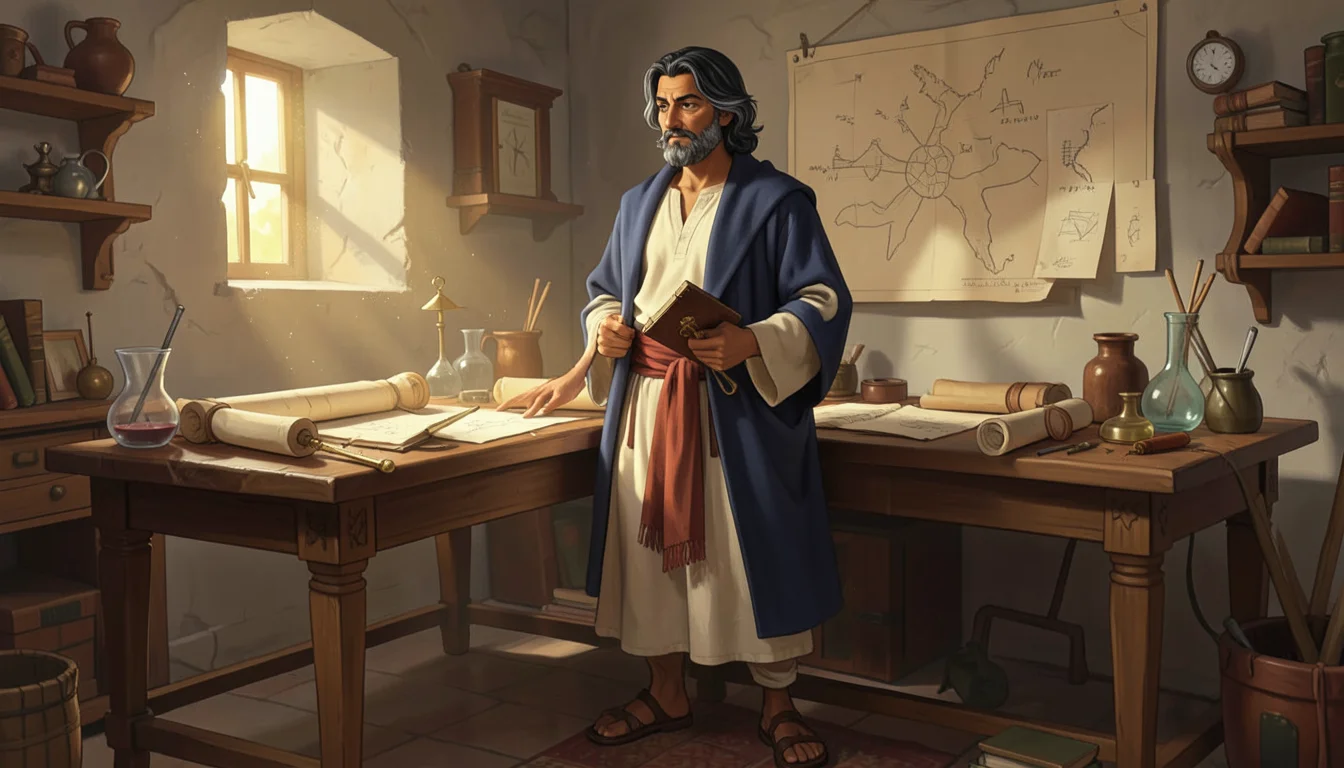
In Cairo, near the end of a long afternoon, Ibn al-Haytham bent over a table covered with scrolls, glass vessels, and questions. He wanted to know how sight truly worked.
Ibn al-Haytham Locked Himself Away and Let Light AnswerIbn al-Haytham turned questions about vision into experiments, helping build a method of testing ideas instead of only arguing about them.
1. In Cairo, near the end of a long afternoon, Ibn al-Haytham bent over a table covered with scrolls, glass vessels, and questions. He wanted to know how sight truly worked.
2. Some learned writers said that the eyes sent out rays, like tiny feelers reaching toward the world. Others said that light came from the world into the eyes. Ibn al-Haytham did not want a louder argument. He wanted a better question.
3. He began with a flame and a mirror. The flame appeared in the glass, but it did not leap from his eye to fetch the image. Light traveled from the flame, reached the mirror, and entered his eye.
4. Next, he darkened a room and made one tiny opening in a wooden screen. A bright patch appeared on the far wall. The opening was small, yet it carried an image of the sun inside.
5. He changed one thing at a time. He moved the screen, widened the hole, and watched the bright shape blur or sharpen. Each result gave him another question, but it also gave him something solid to think about.
6. The work took patience. Some trials failed because the lamp flickered or the opening was too wide. Ibn al-Haytham recorded those failures instead of hiding them, then tried again.
7. To protect time for careful work, he withdrew from public life and stayed in a room of his own. The door was shut, but his mind kept opening windows.
8. He tested lenses, mirrors, shadows, and colored light. He noticed that a lens could gather light and make a small thing seem large, while a rough surface scattered light in many directions.
9. When he thought he had found an answer, he asked whether the test could be repeated. Would the same light make the same mark tomorrow? Would another person see what he saw?
10. An apprentice repeated one of the trials while Ibn al-Haytham watched. The bright patch appeared in the same place. An idea had become a result that another person could check.
11. The light did not settle every question at once. It did something more useful: it showed which questions could be tested, what a test required, and when an explanation needed changing.
12. Ibn al-Haytham turned questions about vision into experiments, helping build a method of testing ideas instead of only arguing about them. He asked the light to answer, and then he made room for others to ask it again.
Make a story like this →