 Storyclover
Storyclover
Storyclover
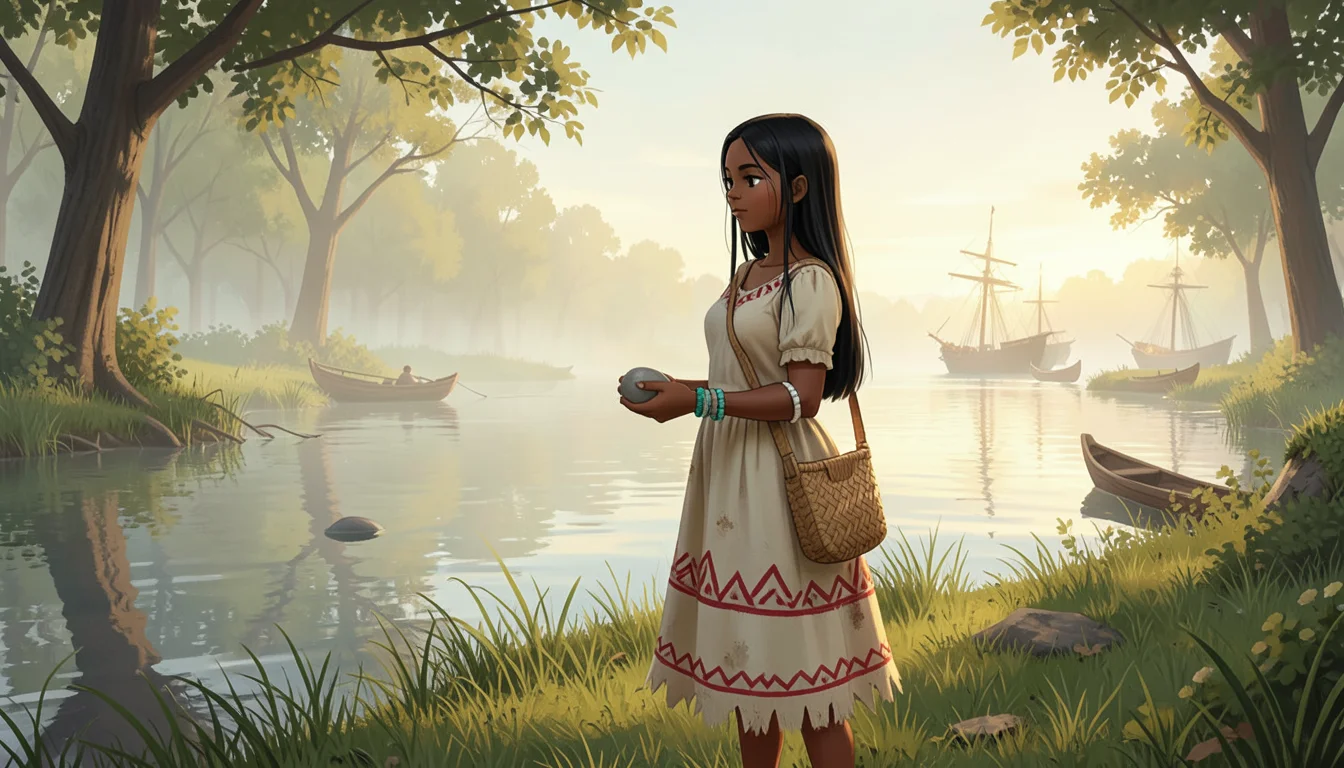
At sunrise beside the James River, Pocahontas turned a smooth stone in her hand and watched unfamiliar ships settle near the shore. She had grown up among the Powhatan people, where the river carried news, food, and travelers. Now it carried strangers who seemed to want the land to answer one question: who would control it?
Pocahontas Stood Between Two Worlds That Wanted Simple AnswersPocahontas's life shows how real people can be flattened into legends, and why history must ask whose voices were preserved and whose were not.
1. At sunrise beside the James River, Pocahontas turned a smooth stone in her hand and watched unfamiliar ships settle near the shore. She had grown up among the Powhatan people, where the river carried news, food, and travelers. Now it carried strangers who seemed to want the land to answer one question: who would control it?
2. Pocahontas listened as her father, Wahunsenacawh, spoke with leaders from neighboring communities. He governed a powerful alliance, but power did not make choices easy. The newcomers needed food, the Powhatan communities needed safety, and every meeting carried the weight of both.
3. Pocahontas sometimes carried corn to the settlement. A tired young settler accepted it with both hands, as if the gift were heavier than it looked. Neither of them had the words to explain everything they feared, so they began with food, gestures, and careful attention.
4. When Captain John Smith was brought before her father, Pocahontas stood nearby and watched every face. Later, Smith wrote that she had saved his life. Powhatan accounts and English accounts do not tell the same story, and the surviving records do not let us settle the scene with certainty.
5. The story of that meeting traveled far beyond the river. In England, people repeated a tale of a brave girl rescuing a helpless man. In Tsenacommacah, people remembered a young woman moving through dangerous negotiations. A person had begun to become a story.
6. Years later, Pocahontas was baptized and took the name Rebecca. She married John Rolfe and traveled to England. These were choices shaped by pressure, possibility, family, and empire, but later retellings often squeezed them into one neat word: willing.
7. In England, visitors stared at Pocahontas and asked her to represent a distant place they barely understood. Portraits showed her in clothing chosen for an English audience. Her own voice is harder to hear, because the people who wrote most of the surviving records were usually English.
8. Pocahontas did not return to her homeland. In 1617, while preparing to sail home, she became ill and died in England. She was still very young. The records tell us when her life ended, but they cannot tell us everything she thought, wanted, or would have chosen next.
9. A legend can be bright, memorable, and incomplete. It may preserve one writer's version while leaving out the people who were watched, translated, renamed, or never invited to write. To study Pocahontas, we must notice not only what the records say, but also who had the power to preserve them.
10. Pocahontas stood between worlds that wanted simple answers: rescuer or captive, princess or symbol, bridge or betrayer. Her life was more complicated than any of them. Real people can be flattened into legends, so history must keep asking whose voices were preserved—and whose were not.
Make a story like this →