 Storyclover
Storyclover
Storyclover
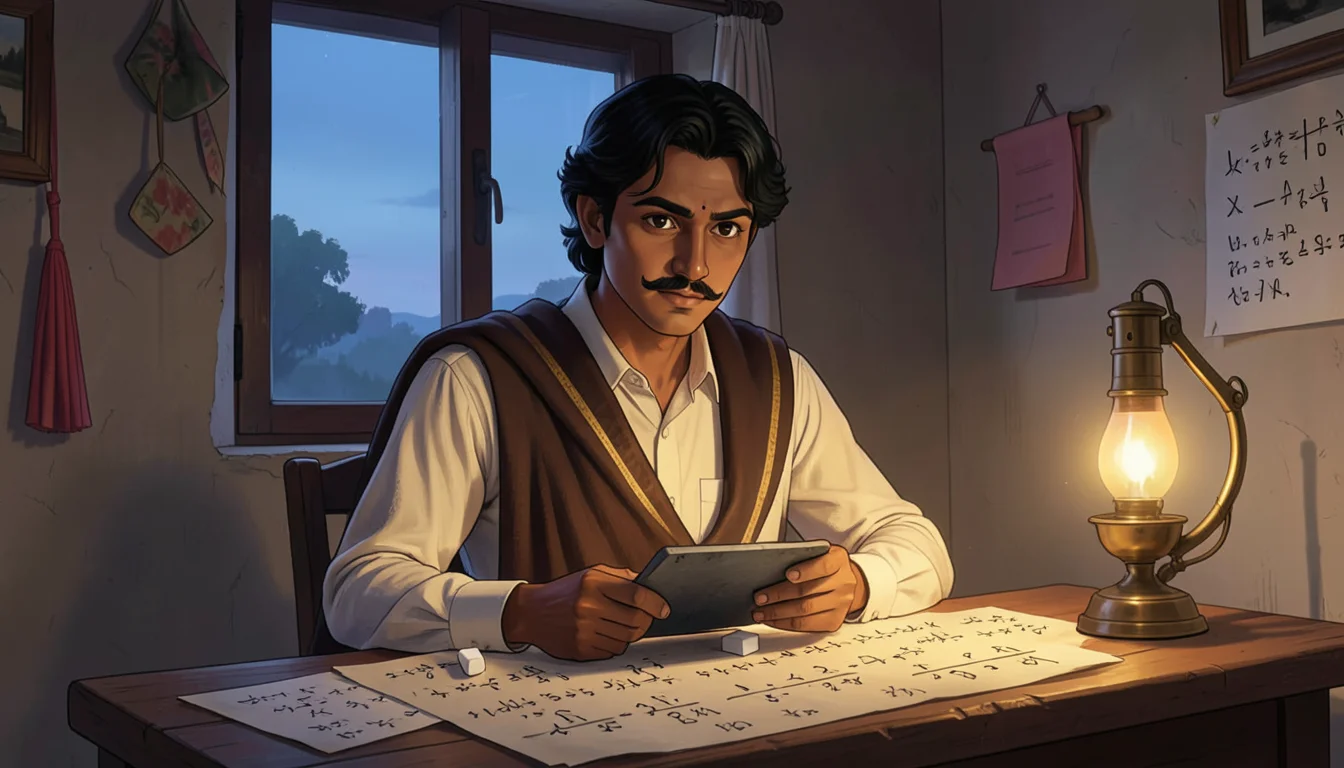
Before sunrise, Srinivasa Ramanujan filled his slate with numbers. He was not copying a textbook. He was following a pattern that seemed to be waiting for him.
Srinivasa Ramanujan Saw Patterns No Textbook Had Shown HimSrinivasa Ramanujan followed startling mathematical intuition, then had to learn how to translate his insights into proofs others could test.
1. Before sunrise, Srinivasa Ramanujan filled his slate with numbers. He was not copying a textbook. He was following a pattern that seemed to be waiting for him.
2. He noticed that numbers could be grouped, balanced, and reshaped. One answer suggested the next, and the next answer opened another door.
3. His notebooks grew crowded with discoveries. Some ideas were so unexpected that no textbook he owned had shown him how to find them.
4. Ramanujan trusted the patterns he saw. When a result felt true, he wrote it down and hurried toward the next question.
5. But a pattern that looks right is not yet a proof. A proof must show every step clearly enough for another person to check.
6. He tried to explain one of his discoveries. The idea leaped ahead, but his written steps could not yet carry anyone else to the same place.
7. In Cambridge, G. H. Hardy recognized the power in Ramanujan’s results. He also asked a careful question: “How did you get there?”
8. Ramanujan began again. He slowed the leap, tested small cases, defined each part, and filled the spaces between one line and the next.
9. The work took longer, but it became stronger. Ramanujan’s intuition found the hidden path; proof made the path visible to others.
10. Srinivasa Ramanujan kept trusting the patterns no textbook had shown him. Then he learned to translate those flashes of insight into proofs that others could test.
Make a story like this →