 Storyclover
Storyclover
Storyclover
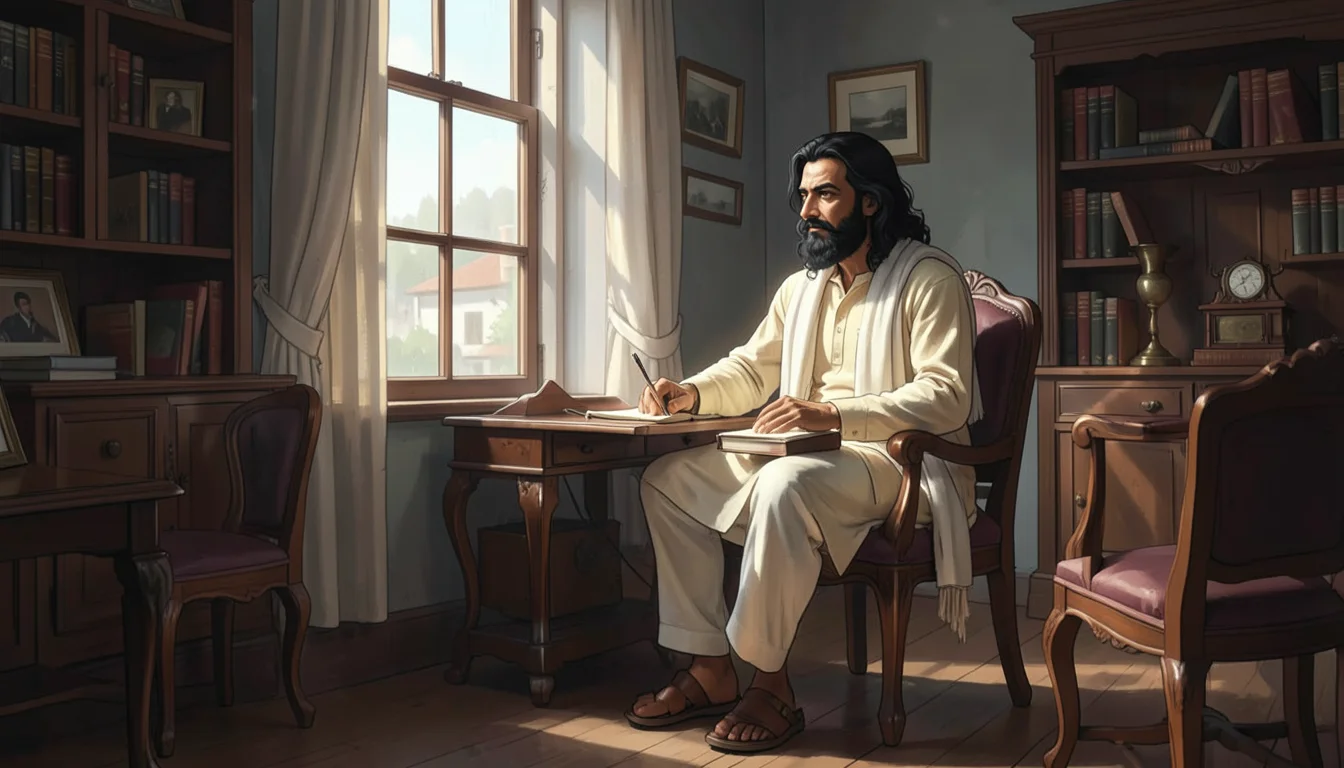
Rabindranath Tagore sat beside a high window with a notebook on his knees. Outside, morning light spilled across the trees, but inside, the room felt close and still.
Rabindranath Tagore Refused to Let School Feel Like a CageRabindranath Tagore wrote poems and songs while building a school shaped by nature, creativity, and a wider idea of learning.
1. Rabindranath Tagore sat beside a high window with a notebook on his knees. Outside, morning light spilled across the trees, but inside, the room felt close and still.
2. He remembered his own schoolroom: rows of desks, strict lessons, and windows that seemed too far away. The children learned to copy words, but rarely had time to wonder what the words might become.
3. Tagore began to ask a different question. What if a child could learn beneath a tree, where a leaf, a bird, or a changing cloud might open a door in the mind?
4. At Santiniketan, he helped make a school with the sky for a roof. Students gathered beneath trees, listened to one another, and let the seasons enter their lessons.
5. A lesson might begin with a question about stars and end with a song. A child might paint an answer, shape it from clay, or place it in a poem.
6. Tagore wrote songs for the school, and the students gave them voices, drums, painted colors, and dancing feet. Learning did not sit still in one shape.
7. Some mornings, Tagore wrote before the school woke. The pond held the pale sky, and a bird touched the water with its beak; both found their way into his thoughts.
8. He did not expect every child to think in the same way. He made room for the careful observer, the restless maker, the quiet singer, and the child whose best answer had not yet been found.
9. The school grew slowly, like a sapling after rain. Its roots reached into nature, art, music, friendship, and the wide world beyond the classroom.
10. When night gathered, Tagore returned to his notebook. He wrote poems and songs while building a school shaped by nature, creativity, and a wider idea of learning.
Make a story like this →