 Storyclover
Storyclover
Storyclover
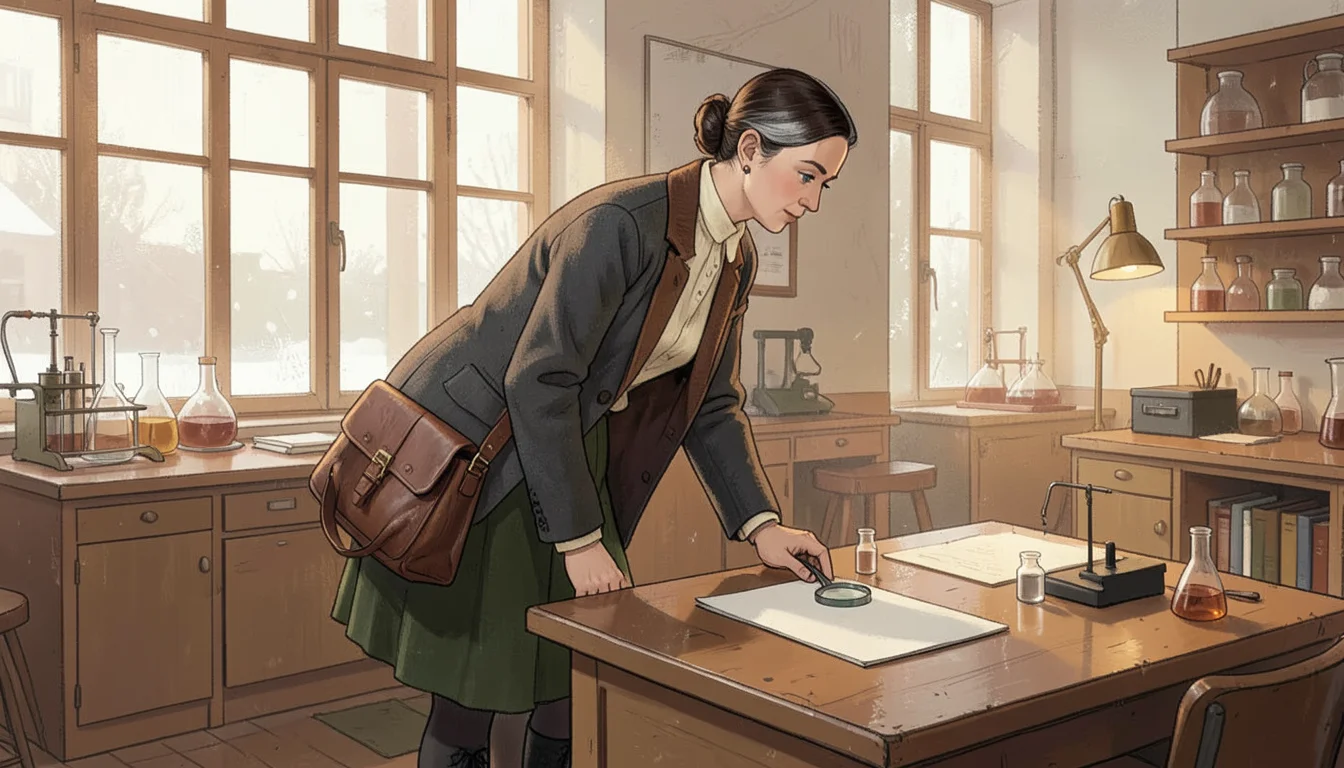
On a winter afternoon in Berlin, Lise Meitner bent over a laboratory table and studied a result that would not behave.
Lise Meitner Named the Split That Changed the WorldLise Meitner helped explain nuclear fission, and her story asks how scientists carry responsibility when knowledge becomes powerful.
1. On a winter afternoon in Berlin, Lise Meitner bent over a laboratory table and studied a result that would not behave.
2. Otto Hahn and Fritz Strassmann had found barium where uranium should have been. Uranium was supposed to be the heaviest atom in the experiment. How could it have become something much lighter?
3. Before Lise could work through the puzzle with her colleagues in Berlin, the Nazis made her position unsafe because she was Jewish. In July 1938, she escaped to Sweden with little more than a suitcase, leaving her laboratory and much of her work behind.
4. That winter, her nephew, physicist Otto Frisch, came to visit in Sweden. Lise showed him the strange result, and their talk followed them out into the snow.
5. They imagined the uranium nucleus as a crowded drop, not a tiny, hard marble. If it wobbled just right, it might stretch, pinch, and divide into two smaller drops.
6. Then the missing piece clicked into place. A split uranium nucleus would leave two smaller nuclei, extra neutrons, and a burst of energy. The barium was not a mistake; it was a clue.
7. Otto Frisch returned to Copenhagen and tested the idea. The uranium atoms gave off a burst that could be detected, just as their explanation predicted. Frisch gave the process a name borrowed from biology: fission.
8. The news traveled quickly. Scientists realized that each split could release neutrons that split more nuclei, making a chain reaction. The same idea might produce useful energy or a weapon.
9. As war spread across Europe, Lise was asked to join work connected to an atomic bomb. She declined. Discovering what nature could do, she believed, did not decide what people ought to do.
10. In 1944, Otto Hahn received the Nobel Prize in Chemistry for discovering nuclear fission. Lise did not receive that prize, even though her explanation helped reveal what the discovery meant. She kept working, and she kept asking what science owed the world.
11. Lise Meitner helped explain nuclear fission, and her story asks how scientists carry responsibility when knowledge becomes powerful.
Make a story like this →