 Storyclover
Storyclover
Storyclover
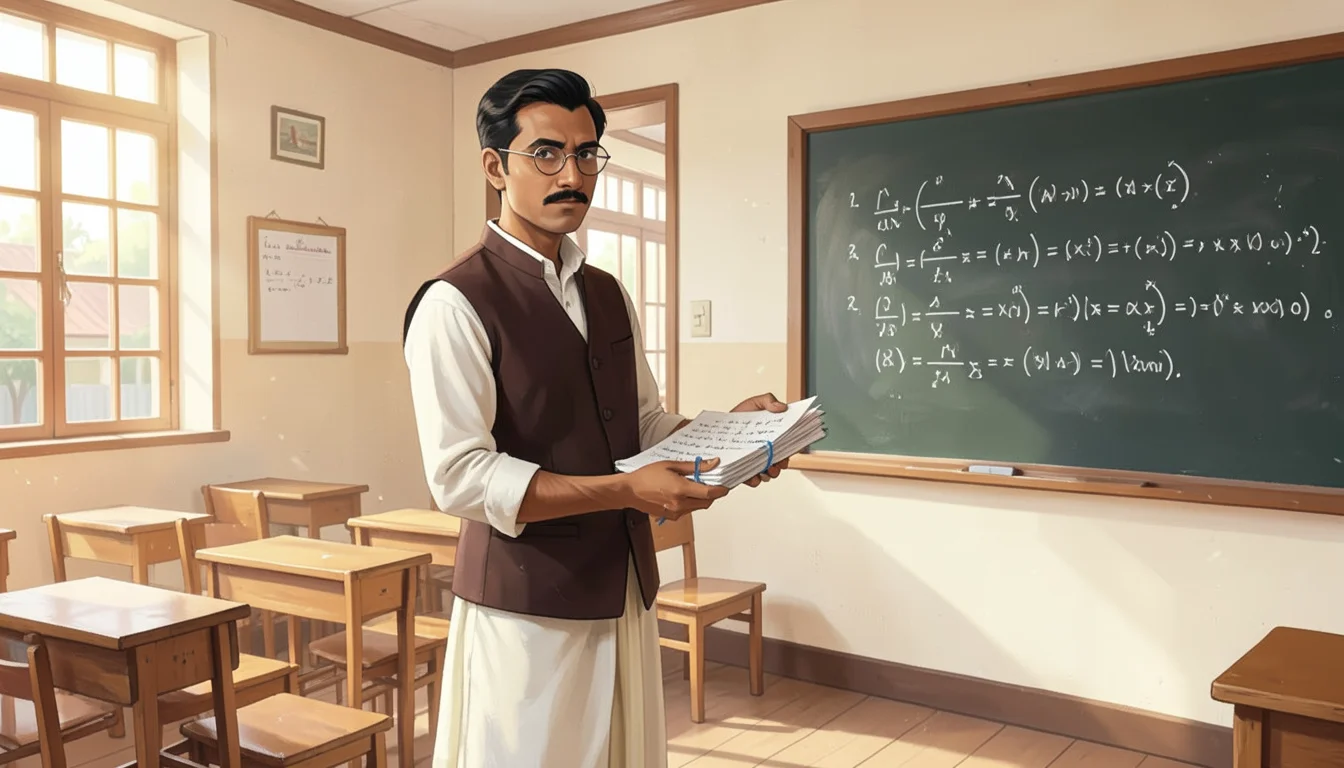
One bright morning, Satyendra Nath Bose covered a classroom blackboard with equations about light. He wanted to know whether the tiniest particles of light might follow a rule no one had written down before.
Satyendra Nath Bose Sent Einstein the Math No Journal WantedSatyendra Nath Bose's bold paper on light particles helped create new physics after he bypassed rejection and sent his idea directly to Einstein.
1. One bright morning, Satyendra Nath Bose covered a classroom blackboard with equations about light. He wanted to know whether the tiniest particles of light might follow a rule no one had written down before.
2. Bose worked slowly, checking every line. He counted possible arrangements of light particles, not one by one, but by asking which arrangements were truly different.
3. The old way of counting did not fit his result. Bose crossed out a line, tried another, and found that the particles seemed to belong to the same crowd, with no private name or place for any one of them.
4. When the mathematics finally held together, Bose shaped it into a paper. He sent the paper to a leading journal, expecting the editors to test the idea carefully.
5. The journal did not accept it. No detailed argument came back, only the blunt fact that the paper would not be printed.
6. Bose read his equations again. The rejection had stopped the paper, but it had not answered the mathematics.
7. So Bose chose a bolder path. He sent the paper directly to Albert Einstein, whose work had already changed how scientists thought about light, space, and time.
8. Einstein opened the envelope and studied the unfamiliar argument. The counting was daring, but its pattern was clear.
9. Einstein recognized what Bose had done. He translated the paper into German and sent it onward for publication.
10. When Einstein's support reached Bose, the rejected paper had a new beginning. Its idea could now travel beyond one classroom and one determined mathematician.
11. Other scientists built on the new way of counting. The rule described particles that could gather into the same state, and physics began to open a different door.
12. Satyendra Nath Bose had sent his idea where no journal wanted it to go. His bold mathematics, carried to Einstein, helped create new physics—and the blank page still waited for the next question.
Make a story like this →