 Storyclover
Storyclover
Storyclover
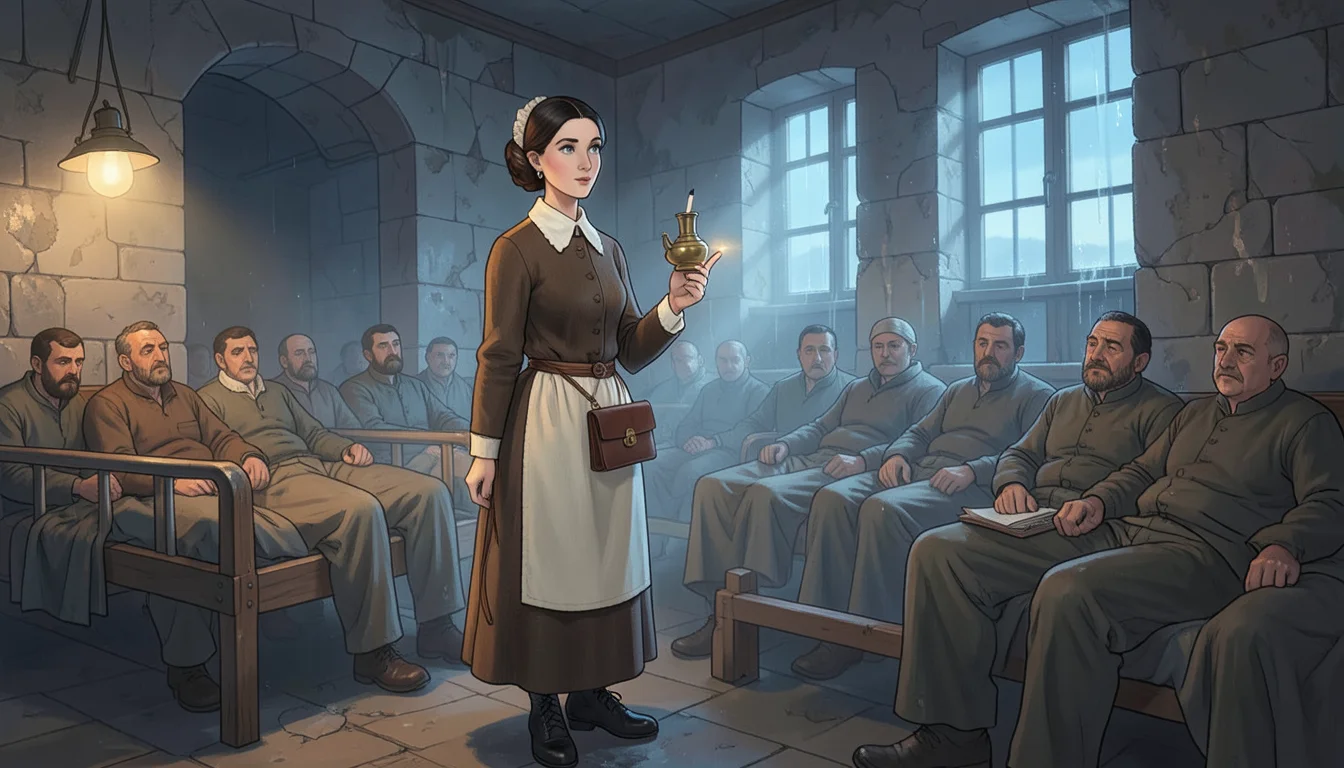
Before sunrise in November 1854, Florence Nightingale stepped into the Barrack Hospital at Scutari with a lamp in one hand and a notebook in the other. Wounded soldiers filled the wards, while men burning with fever lay wherever there was room. She had come to nurse them, but she could not yet see what was making so many of them sick.
Florence Nightingale Counted the Patients No One Wanted to CountFlorence Nightingale used nursing, organization, and data displays to show that clean systems could save lives as surely as brave actions.
1. Before sunrise in November 1854, Florence Nightingale stepped into the Barrack Hospital at Scutari with a lamp in one hand and a notebook in the other. Wounded soldiers filled the wards, while men burning with fever lay wherever there was room. She had come to nurse them, but she could not yet see what was making so many of them sick.
2. By morning, the hospital smelled of damp stone, dirty water, and too many bodies packed too close together. The sickest patients were easy to overlook because no one had a complete list of who had arrived, who had recovered, and who had died. Florence stood at the end of a crowded ward and decided to make the list herself.
3. She counted patients at the bedside and copied each case into her notebook: wounds, fevers, days in the ward, and deaths. The work was slow, especially when a new stretcher arrived before the last entry was finished. Still, a number could be checked, compared, and carried to someone who could act.
4. The counts showed gaps that courage alone could not fill. There were too few clean linens, poor drains, broken supplies, and no dependable routine for washing the wards. Florence organized nurses to scrub floors, sort medicines, wash bedding, and bring food and water where they were needed.
5. Some officials dismissed the changes as fussing. They said soldiers died because war was hard, and they doubted that lists and clean floors could alter the result. Florence did not argue every point; she kept the records, checked the work, and returned with the same requests until the hospital had to answer.
6. After months of counting, Florence arranged the totals by month and by cause. The pattern startled anyone willing to study it: disease had killed far more soldiers than battle wounds. The numbers did not merely describe a tragedy; they pointed toward the places where a system was failing.
7. A long table of figures could be ignored, so Florence shaped the totals into a broad circular diagram. Blue sections showed deaths from disease, and red sections showed deaths from wounds; the uneven circle made the difference impossible to miss. Data had become an argument that could be seen at a glance.
8. Her report and diagrams reached officials in Britain, while new inspections reached the hospital in Scutari. Drains were cleared, water was improved, kitchens and laundries were organized, and the wards were cleaned more regularly. The changes took time, but the place began to work less like a crisis and more like a hospital.
9. Then the records began to change. Month by month, the share of deaths from disease fell, and more patients left the wards alive. Florence still counted those who died, because a smaller number was not the same as no number at all.
10. She had entered the hospital carrying a lamp, but she left behind something that could travel farther: careful nursing, organized work, and evidence arranged so that people in power could not look away. Florence Nightingale used nursing, organization, and data displays to show that clean systems could save lives as surely as brave actions.
Make a story like this →