 Storyclover
Storyclover
Storyclover
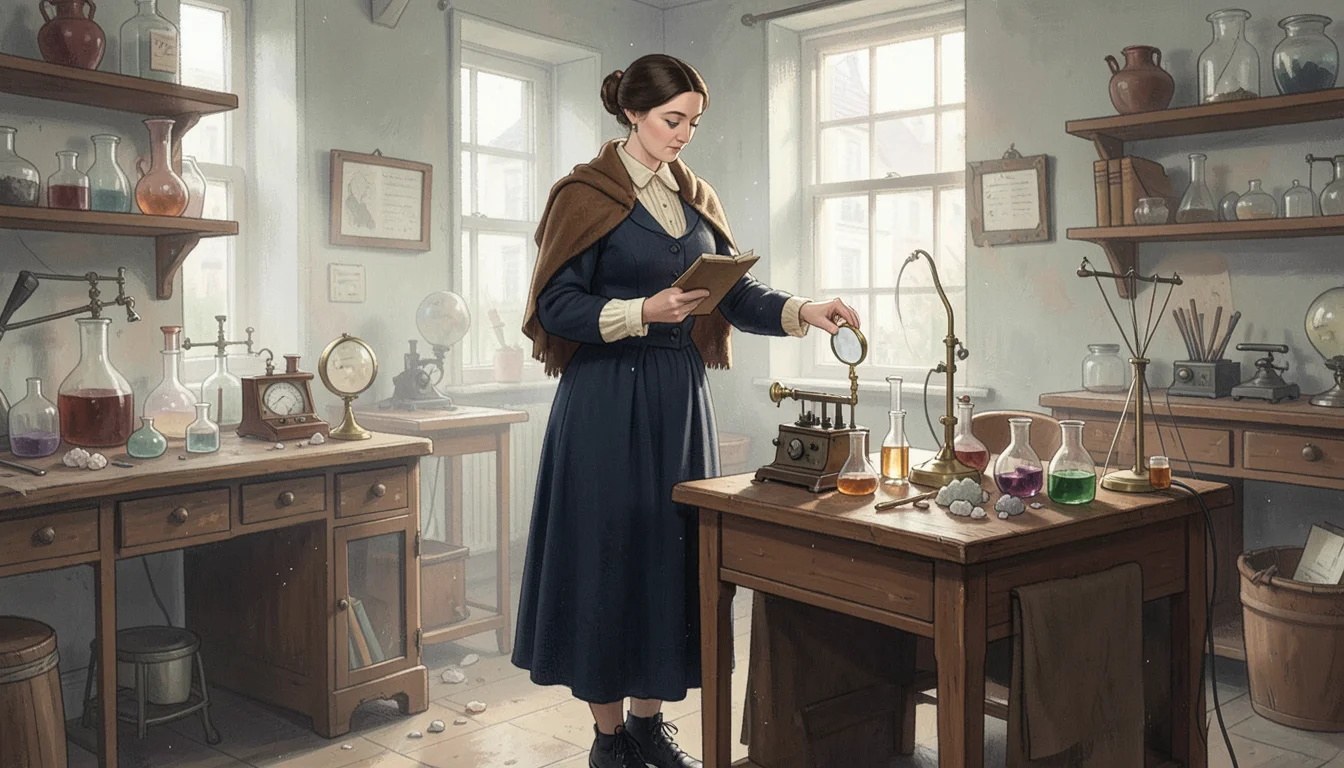
On a gray Paris morning in 1897, Marie Curie set mineral samples beside a delicate instrument and watched its needle shift. She wanted to know why some rocks could make the air carry electricity, even when no one touched them.
Marie Curie Kept Working When the Glow Became DangerousMarie Curie's discoveries opened new science and medicine, while her story also shows how discovery can carry risks people do not yet understand.
1. On a gray Paris morning in 1897, Marie Curie set mineral samples beside a delicate instrument and watched its needle shift. She wanted to know why some rocks could make the air carry electricity, even when no one touched them.
2. She tested uranium compounds, then tested a mineral called pitchblende. The readings from pitchblende were far too strong for the uranium it contained, so Marie checked the instrument again.
3. When Marie told Pierre Curie, he leaned over the measurements instead of dismissing them. Together they asked a startling question: Could pitchblende contain an unknown substance more active than uranium?
4. They began separating pitchblende into its chemical parts. Their laboratory was cramped and poorly equipped, and each portion had to be tested again before they could trust the result.
5. Day after day, Marie lifted boiling mixtures, stirred heavy residues, and measured them. The air filled with steam, her notebook filled with readings, and the work kept asking for one more careful test.
6. In 1898, the Curies announced a new element and named it polonium, after Marie’s homeland, Poland. Months later, another separated material gave off a faint blue-green glow, and they named that element radium.
7. The glow was small, but its power was not. Radium released invisible energy that could pass through some materials, and doctors began wondering whether those rays might help reach diseased tissue.
8. The same invisible energy that opened a path toward new treatments could also affect healthy bodies. Marie and Pierre handled their samples before scientists understood how much exposure was too much.
9. As evidence accumulated, scientists learned that the danger was invisible and that the rules for handling radioactive materials had not yet been written. Marie kept working, but she treated the glow with greater care.
10. Her work helped reveal new substances, new questions, and new ways to use invisible energy. Marie Curie’s discoveries opened new science and medicine, while her story also shows how discovery can carry risks people do not yet understand.
Make a story like this →