 Storyclover
Storyclover
Storyclover
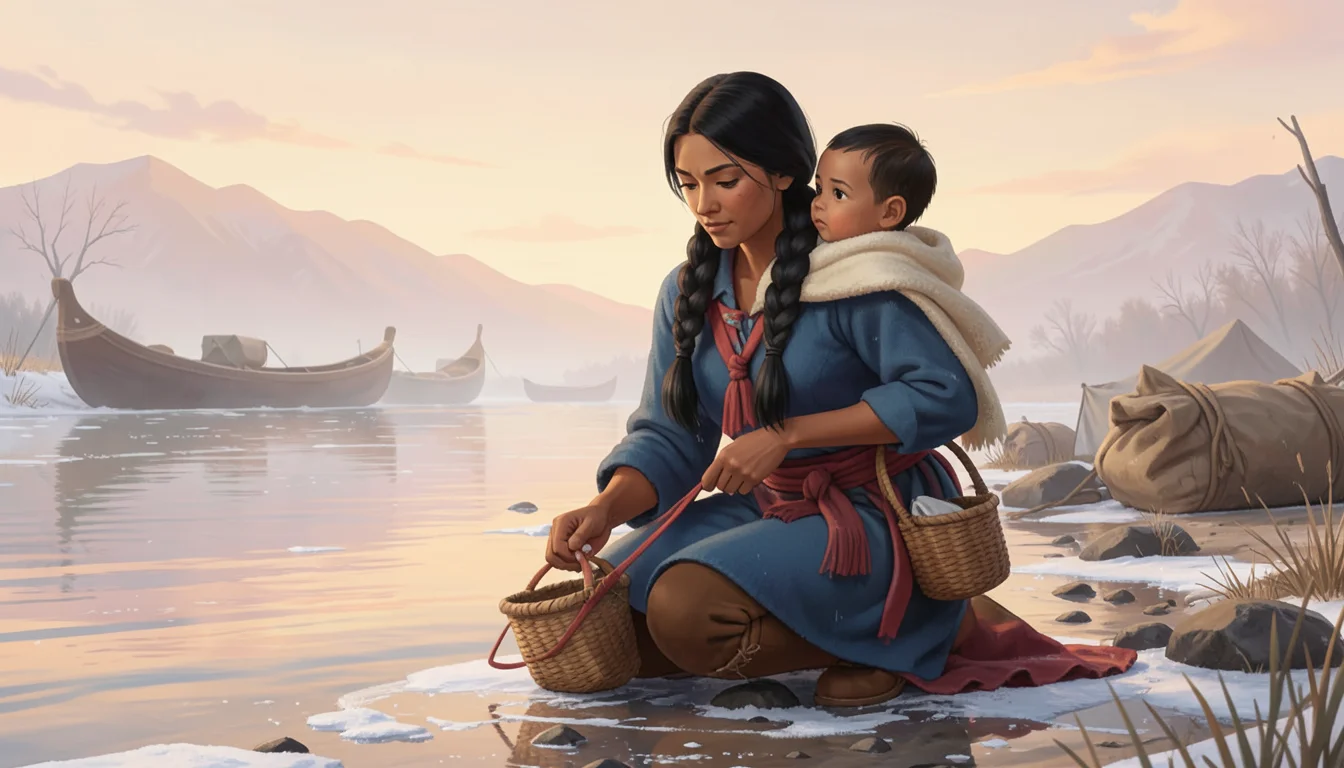
At first light in the spring of 1805, Sacagawea knelt beside the Missouri River and tightened the straps on a small woven basket. Jean Baptiste rested against her shoulder while the expedition's boats waited in the pale mist. Westward, the river led toward mountains no one in the camp had mapped completely.
Sacagawea Read the Land When the Maps Went BlankSacagawea's knowledge, languages, and presence helped an expedition survive unfamiliar terrain, while her story also raises questions about whose labor is recorded.
1. At first light in the spring of 1805, Sacagawea knelt beside the Missouri River and tightened the straps on a small woven basket. Jean Baptiste rested against her shoulder while the expedition's boats waited in the pale mist. Westward, the river led toward mountains no one in the camp had mapped completely.
2. The captains had maps, but the ink grew uncertain beyond the familiar rivers. A bend could hide a rapid, a ridge could conceal a pass, and a place name could mean nothing to people who had never stood there. Sacagawea watched water, plants, animals, and the shape of the land; each offered a clue the paper could not.
3. Sacagawea spoke Hidatsa and Shoshone. Toussaint Charbonneau spoke Hidatsa and French. With other interpreters passing words into English, a question could travel across several languages before an answer returned.
4. Near a fork in the river, the current split around gravel bars. Sacagawea crouched beside bent grass and fresh tracks, studying the leaves gathered along one bank. The captains studied the same scene, but she read it as a pattern of water, weather, and season.
5. At the Rocky Mountain front, the river stopped being a road. The party needed horses and a route over the pass. No mark on the maps could tell them which welcome—or which way—waited beyond the ridge.
6. Then, across a broad valley, a Shoshone group appeared. Sacagawea raised her hand to her mouth, then spoke a name she had not spoken in years: Cameahwait. The man at the front stopped; recognition passed between them before any interpreter needed to speak.
7. The expedition needed horses, and Cameahwait knew the mountain country. Through Sacagawea's translating, the visitors traded for animals and learned of a pass. Her words connected two sides of a meeting that the blank spaces on the maps could not explain.
8. The pass was steep, but it led through country Sacagawea recognized. Her knowledge of the valleys, rivers, and seasons gave the travelers more than a line on paper; it gave them choices. Step by careful step, they crossed into the land beyond the mountains.
9. Later, when the expedition met unfamiliar communities, Sacagawea traveled among the men with a baby on her back. Her presence could be understood before her words: a woman and child made the group seem less like a war party, while her languages made conversation possible.
10. Sacagawea's knowledge, languages, and presence helped the expedition survive unfamiliar terrain. Yet the journals recorded the captains' names and decisions more often than they recorded her labor. Her story leaves a question: whose labor is recorded clearly, and whose is left at the edge of the map?
Make a story like this →