 Storyclover
Storyclover
Storyclover
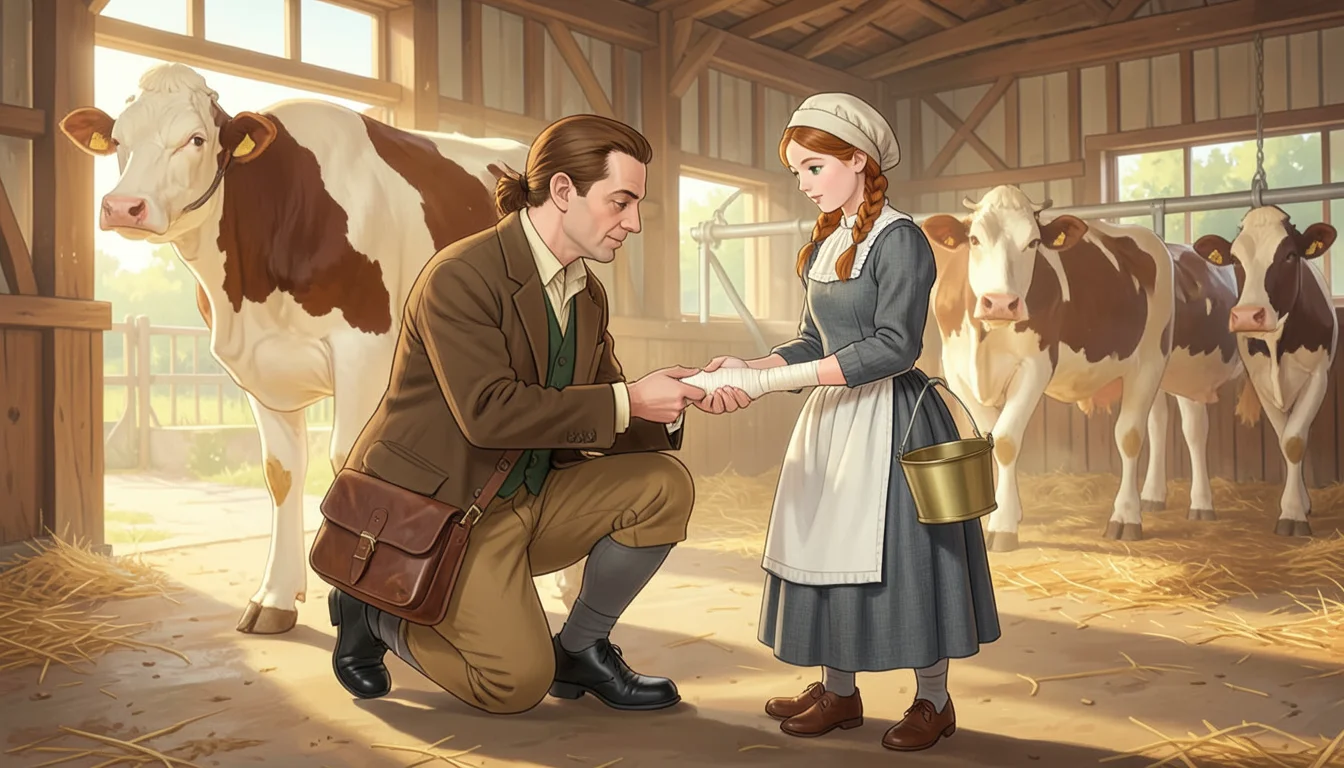
On a bright May morning in 1796, Edward Jenner knelt beside a calm cow in a Gloucestershire cowshed and examined a small sore on a dairymaid’s hand. He had heard that dairymaids who caught cowpox rarely caught smallpox, and he wanted to know whether the old country saying held a useful clue.
Edward Jenner Tested a Risky Clue From the CowshedEdward Jenner's smallpox vaccine grew from observation and experiment, opening a new kind of prevention while demanding serious questions about risk and trust.
1. On a bright May morning in 1796, Edward Jenner knelt beside a calm cow in a Gloucestershire cowshed and examined a small sore on a dairymaid’s hand. He had heard that dairymaids who caught cowpox rarely caught smallpox, and he wanted to know whether the old country saying held a useful clue.
2. The dairymaid was Sarah Nelmes. She told Jenner that the sore had come from cowpox, an infection usually mild in people. Other dairymaids had told similar stories, but Jenner knew that a repeated story was a starting point, not proof.
3. Back in his study, Jenner wrote down what he had seen and asked questions about who had caught cowpox and who had later fallen ill with smallpox. The pattern looked promising, yet cowshed stories could be mistaken, and no careful experiment had tested the idea.
4. Smallpox was not a small worry. It could scar, blind, or kill, while variolation—deliberately giving someone a small amount of smallpox material—sometimes protected a person but could also cause illness and spread it to others. Jenner wanted a safer kind of protection, but wanting one did not make it safe.
5. In May 1796, Jenner asked James Phipps’s father for permission to try the cowpox experiment. James was eight years old, so the adults had to carry the responsibility for a choice he could not fully make. Jenner prepared a small amount of material from Sarah’s sore and placed it into a prepared spot on James’s arm.
6. James became mildly feverish and uncomfortable, then returned to his usual self. Jenner watched closely and recorded each change. The cowpox had not proved harmless for every possible person; it had only given this one experiment an encouraging first answer.
7. Weeks later came the test Jenner thought would reveal whether the protection was real. He used smallpox material in the old variolation practice, a step that carried serious danger. By today’s standards, deliberately exposing a child to smallpox would be unacceptable; modern research requires stronger evidence, careful oversight, and informed consent.
8. James did not develop smallpox. Jenner had found a remarkable result, but one child could not settle a question affecting whole communities. He needed more observations, clearer records, and people willing to examine both the promise and the danger.
9. As Jenner shared his findings, some people trusted the result, some questioned it, and others worried about what vaccination might do. Their arguments were not a nuisance to sweep aside. When a treatment asks people to accept risk, trust must be earned with honest evidence, plain explanations, and attention to harm.
10. The idea spread beyond the cowshed. The word vaccine came from vacca, the Latin word for cow, and the practice offered a new way to prevent disease before it arrived. It was not magic or a promise that every question had vanished; it was a beginning built from a clue, a test, and results others could examine.
11. Jenner’s work did not end the need for questions. Who may take a risk, who must explain it, what evidence is enough, and how can harm be watched for? Edward Jenner’s smallpox vaccine grew from observation and experiment, opening a new kind of prevention while demanding serious questions about risk and trust.
Make a story like this →