 Storyclover
Storyclover
Storyclover
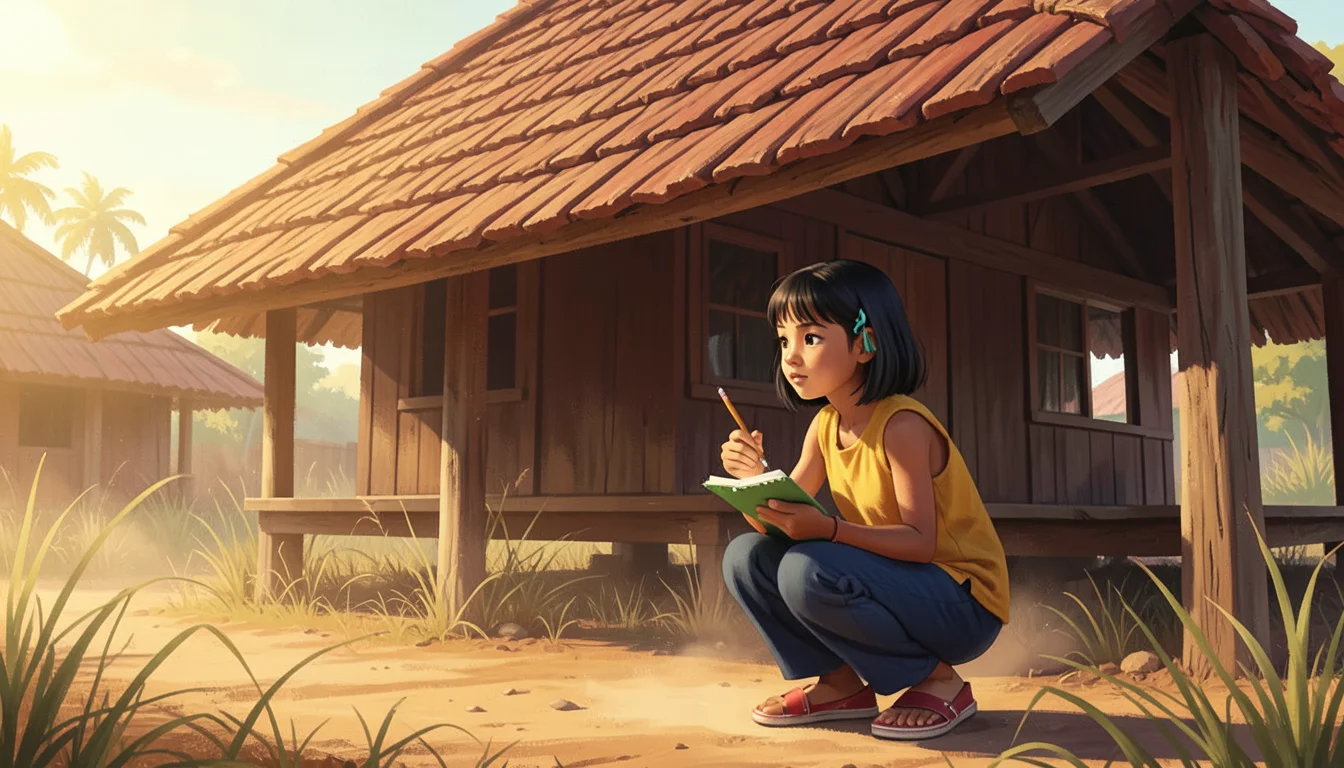
At four o’clock on a dry-season afternoon, Dara crouched beneath a raised teak house in Ban Mae and sketched its roof. The ridge rose like a small mountain, and she wanted to know why the new reading shelter needed a roof just as steep.
The Roofs Were Built for Rain That Had Not Arrived YetStudying steep roofs in Southeast Asian villages reveals how architecture stores generations of weather knowledge before a storm ever appears.
1. At four o’clock on a dry-season afternoon, Dara crouched beneath a raised teak house in Ban Mae and sketched its roof. The ridge rose like a small mountain, and she wanted to know why the new reading shelter needed a roof just as steep.
2. Her grandmother Nok settled beside her with a bamboo basket. When Dara asked, Nok touched the roof post. “We could wait for the rain,” she said, “or we could ask the roofs what they already know.”
3. One roof wore clay tiles, another wore corrugated metal, and a third held a thick thatch cap. Dara measured each slope with two fingers. Their materials disagreed, yet the roofs all leaned steeply away from the sky.
4. At home, Dara drew a low roof for the shelter. It would use less material and look neat beside the new school. Then she imagined a monsoon cloud stopping above it, and her pencil hovered over the empty space where the rain would land.
5. Under the oldest roof, Nok showed her the deep eaves, the raised floor, and the small opening along the ridge. The eaves kept walls in shade, the floor stayed above wet ground, and the ridge opening gave hot air a way out. “A roof remembers more than rain,” Nok said. “It remembers heat, wind, and all the people who repaired it.”
6. Dara wanted proof that old decisions belonged on a new shelter. At dusk, clouds gathered over the hills, and the air smelled of dust before rain. She drew one steep line across her plan, then paused as the first drop darkened the wooden step.
7. Before dawn, rain arrived in a shining curtain. Water streamed from the steep tiles into the drainage channel, while the raised floor stayed dry above the wet earth. Dara watched from beneath the eaves, where the walls were still shaded and the air still moved.
8. When the rain stopped, Dara redrew the shelter. She kept the steep slope and wide eaves, added a raised floor and a small ridge opening, and chose materials the builders already knew how to repair. Her new roof did not copy the oldest one; it carried its decisions forward.
9. By the next dry afternoon, the new reading shelter stood beside the school, with a steep roof, wide eaves, a raised floor, and a vent beneath the ridge. Dara set her green sketchbook on the step while Nok rested her basket beside it. For Dara, studying steep roofs in Southeast Asian villages revealed how architecture stores generations of weather knowledge before a storm ever appears.
Make a story like this →