 Storyclover
Storyclover
Storyclover
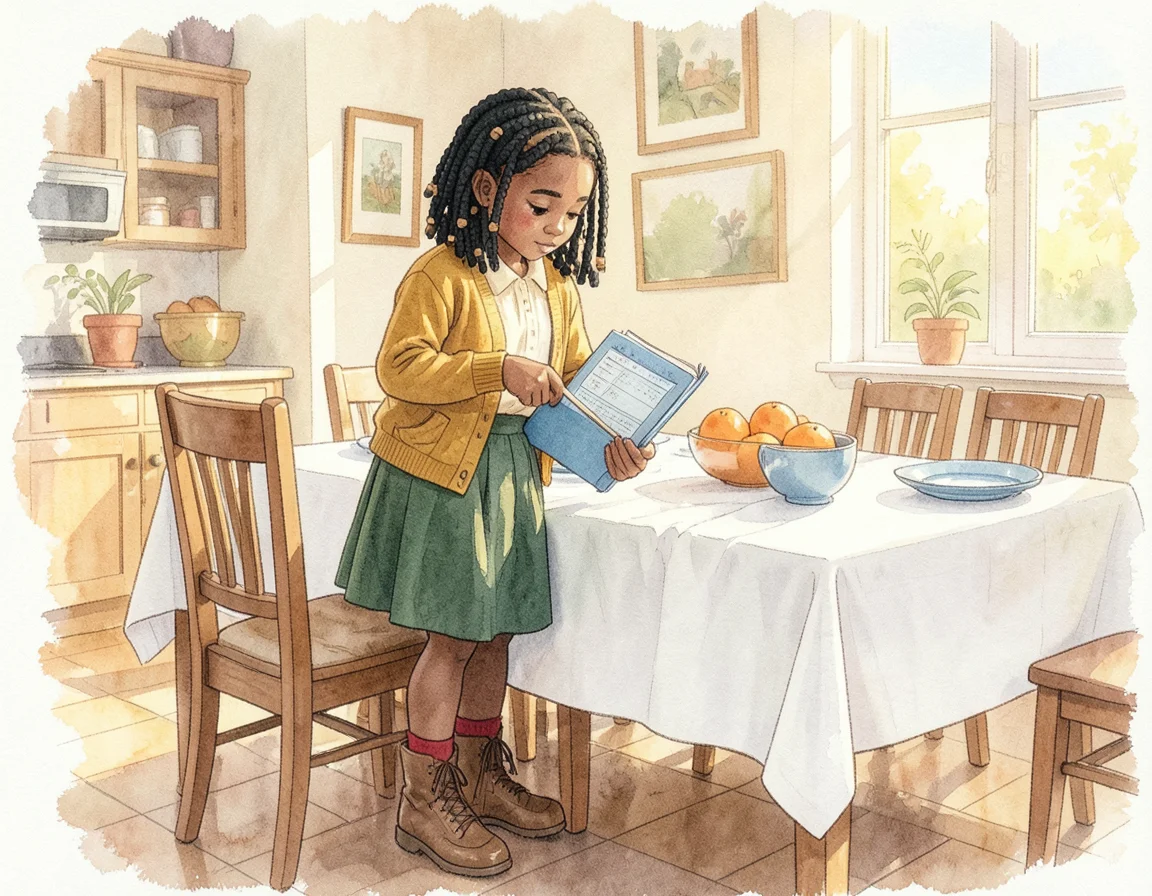
On Saturday afternoon, Nia climbed onto a chair and spread the white tablecloth across Grandma Ada’s long dining table. Tonight, the family was holding a remembrance meal, and Nia had been given one important job: make room for the people who came before them.
Who Put the Ancestors at the Dinner Table?A family remembrance meal shows how people can honor those before them through food, photographs, stories, and places set with care.
1. On Saturday afternoon, Nia climbed onto a chair and spread the white tablecloth across Grandma Ada’s long dining table. Tonight, the family was holding a remembrance meal, and Nia had been given one important job: make room for the people who came before them.
2. She counted the plates, then counted the chairs. There were seven people coming, but only six places at the table. Nia opened every cupboard twice, as if an extra seat might be hiding behind the soup bowls.
3. Grandma Ada came in carrying a covered dish. Nia pointed toward the table. “Who is the seventh place for?” Grandma Ada lifted one eyebrow. “That depends,” she said, “on who you think is coming.”
4. Nia thought of the relatives who had promised to come: Auntie Jo, Uncle Malik, her cousins, and Grandma Ada. “Those are all the living people,” she said. Grandma Ada opened a drawer and took out a bundle of photographs tied with blue ribbon.
5. The first photograph showed a young man with a bright smile and a baker’s hands. “That is your great-grandfather Eli,” Grandma Ada said. “He made the cornbread for every important gathering.” Nia wrote his name in her blue notebook.
6. Nia set Great-Grandfather Eli’s photograph beside the basket of cornbread. It was not a chair, exactly, but it felt like making space.
7. The next photograph showed Great-Grandmother Lottie beside a garden taller than Nia. Grandma Ada stirred the greens and told the story of how Lottie saved seeds in folded paper envelopes, even during years when nothing came easily.
8. Nia placed a bowl of beans beside Lottie’s photograph. Then she added a tiny envelope of seeds from Grandma Ada’s garden. “She should have something from the earth she cared for,” Nia said.
9. A third photograph showed a young woman holding a baby near a blue-painted doorway. “That is Aunt Ruby,” Grandma Ada said. “She taught everyone to save the first bite of peach pie for the person who had worked the hardest.”
10. Nia cut the peach pie into careful slices and set the largest one near Aunt Ruby’s photograph. She wondered whether remembrance had rules, or whether it was simply a way of saying, “You still belong here.”
11. Just before the guests arrived, Grandma Ada opened one more box. Inside lay a brass key and a smooth gray stone. “Your great-great-grandmother carried these when she moved to this city,” she said. “She wanted a door that could open, and a place where her children could rest.”
12. Nia put the key and stone at the end of the table. Then she pulled out one more chair. It was not for a ghost. It was for a place in the family that no photograph could fill by itself.
13. When everyone arrived, Nia showed them the table. No one laughed at the extra chair. Uncle Malik placed a spoon beside it, and Auntie Jo added a small glass of water.
14. They ate Eli’s cornbread, Lottie’s greens, Ruby’s peach pie, and beans from Grandma Ada’s garden. Between bites, each person told one story about someone whose name had been waiting in the photographs.
15. At last, Nia understood who had put the ancestors at the dinner table. It was the food, the photographs, the stories, and every careful place made for people who had shaped the family before anyone in the room was born.
16. After the plates were cleared, Nia left the extra chair where it was. The table had room for the living, room for the remembered, and room for the stories still waiting to be told.
Make a story like this →