 Storyclover
Storyclover
Storyclover
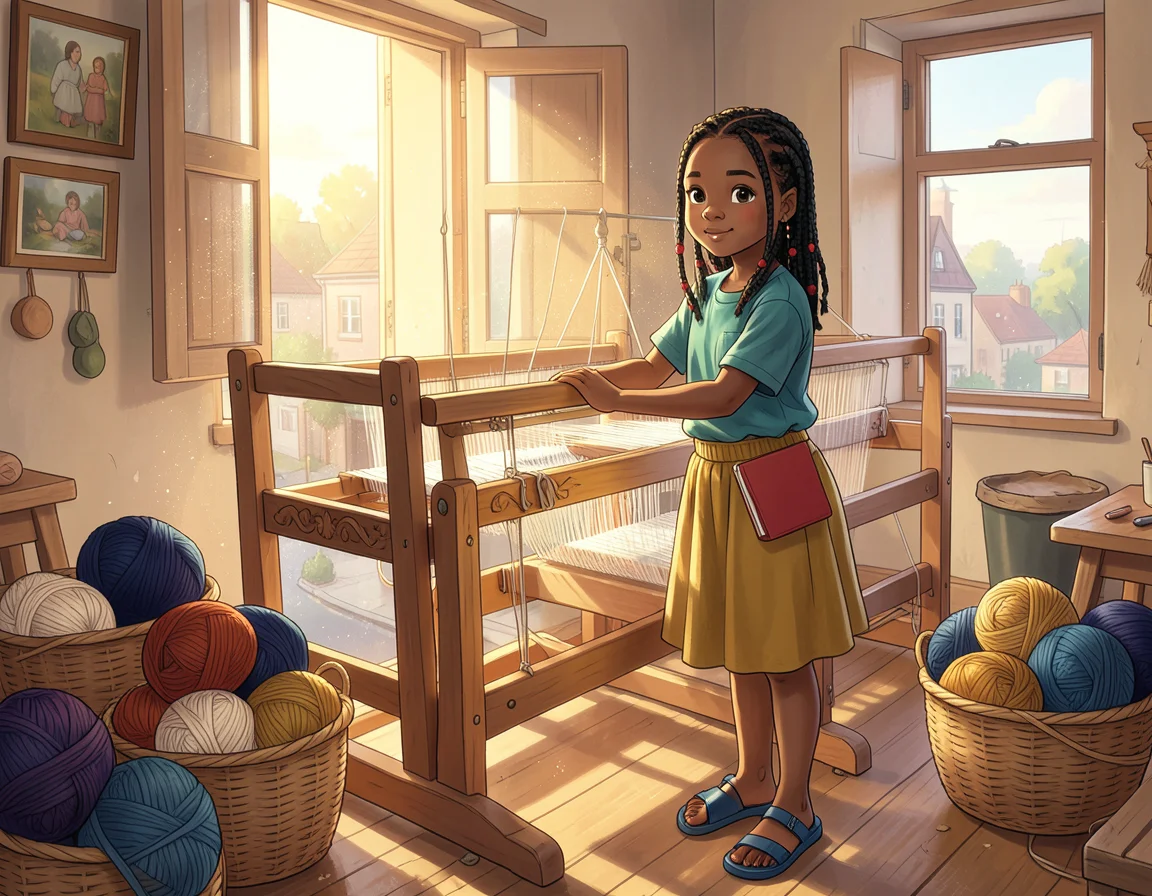
Before breakfast, Nia climbed to the weaving room and lifted the cloth from the loom. Across it ran the pattern everyone in town knew: three red steps, a blue river, and a small gold sun.
Who Gets to Wear the Pattern After the Weaver Is Gone?A family argues over a famous weaving pattern, raising questions about inheritance, copying, cultural ownership, and keeping craft alive.
1. Before breakfast, Nia climbed to the weaving room and lifted the cloth from the loom. Across it ran the pattern everyone in town knew: three red steps, a blue river, and a small gold sun.
2. Aunt Mara stopped in the doorway. “That pattern belonged to your grandmother,” she said. “She made it for our family.” Nia smoothed the cloth. “Then I should wear it at the festival.”
3. Uncle Jo had other plans. “The museum wants a copy,” he said. “They will pay well.” His pencil traced the three red steps. Nia pulled the cloth closer. “A copy is not the same as hers.”
4. By noon, the whole family was arguing beneath the jacaranda tree. Mara said the cloth should stay with the eldest daughter. Jo said a pattern hidden in a chest could not feed anyone. Toma listened, his fingers curled around his walking stick.
5. At last, Toma opened a box no one had seen before. Inside were broken threads, old sketches, and a brass thimble. “Your grandmother learned the first shape from her mother,” he said. “She changed it, too.”
6. Toma told them the pattern had once marked a wedding blanket, then a shop curtain, then a coat. “It was never frozen,” he said. “But it was never ownerless.”
7. That evening, Nia tried the pattern on a narrow strip of cloth. She kept the red steps, widened the blue river, and left out the gold sun. Mara watched the shuttle pause above the threads.
8. Nia wrote down where the pattern came from, who had changed it, and what the family would not sell. Jo added a fair price for the hours of work. Mara added one more rule: every new version must name its threads.
9. At the festival, Nia wore her changed pattern while the original stayed safe beneath glass. The family offered lessons, not uncredited copies. People could learn the steps, but they had to learn the story with them.
10. The family never agreed on who owned the pattern. They agreed on something harder: no one would pretend it had appeared from nowhere. Nia threaded the loom again, and the old story waited in the new cloth.
Make a story like this →