 Storyclover
Storyclover
Storyclover
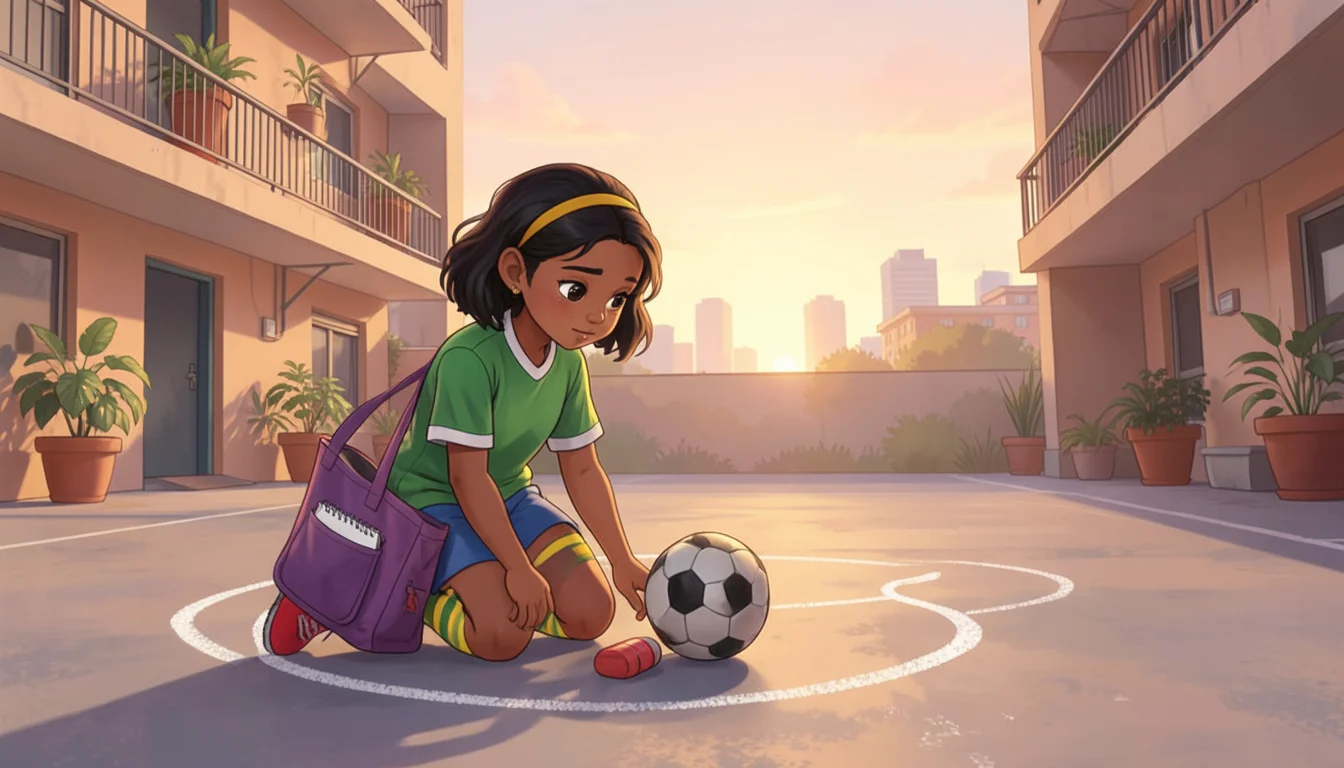
At sunrise on Saturday, Maya chalked a crooked white boundary around the community court. The city cup was three days away, and she wanted to lead one soccer chant loud enough for every neighborhood to claim.
The Soccer Chant Sounded Different in Every NeighborhoodA global game reveals local culture through chants, snacks, rivalries, street rules, team colors, and the way fans share space.
1. At sunrise on Saturday, Maya chalked a crooked white boundary around the community court. The city cup was three days away, and she wanted to lead one soccer chant loud enough for every neighborhood to claim.
2. That afternoon, Maya carried her notebook to the Old Market, where red-and-gold flags hung above stalls of fried plantains. The market fans clapped twice, stamped once, and sang, “Clap, clap—our street, our beat!” Maya wrote down the rhythm, but not the words; the words belonged to that place.
3. On the hill, blue scarves fluttered between the houses. The Hill team would not start a street match until the ball bounced once off the wall; it was their rule for keeping the narrow lane fair. Their chant rose in short bursts: “Bounce, bounce, then pass!” Maya copied the rule beside the rhythm.
4. By the riverside, the chant was softer: “Make room, make room!” Fans shifted their chairs whenever a bicycle passed, leaving a clear lane beside the water. Maya noticed that even the cheering had learned how to share.
5. That evening, Maya spread the three rhythms across her floor. She stitched market claps, hilltop words, and riverside hush into one long chant. At practice, the first line swallowed the second, and the third arrived too late. Maya stopped with her pencil above the page. One chant for everyone had left no room for anyone.
6. At city-cup practice, the market captain clapped faster, the hill captain pointed toward the wall, and the riverside fans protected their open lane. Maya tore out no pages. She placed three colored ribbons on the ground and left a circle of pavement between them. Each neighborhood could keep its own verse. The empty circle would be the beat they shared.
7. On game day, the market brought plantains, the hill brought sesame buns, and the riverside brought cups of sweet corn. The teams kept their colors and their street rules, but the fans left one broad space between them. Maya stood there with her hand ready.
8. At the first whistle, the ball rested at midfield between red-and-gold and blue-and-white shoes while the riverside side kept the lane clear. Maya lifted one hand. The market gave two claps, the hill answered with one stamp, and the riverside held the beat open. Then all three sides shouted, “One game, many voices!”
9. At halftime, the rival sides sat on opposite edges of the chalk line, still arguing cheerfully about one close call. Snacks crossed the line before the argument was finished. The teams kept their rivalries, but nobody kept the food or the open space to themselves.
10. After sunset, Maya closed her notebook and listened to the last echoes fade across the court. The soccer chant sounded different in every neighborhood—in the claps, the snacks, the street rules, the team colors, the playful rivalries, and the space fans made for one another. The game was global, but its voice belonged to every street that shared it.
Make a story like this →