 Storyclover
Storyclover
Storyclover
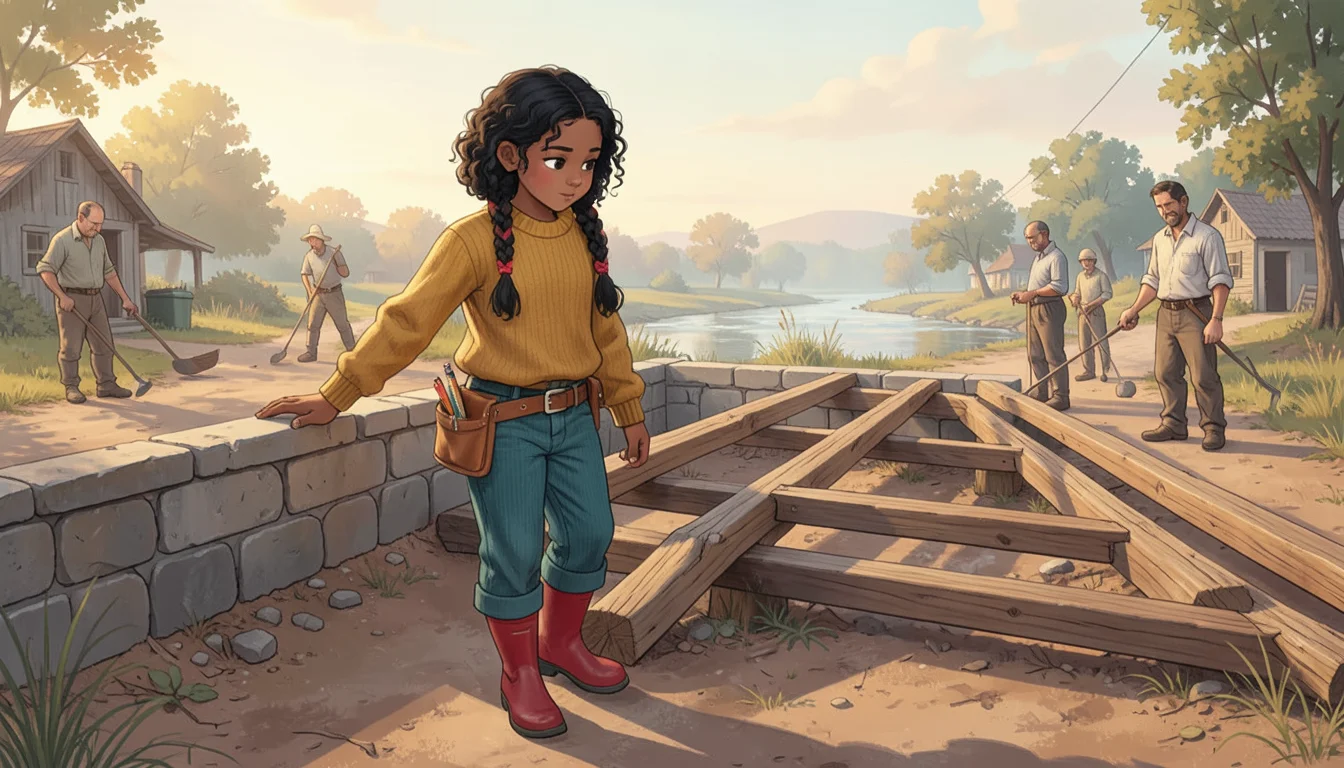
At first light, Mara carried her wooden pencil and folding ruler to the empty foundation beside the river road. Beams lay in neat rows, and a dozen neighbors were already measuring them. “Why are we building a house for someone else?” Mara asked.
Why Did the Neighbors Build a House for Someone Else?A community house-raising tradition shows how shared labor can act as insurance, celebration, and social agreement all at the same time.
1. At first light, Mara carried her wooden pencil and folding ruler to the empty foundation beside the river road. Beams lay in neat rows, and a dozen neighbors were already measuring them. “Why are we building a house for someone else?” Mara asked.
2. Tomas tapped a mallet against his palm. “The house is for me,” he said. “The spring river took my old place, and the bakery loft is no place to spend a winter.” Mara glanced at the beams. They seemed suddenly less like a pile and more like an answer.
3. In Elm Hollow, a house-raising began with an empty foundation and a promise. Every household sent hands, tools, food, or all three. No one kept a tally, because the next house might belong to any family in the valley.
4. Mara’s first peg split down the middle. She held the broken pieces tightly and watched the others fit theirs into place. “What if I make things worse?” she asked. Tomas placed a fresh peg beside her. “Then we make another one,” he said.
5. By noon, rain had darkened the timbers and softened the ground, so everyone gathered beneath an awning. Someone passed around soup. Someone else covered the tools. The work had paused, but nobody had gone home.
6. By the next morning, the frame stood tall enough to cast a shadow. Mara wondered about the broad porch stretching across the front. “Why build it so wide?” she asked. Tomas rested his carpenter’s square against a post. “So there will be room when the next family needs a house,” he said.
7. At the last corner, Mara noticed that the frame leaned a finger’s width. She opened her folding ruler and checked the post before anyone nailed it in place. Tomas listened, and the neighbors reset the brace. This time, Mara’s hands did not hurry.
8. Three days later, the house had walls, windows, and a roof that held the evening light. On the porch, Tomas placed a bowl in Mara’s hands. “The house is mine,” he said, “but the raising belongs to everyone.” Then he carried soup to the next table.
9. In autumn, a new foundation appeared across the valley. This time, Tomas arrived before sunrise with his tool roll, and Mara carried the first basket of pegs. The neighbors came from every road, just as they had for him.
10. Mara finally understood the question she had asked at the river road. The neighbors built a house for someone else because a house-raising was a roof for one family, a celebration for everyone, and an agreement that the hands would come when any family needed them. It was insurance made of neighbors.
Make a story like this →