 Storyclover
Storyclover
Storyclover
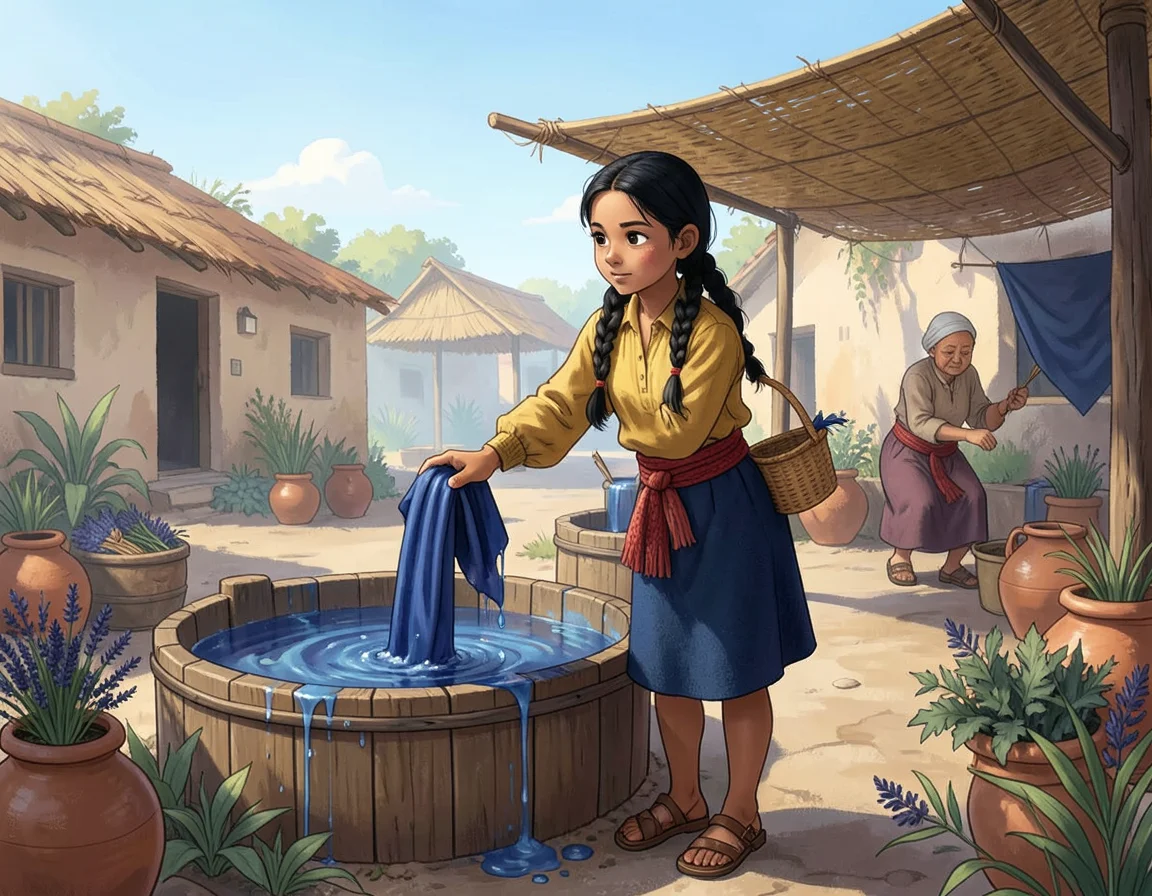
On a bright morning, Mara lifted a new indigo cloth from the dye vat. It was the deepest blue she had ever seen.
Why Did the Cloth Cost More After It Faded?A naturally dyed textile becomes more valued as it ages, revealing how labor, scarcity, repair, and taste can change ideas of beauty.
1. On a bright morning, Mara lifted a new indigo cloth from the dye vat. It was the deepest blue she had ever seen.
2. Grandmother Sela pressed the cloth between her fingers. “The blue is beautiful,” she said. “But beauty is only one part of what a cloth carries.”
3. For the blue, they had gathered leaves before sunrise, stirred the vat for hours, and waited through three careful baths. A color could be made from plants, but it could not be hurried.
4. At the market, a merchant admired the color, counted the hours of work, and paid a fair price. Mara carried the cloth home as proudly as if it were a treasure.
5. The cloth was saved for a special day. Then a less special day arrived, and Mara wrapped it around her little brother when rain soaked his blanket.
6. The cloth met sun, rain, dust, and many washings. Its sharp blue softened into the color of evening water.
7. One day, Mara found a thin place near the hem. She carried the cloth to Grandmother Sela instead of hiding it in the chest.
8. Sela repaired the hem with ocher-gold thread. The stitch did not pretend to be invisible; it made a small road across the blue.
9. Mara wore the cloth to the harvest festival. People noticed the mellow blue, then the gold road, then the careful way the whole cloth had been made.
10. The merchant offered more for the faded cloth than he had paid for the new one. Mara looked from the soft blue to the golden repair and wondered why.
11. “The first price paid for the cloth counted the dye and the weaving,” Sela said. “This price also counts the years, the use, the repair, and the rare hand that made them beautiful together.”
12. Mara did not sell the cloth. She folded it carefully and placed it where the next years could find it. The blue had faded, but the cloth had become richer.
Make a story like this →