 Storyclover
Storyclover
Storyclover

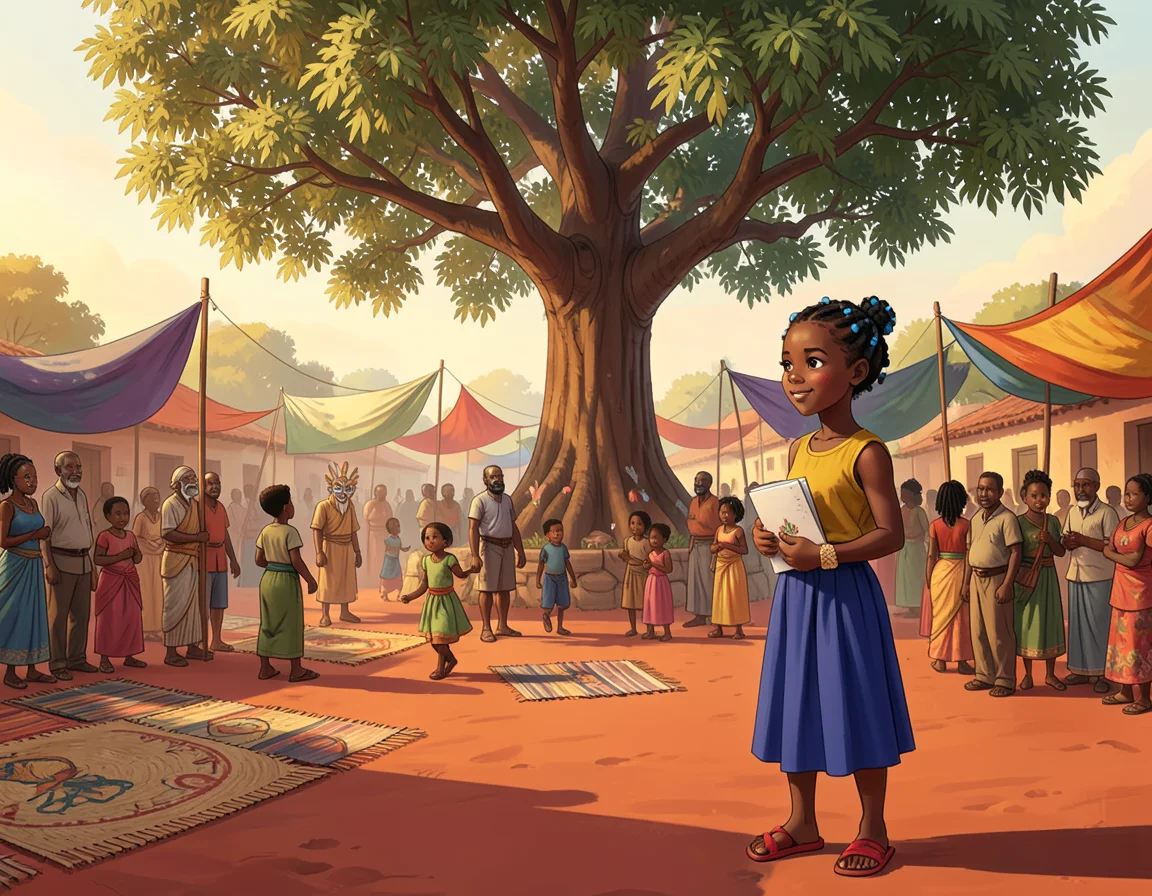
At sunrise, Nia climbed Signal Hill with a small drum in her hands. Her cousin Luma lived beyond the blue ridge, and Nia wanted to invite her to the valley’s evening gathering before the first lanterns were lit.
The Drummers Stopped, but the Message Kept TravelingExploring drum languages and signal systems shows how communities sent warnings, news, and invitations across distance before modern devices.
1. At sunrise, Nia climbed Signal Hill with a small drum in her hands. Her cousin Luma lived beyond the blue ridge, and Nia wanted to invite her to the valley’s evening gathering before the first lanterns were lit.
2. At the hilltop heritage room, Auntie Ama showed Nia a carved drum with two different heads. She explained that, in some communities, skilled drummers shaped pitch, spacing, and repeated phrases to echo spoken language, so a drum could carry more than a beat.
3. Nia wrote the invitation in her notebook and turned it into a rhythm: three low taps, two quick taps, and a long pause. She tried it from the west ridge. The answer came back as a ragged echo, and the valley swallowed the rest.
4. Auntie Ama did not call the attempt a failure. She led Nia to a row of old lookout platforms, where communities had used drums, flags, polished metal, fires, and runners to pass warnings, news, or invitations from one high place to another. A single signal could be missed, she said, but a chain could carry it farther.
5. They made a relay for their own message. One platform would pass each part to the next, using a drum when the air was clear, a flag when shape and color were easier to see, and a flash of polished metal in bright sun. Nia would begin, and Auntie Ama would listen from the next ridge.
6. At noon, Nia sent the first part. Auntie Ama answered from the next platform with the agreed blue flag, then passed the signal toward the far ridge. The message was no longer a single sound trying to cross the valley; it had become a chain of careful choices.
7. Near sunset, the final signal reached Luma on the last ridge. She understood the relay: come before sunset, and bring a song. Her green flag rose against the sky, and Nia knew the invitation had arrived.
8. Luma arrived before the first lanterns were lit, carrying the song she had promised. Nia answered on the drum, and soon their two rhythms met—not as a race across the valley, but as a conversation at the same fire.
9. After the gathering, Nia set the drum beside the polished mirror and the folded flags. Her phone could send a message in an instant, but the old signals had taught her to notice a pattern someone could recognize, a path across distance, and another person willing to pass it on. The drummers stopped, but the message kept traveling. Exploring drum languages and signal systems showed Nia how communities sent warnings, news, and invitations across distance before modern devices.
Make a story like this →