 Storyclover
Storyclover
Storyclover
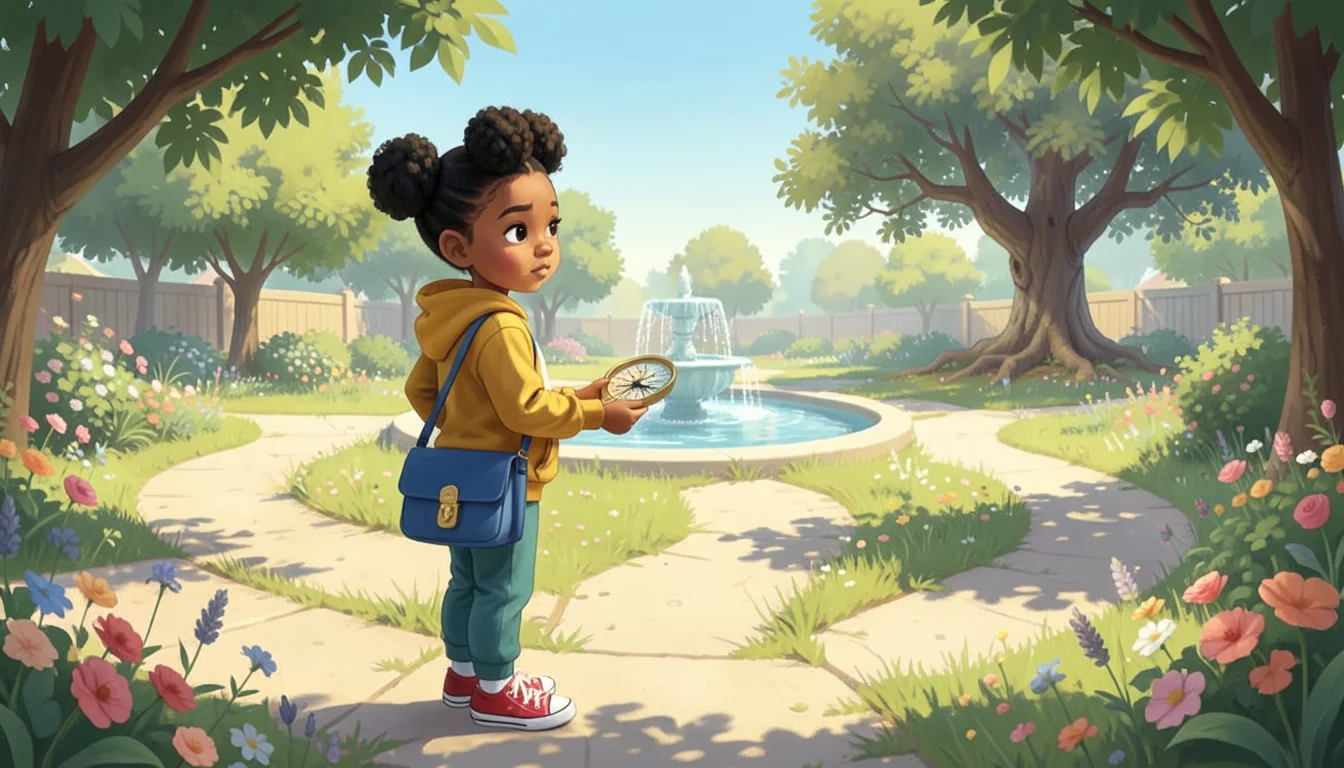
At nine on Saturday morning, Mina stood at the entrance to Riverside Language Garden and checked the brass compass in her satchel. She had promised to meet Tali beside the old fig tree, but four paths opened ahead, and none of them looked more correct than the others.
The Language That Hid Directions Inside Every GreetingA child learns that some languages use north, south, east, and west instead of left and right, changing how speakers notice the world.
1. At nine on Saturday morning, Mina stood at the entrance to Riverside Language Garden and checked the brass compass in her satchel. She had promised to meet Tali beside the old fig tree, but four paths opened ahead, and none of them looked more correct than the others.
2. Tali lifted her hand from beside the fountain. “Good morning, Mina. You are north of the fountain.” Mina glanced at the water. “That is an unusual way to say hello.” “It is an accurate one,” Tali said.
3. Tali set a blue bowl on a tree stump and arranged three shells around it. “Bring me the shell east of the bowl,” she said. Mina faced the fountain, turned left, and hurried back with a shell. Tali looked at it, then at the shell shining on the far side of the bowl.
4. Tali did not laugh. She placed the compass between them. “In some languages, people say north, south, east, and west where English speakers might say left and right,” she said. “Those directions stay fixed, even when a speaker turns around. A greeting can carry direction, too, when it tells where someone is or where they came from.”
5. At the garden gate, Tali tried again. “Good morning, Mina. From which direction did you enter?” Mina watched the compass needle settle, then faced the path behind her. “From the west,” she said. The greeting felt less like a password now and more like a tiny map.
6. They walked toward the fig tree. At the pond, Tali asked, “Keep the water to your south. Which way will you go?” Mina stopped before choosing. She checked the compass, found north, and took the path that kept the pond to the south. She had used left and right before, but now those words came after the directions, not instead of them.
7. Under a canopy of leaves, the paths crossed again. Mina reached for the compass, then paused. The afternoon sun hung low on the western side of the sky, and the long shadows stretched east. She looked from the shadows to the fork.
8. “North is that way,” Mina said, pointing along the quietest path. Tali followed her gaze. “How did you know?” “The sun told me where west was,” Mina replied. “Then the shadows told me where east was.” For the first time, Mina was not simply carrying a direction; she was noticing one.
9. At the old fig tree, Tali turned to leave, and Mina raised her hand. “Good afternoon. You are south of the tree, and I am north of you.” Tali smiled. Mina glanced at her compass but left it closed. After that, Mina understood what Tali’s language had been carrying all morning: some languages use north, south, east, and west where English uses left and right, so even a greeting can make the whole world part of hello.
Make a story like this →