 Storyclover
Storyclover
Storyclover
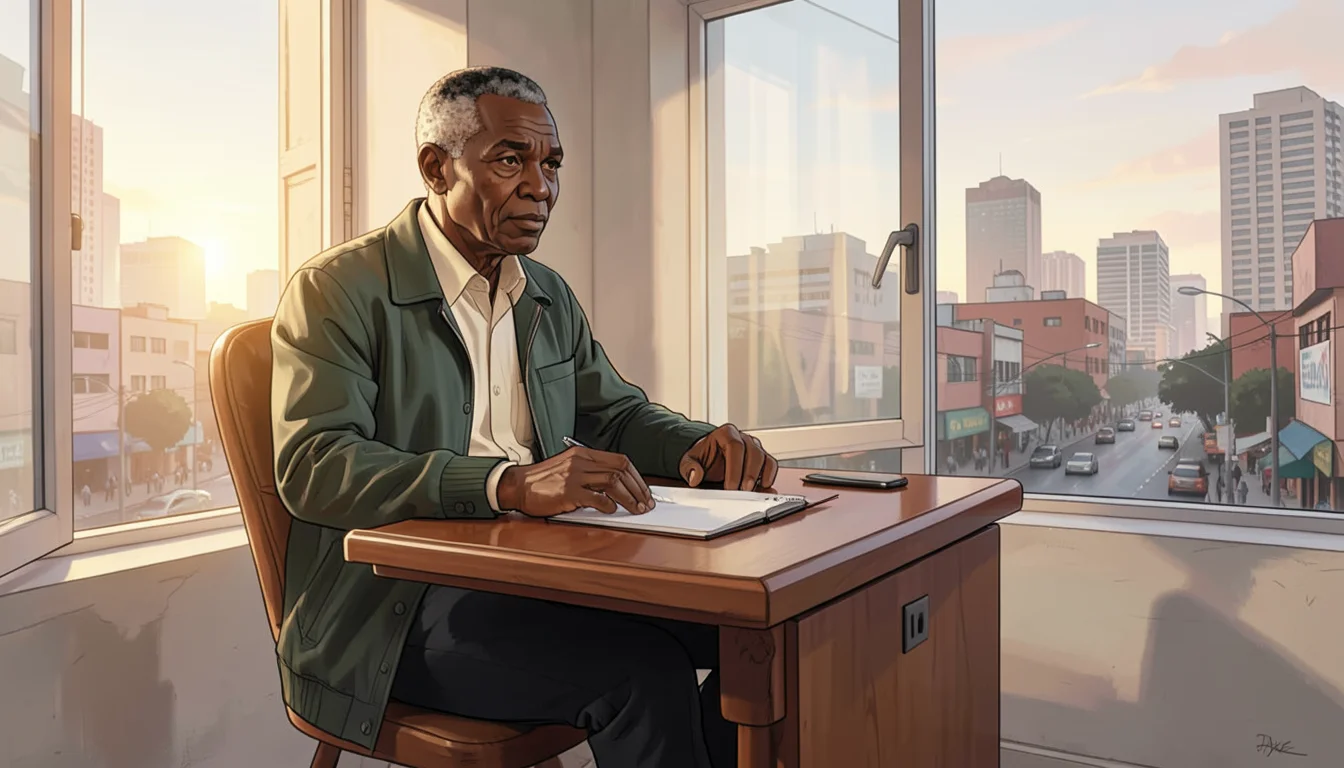
Before sunrise in Johannesburg, Nelson Mandela opened his law notebook and listened to the city wake. He wanted a country where the law opened doors instead of closing them, so he began by asking who the law served.
Nelson Mandela Learned to Fight Without Letting Hate LeadNelson Mandela moved from resistance to reconciliation, showing how justice can require both firmness and the discipline to imagine former enemies differently.
1. Before sunrise in Johannesburg, Nelson Mandela opened his law notebook and listened to the city wake. He wanted a country where the law opened doors instead of closing them, so he began by asking who the law served.
2. Apartheid gave white South Africans power over Black South Africans. It separated schools, neighborhoods, buses, and benches, and it could punish a Black person for traveling without the right pass. Mandela could not accept a law that treated human beings as if some mattered less.
3. So he and other activists organized a campaign of peaceful defiance. They entered places barred to them and faced arrest without striking back. Each arrest was meant to make the unfair rules impossible to ignore.
4. But the arrests continued, and the government answered protest with greater force. Mandela helped build an underground resistance and later supported armed attacks on government property, taking care to avoid people. He was not choosing an easy road; he was trying to make a closed system feel pressure.
5. Then the police arrested him. At the trial, he stood accused of trying to overthrow the government. Mandela spoke of a democratic South Africa so clearly that the courtroom became a place where the future could be heard.
6. The sentence was life in prison. For twenty-seven years, Mandela worked, studied, and argued with prison officials for better treatment. The people who locked his door could control his days, but he guarded one decision: they would not be allowed to lock his mind.
7. Outside the prison, a new generation kept demanding freedom. Inside, Mandela began secret conversations with government officials. He still demanded an end to apartheid, yet he practiced asking what a country after apartheid would need from everyone.
8. When Mandela walked free in 1990, crowds called his name. He raised a hand in greeting and listened. The country was full of anger, grief, and hope, and a victory speech alone could not keep it from breaking.
9. Mandela met government leaders, including F. W. de Klerk, who had helped maintain the old order. Mandela remained firm: the future needed equal votes and equal rights. At the same table, he also searched for words that could keep former opponents talking.
10. Negotiations stumbled through violence and distrust, but the promise of an election held. In 1994, Mandela cast his vote in South Africa’s first election open to all adults. His finger marked a paper, and decades of refusal became one quiet choice.
11. After the election, Mandela did not ask only his supporters to celebrate. At the 1995 Rugby World Cup, he greeted captain Francois Pienaar and honored a team many Black South Africans had once seen as a symbol of exclusion. The gesture did not erase the past; it made room for people to step into a different future.
12. Mandela never forgot the injustice, and he never stopped insisting on justice. He had moved from resistance to reconciliation, showing that justice can require both firmness and the discipline to imagine former enemies differently.
Make a story like this →