 Storyclover
Storyclover
Storyclover
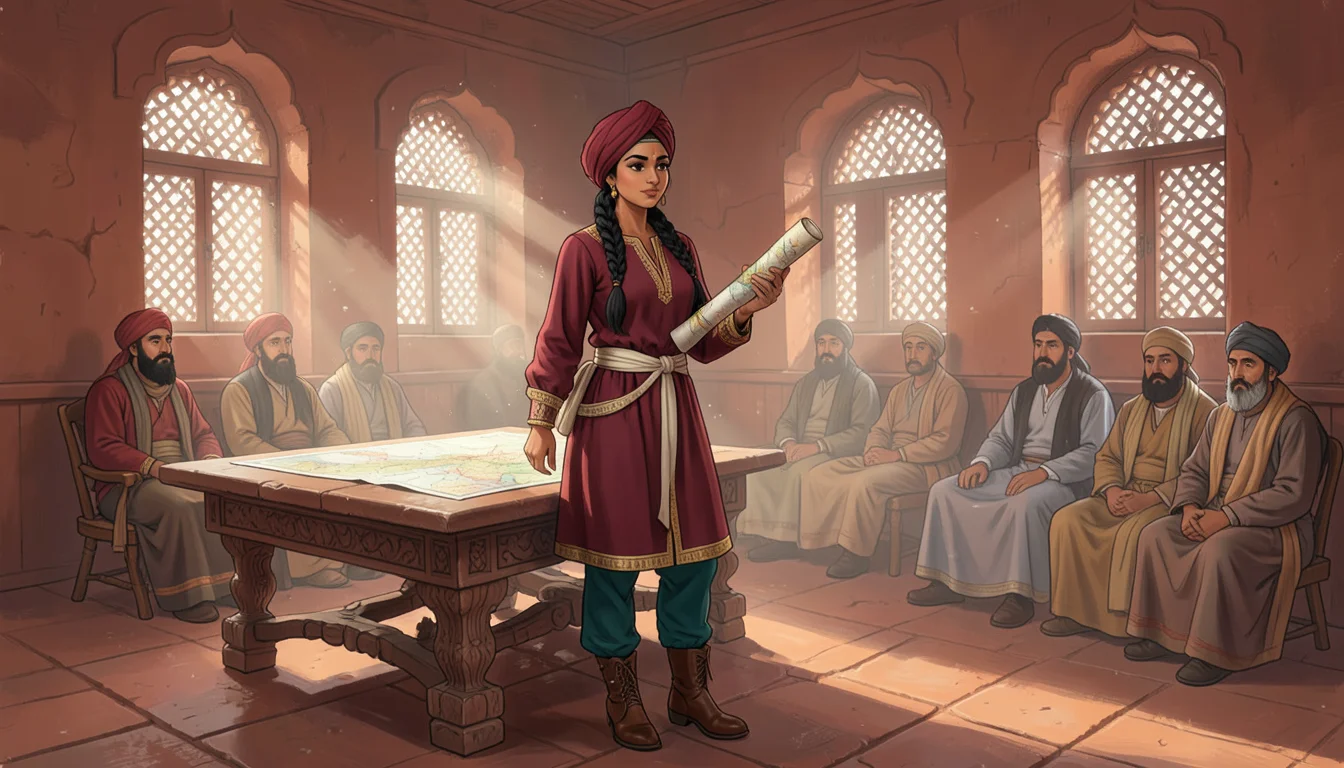
At sunrise in Delhi, Razia bent over a map of the city. Beyond the carved screens, the court waited to see whether a woman could hold a throne.
Razia Sultana Held the Throne While Courtiers Looked AwayRazia Sultana ruled Delhi with political skill in a world that resisted female authority, revealing how leadership depends on allies as well as courage.
1. At sunrise in Delhi, Razia bent over a map of the city. Beyond the carved screens, the court waited to see whether a woman could hold a throne.
2. Her father, Sultan Iltutmish, had seen her sharp judgment. Before he died, he named Razia his heir, though many nobles preferred a son who would agree with them.
3. The nobles placed her half-brother on the throne instead. Razia did not shout. She listened, remembered who had acted wisely, and waited.
4. Razia walked through Delhi in plain sight. Merchants told her about unfair taxes, crowded wells, and officials who answered only to themselves.
5. When the court grew careless, Razia made the city's complaints impossible to ignore. She gathered witnesses, compared records, and placed the facts before the nobles.
6. People began to speak her name in the streets. When the throne was offered to her at last, Delhi's citizens stood behind her, and the nobles could not pretend they had not heard.
7. Razia ruled openly. She heard petitions, checked the treasury, and chose officials for ability rather than family name. Her decisions were careful, but they were never timid.
8. She also trusted people outside the old circle of nobles. Jamal al-Din Yaqut, a skilled officer of the royal stables, earned responsibility through work, not ancestry.
9. That choice unsettled the powerful. Some courtiers looked away whenever Yaqut entered the council, then returned with rumors sharper than any blade.
10. Razia answered the rumors with work, but work alone could not hold a kingdom together. Governors who feared losing their privileges began to withdraw their support.
11. Razia called together the allies who still believed in fair rule. They brought fewer banners than the rebels, but they brought clear promises and the courage to keep them.
12. The struggle cost Razia her throne. Yet the years she held it changed what Delhi had witnessed: a woman could listen, decide, and govern with skill.
13. Her courage had opened the door, but courage could not keep it open by itself. Razia's reign left a harder truth behind: leadership needs brave choices, and it needs people willing to stand together.
Make a story like this →