 Storyclover
Storyclover
Storyclover
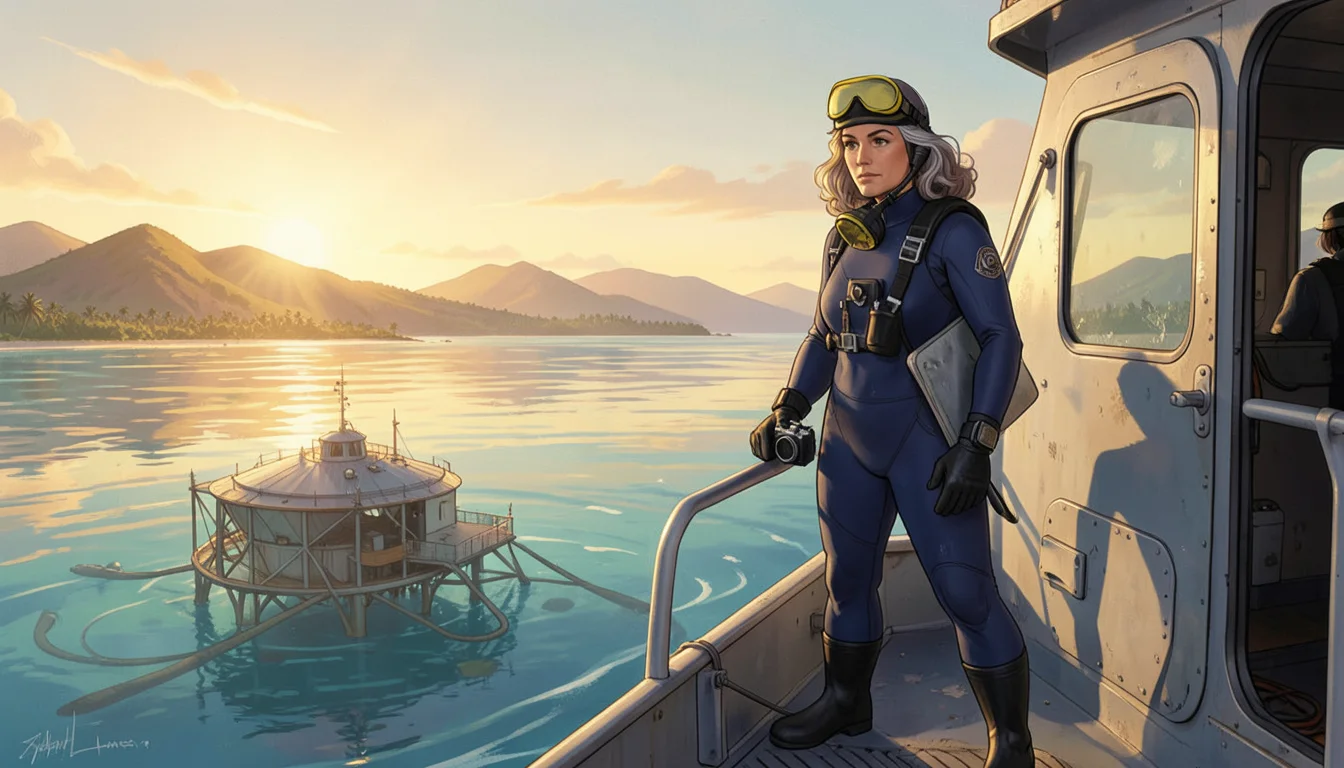
At sunrise in Great Lameshur Bay in 1970, Sylvia Earle checked her slate beside the Tektite II habitat. She was about to live beneath the sea with four other aquanauts, and she wanted to learn what the ocean was doing when nobody stood on its shore.
Sylvia Earle Dove Deeper Than the World Was WatchingSylvia Earle explored the ocean as a scientist and advocate, helping people understand that the deep sea is both mysterious and vulnerable.
1. At sunrise in Great Lameshur Bay in 1970, Sylvia Earle checked her slate beside the Tektite II habitat. She was about to live beneath the sea with four other aquanauts, and she wanted to learn what the ocean was doing when nobody stood on its shore.
2. The water closed over Sylvia, and the seafloor became her workplace. Below, the habitat rested like a small house among the coral. Instead of visiting the reef for an hour, she could stay long enough to notice its patterns.
3. She recorded water temperature, coral growth, fish behavior, and every question the reef placed in front of her. Her notes did not make the ocean simpler. They made it larger.
4. Hours became days, and daylight gave way to the blue-black hush of night. New creatures appeared at the porthole, while the reef kept its own clock. Sylvia learned that careful science often begins by staying still.
5. From land, the sea looked like one shining surface. A notebook could hold measurements, but it could not easily carry the reef's quiet into a classroom, a laboratory, or a crowded meeting room. Sylvia needed to go where fewer people had gone.
6. Years later, off Oahu, Hawaii, Sylvia climbed into a one-person JIM suit. In 1979, the suit carried her to about 1,250 feet, farther down than any woman had gone before. She was not chasing a number so much as a closer look.
7. At that depth, sunlight had thinned to a faint memory. Sylvia's light found delicate animals, drifting specks, and a seafloor shaped by forces older than any human story. The deep was not empty. It was alive in ways most people had never seen.
8. When Sylvia returned from the deep, she brought back measurements, images, and questions. As a scientist and later NOAA's first woman chief scientist, she kept asking how knowledge could help people care for a world they could not see from shore.
9. The closer she looked, the harder truth became visible. Warming water, pollution, and careless fishing could damage places that had seemed endless. A reef was not scenery; it was a neighborhood, and every neighbor depended on the others.
10. Sylvia began telling the ocean's stories wherever people would listen. Through Mission Blue and its Hope Spots, she helped draw attention to special places that could be studied, protected, and given time to recover.
11. Her work joined two acts that are easy to separate but stronger together: looking closely and speaking clearly. Each dive revealed more wonder, and each warning asked people to protect what wonder alone could not save.
12. Sylvia Earle explored the ocean as a scientist and advocate, helping people understand that the deep sea is both mysterious and vulnerable.
Make a story like this →