 Storyclover
Storyclover
Storyclover
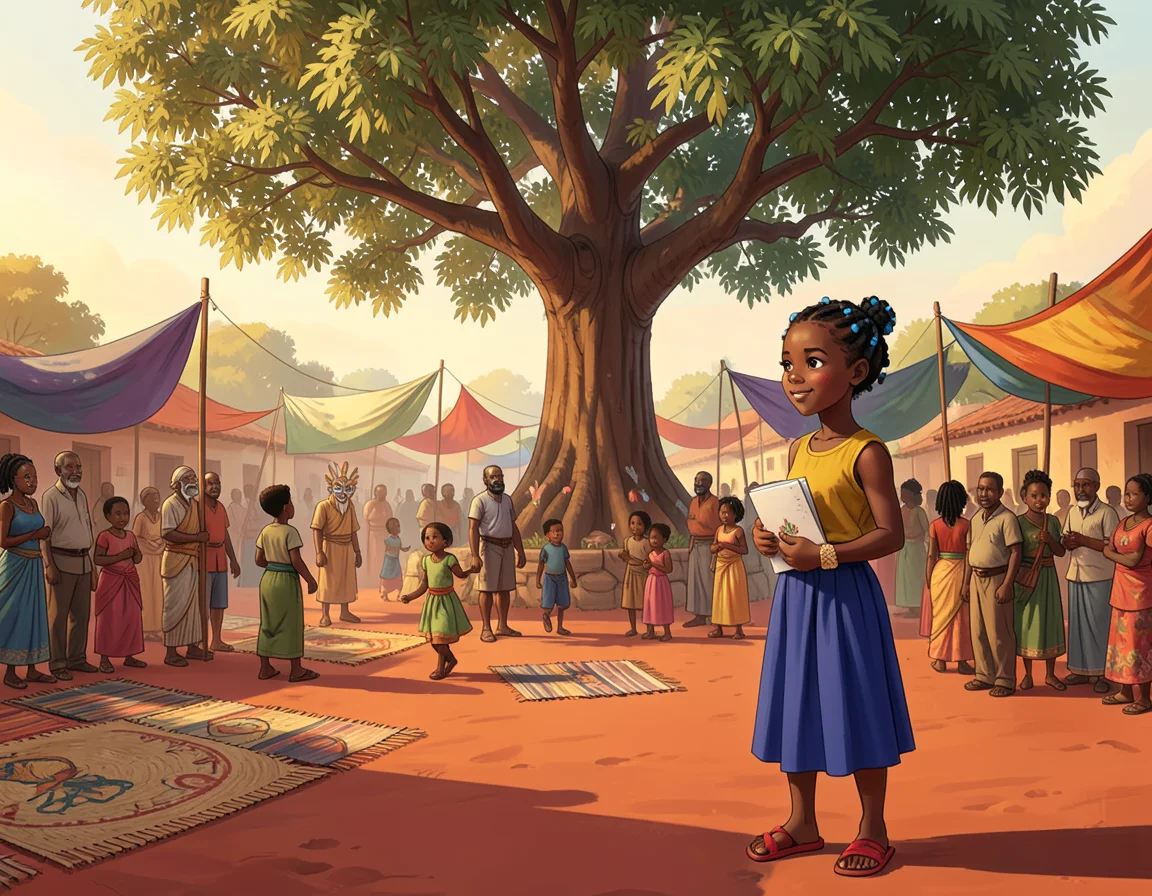
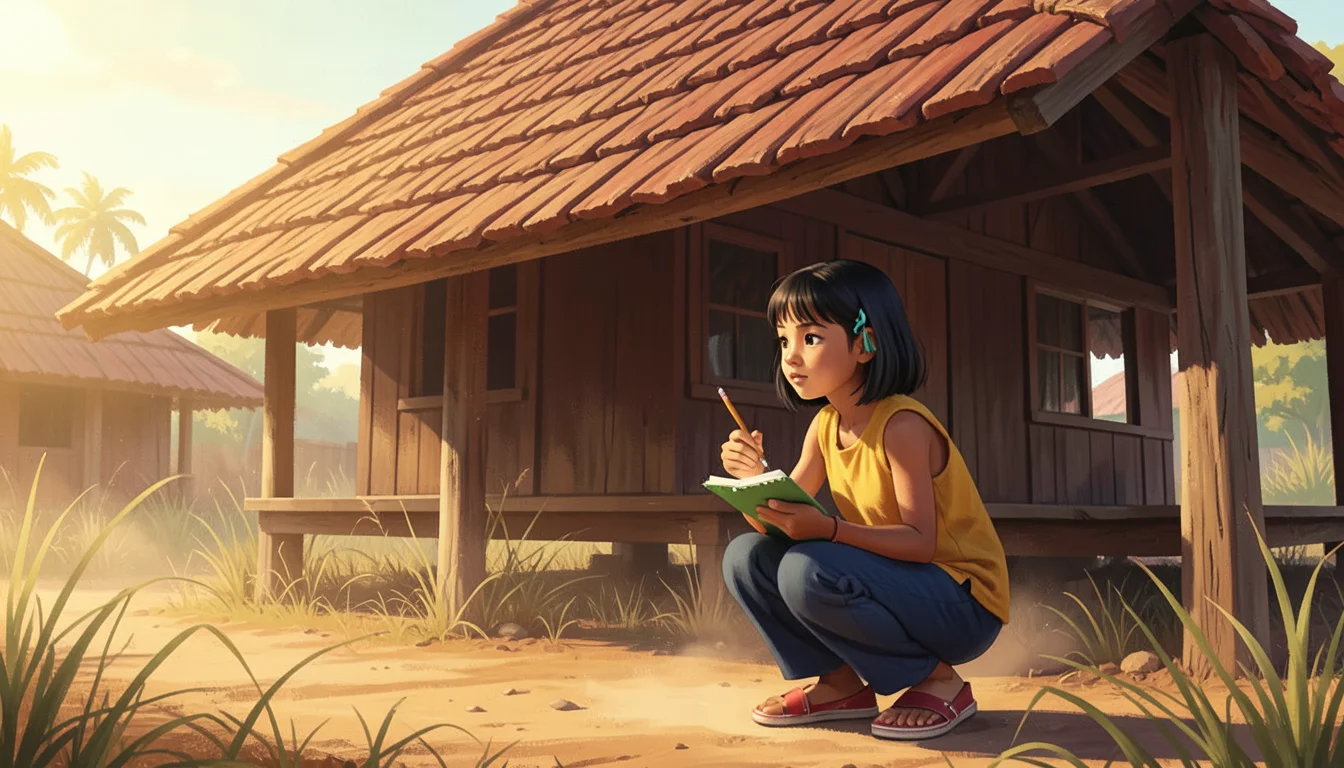
Amina hurried across the village square with her notebook pressed to her chest. By sunset, the masquerade would begin, and she meant to draw every detail.
The Mask That Was Too Heavy Until the Dancer MovedA child watching a West African masquerade discovers that the mask is not just an object but a shared performance of music, ancestry, skill, and community.
1. Amina hurried across the village square with her notebook pressed to her chest. By sunset, the masquerade would begin, and she meant to draw every detail.
2. Near the musicians, a towering costume waited on a mat. Its carved mask had a long face, bright cowrie shells, and a fringe of raffia. Amina reached toward it, then stopped.
3. Amina lifted the mask. It dragged at her wrists like a stone. She lowered it quickly and rubbed the red marks on her palms.
4. “How can anyone dance in that?” Amina asked. The elder beside her smiled. “The mask is heavy when you hold it alone.”
5. He pointed to the drums, the singers, the hands that had stitched each strip of cloth, and the families waiting around the square. “It becomes lighter when everyone carries a part.”
6. When the dancer put on the costume, Amina could no longer see a face. She could hear the dancer breathe, though, and hear the first quiet beat beneath the talking drum.
7. The drums answered one another. Voices rose around them. Then the dancer bent low, and the heavy mask seemed to listen.
8. With each beat, the dancer gave the mask a new balance. It dipped, lifted, and turned toward the people who knew its songs.
9. Amina stopped trying to draw the mask by itself. She began sketching the drum beside it, the hands that clapped, and the circle that made room.
10. Afterward, the dancer lifted off the mask. Its weight had not changed. But Amina understood why the dancer had moved.
11. The mask was wood, shells, cloth, and careful hands. It was also music, ancestry, skill, and everyone making room for the dance.
Make a story like this →