 Storyclover
Storyclover
Storyclover
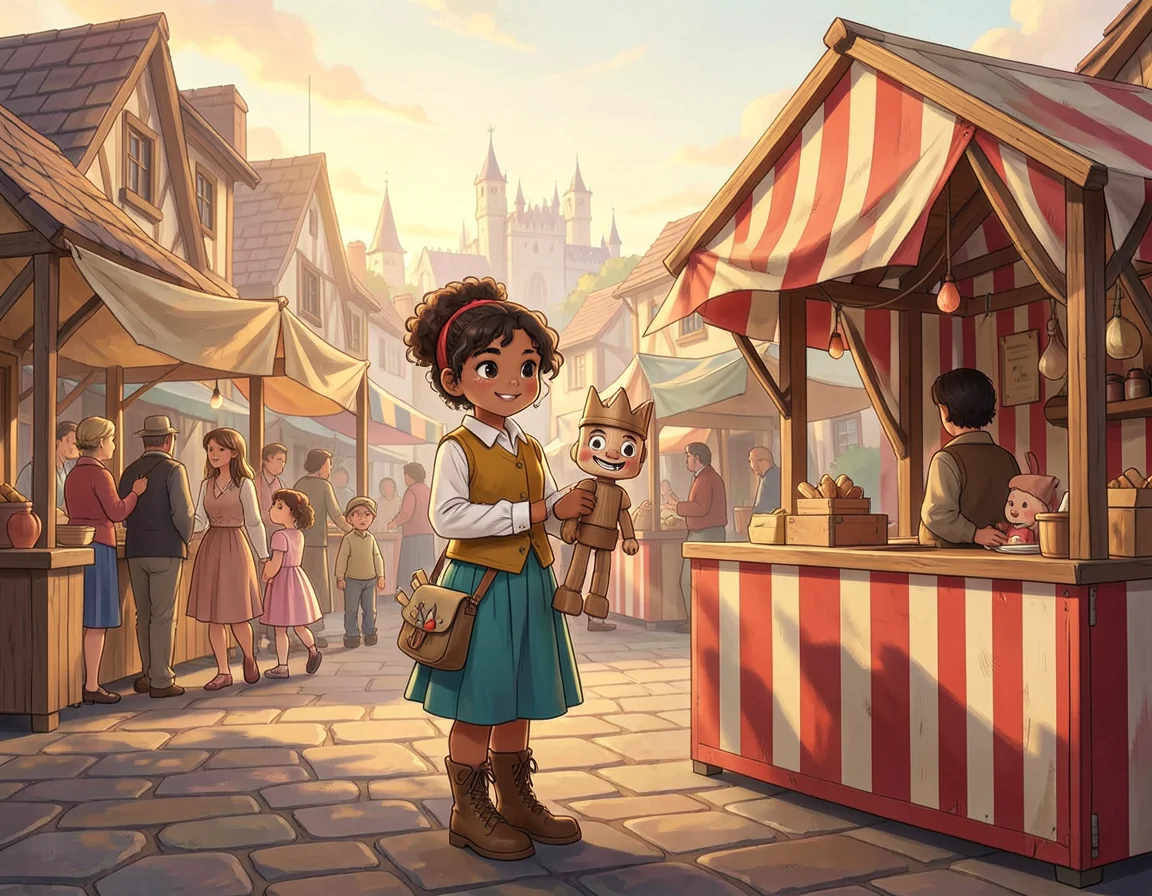
On market day, Mina tightened the strings of a puppet who wore a crooked crown. The puppet was called King Noodle, though he had never ruled anything except a sock drawer.
Who Taught the Puppet to Mock the King?A comic puppet tradition shows how performance can let ordinary people joke about power, unfairness, and foolish decisions.
1. On market day, Mina tightened the strings of a puppet who wore a crooked crown. The puppet was called King Noodle, though he had never ruled anything except a sock drawer.
2. Her grandmother had taught her the old tricks: a wobbling head, a grand bow, and a voice that sounded important until it sneezed. Mina had added one new line. “Your Majesty, is that really your best idea?”
3. Mina had just made King Noodle trip over his own cape when the real king arrived. The market became so quiet that a plum dropped into a basket with a soft, guilty thump.
4. “Who taught that puppet to mock the king?” the king asked. Mina’s fingers tightened around the strings. “No one,” she said. “He learned by listening.”
5. The king pointed toward the painted throne. “Then let him speak.” Mina set the puppet upright, and King Noodle bowed so deeply that his crown fell off.
6. “I have solved the town’s bridge problem,” King Noodle announced. “We shall build the bridge on the moon, where nobody can complain about the toll.” A baker snorted. The king’s mouth twitched.
7. Then King Noodle proposed a tax on umbrellas, because rain had been falling without permission. This time, the laughter came with murmurs. People had been saving coins for a real bridge.
8. Mina glanced at the king. She could make the puppet louder, sharper, safer. Instead, she gave him a small, uncertain bow.
9. King Noodle turned to his adviser. “Perhaps,” he said, “the person who pays for a bridge should be allowed to cross it.” The adviser fainted onto a cushion. The square burst open with laughter.
10. When the show ended, the king did not order the booth closed. He asked the bridge builders to meet him in the square the next morning.
11. “Does he always speak for you?” the king asked. Mina shook her head. “Not always. Sometimes he says what people are still trying to say.”
12. No one had taught the puppet alone. The strings belonged to Mina, the jokes belonged to the crowd, and the courage belonged to anyone willing to laugh at power when power made a foolish choice.
Make a story like this →